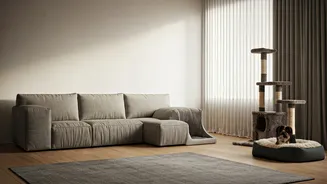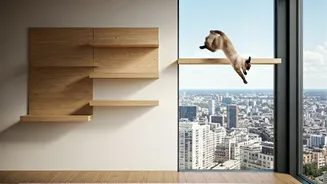



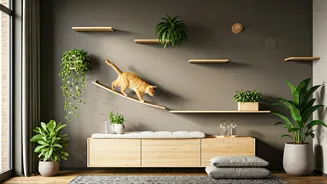
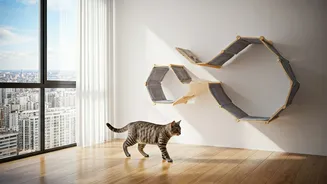


Why Cats Crave Height
Before you even consider drilling a single hole, it’s important to understand why your cat will love you for it. For felines, height isn't just a preference; it's an instinct. In the wild, high vantage points offer safety from ground-level predators and a perfect
spot to survey their territory for prey. Your domesticated house cat, no matter how pampered, still operates on this ancient software. By providing vertical spaces, you are speaking their language. You’re giving them a secure place to retreat, observe, and simply feel in command of their environment. In a multi-pet household, it also provides a crucial escape route from a pestering dog or another cat, reducing stress and potential conflicts. For a cat in a small apartment, a vertical world is an expansive one.
Introducing Soft Stepping Shelves
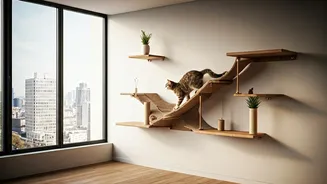
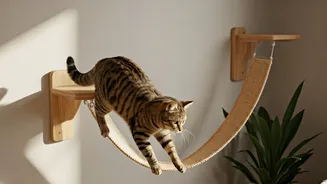
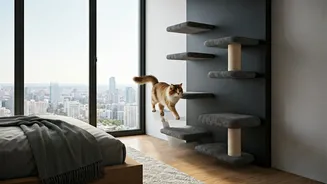
While any shelf is better than no shelf, the trend is moving towards 'soft' stepping shelves for good reason. These are typically sturdy wooden or composite bases covered in carpet, felt, or another plush, non-slip fabric. The benefits are twofold. First, the soft material provides superior grip, giving cats confidence as they leap and climb. A slip on a slick, painted surface can deter a cat from using the shelves again. Second, it adds a layer of comfort. These shelves aren't just transit points; they become destinations. The soft surface invites cats to lounge, nap, and settle in, turning a simple shelf into a coveted resting spot. They absorb sound better than hard surfaces, making for a quieter home as your cat explores its new domain, especially during late-night zoomies.
Designing Your Cat's Highway
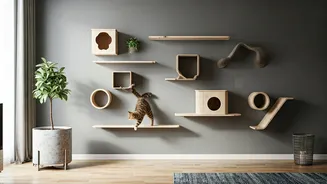
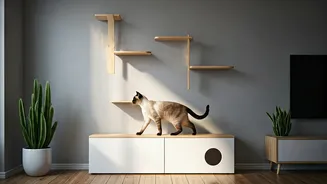
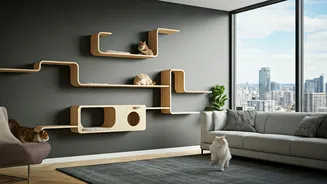
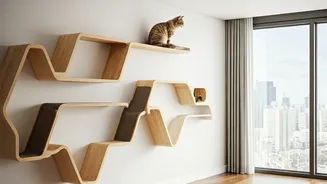
Thoughtful design is key to a successful cat wall. Start by observing your cat. Where do they like to hang out? A path leading to a sunny window or a perch with a view of the room’s main action is a great start. Think in terms of a 'cat superhighway.' The shelves should create a logical path—up, down, and across. The spacing is crucial. Measure your cat’s comfortable jump distance, both horizontally and vertically, and use that as a guide. A good rule of thumb is a maximum of 30-40 cm vertically and 40-50 cm horizontally between shelves, but adjust for your cat's age and agility. Create a mix of small stepping stones and larger lounging platforms. Ensure there's a clear 'on-ramp' and 'off-ramp,' like a low shelf near a sofa or cat tree, so the highway is easily accessible.
DIY vs. Store-Bought Options
Once you have a plan, you need the hardware. The market for cat furniture has exploded, and you can find beautiful, pre-made soft cat shelves online and in pet stores. These often come in complete kits with matching aesthetics, making it easy to create a polished look. They are designed for purpose, with durability and safety in mind. However, the DIY route offers more customisation and can be more budget-friendly. You can buy simple floating shelf brackets and wood planks from a hardware store. Then, wrap the planks in your choice of carpet remnants (ask for free off-cuts at a carpet store), durable felt, or even a shallow sisal rope for a scratching surface. This allows you to perfectly match the shelves to your room’s decor, turning a pet project into a stylish design feature.
Installation: The Safety Checklist
This is the most critical step. A poorly installed shelf is a danger to both your pet and your walls. Your number one tool should be a stud finder. Whenever possible, screw the shelf brackets directly into the wooden studs within your walls. This provides the most secure anchor. If a stud isn't available in your desired location, you must use appropriate drywall anchors rated to hold significant weight—far more than your cat's actual weight, to account for the force of them jumping. Don't skimp here; use high-quality toggle bolts or screw-in anchors. After installing each shelf, test it rigorously. Pull down on it with significant force to simulate a jumping cat. Ensure there is no wobble or give. Your cat's safety depends on it.