





In the world of healthy eating, quinoa and lentils are plant-based powerhouses. But while both are staples in a balanced diet, they offer different nutritional profiles. So, which one is better for your specific health and fitness goals?
The Protein Powerhouse Matchup
When it comes
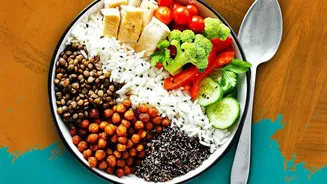
to protein, the numbers might surprise you. Cooked lentils are the clear winner in quantity, packing about 9 grams of protein per 100g serving, which doubles quinoa's 4.4 grams. A standard cooked cup of lentils delivers a substantial 18 grams of protein. However, quinoa's claim to fame is its protein quality. It is one of the few plant foods that is a 'complete protein', meaning it contains all nine essential amino acids your body needs to get from food. Lentils, while protein-rich, are slightly low in certain amino acids. For those on a strictly plant-based diet, quinoa offers a complete protein profile in a single food, but combining lentils with a grain like rice also achieves this.
A Deep Dive into Dietary Fibre
Fibre is crucial for digestive health, blood sugar regulation, and feeling full. In this category, lentils have a significant edge. Per 100 grams, lentils contain approximately 7.9 grams of dietary fibre, while quinoa has about 2.8 grams. This makes lentils an excellent choice for anyone looking to boost their fibre intake, support gut health, and improve satiety between meals. While quinoa still provides a good amount of fibre, lentils are the superior option if fibre is your main focus.
Calories and Carbohydrates
For those monitoring their calorie intake, the two are nearly identical. Cooked quinoa has about 120 calories per 100g, while lentils have a slightly lower 116 calories. Their carbohydrate content is also very similar, with both containing around 20-21 grams of carbs per 100g. A key difference, however, is their glycemic index (GI), which measures how quickly a food raises blood sugar levels. Quinoa has a low-to-moderate GI of around 53. Lentils typically have a lower GI, often ranging from 30-40, making them a particularly strong choice for maintaining stable blood sugar levels.
The Micronutrient Scorecard
Beyond the macros, both foods are packed with essential vitamins and minerals, but they shine in different areas. Lentils are a nutritional powerhouse for folate, iron, and potassium. They contain significantly more of these nutrients compared to quinoa. For example, lentils have more than double the iron and potassium per serving. On the other hand, quinoa is a fantastic source of magnesium, phosphorus, and manganese. Quinoa contains nearly twice the magnesium as lentils, a mineral vital for muscle function and bone health. Your choice may depend on which specific micronutrients you are trying to increase in your diet.
The Verdict: Which One Should You Choose?
There's no single winner in the battle between quinoa and lentils; the best choice truly depends on your individual needs. Choose quinoa if your priority is getting a complete protein from a single plant-based source, if you need a gluten free grain alternative, or if you want to boost your magnesium intake. Its light, fluffy texture makes it a versatile substitute for rice in salads and side dishes. Choose lentils if you want to maximize your protein and fibre intake, support stable blood sugar levels with a lower GI food, or increase your consumption of iron and folate. Lentils are incredibly budget friendly and work perfectly in soups, stews, and curries. Ultimately, both are incredibly healthy, and incorporating a mix of both into your weekly meal plan is the ideal way to get the best of both worlds.