



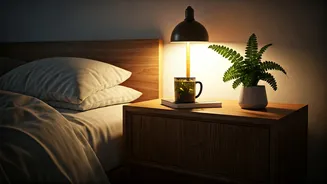




Why Your Brain Hates White Light at Night
Our bodies are brilliant, ancient machines that run on a 24-hour cycle called the circadian rhythm. For millennia, this rhythm was guided by the sun: bright, blue-toned light in the morning signalled ‘wake up and be alert,’ while the warm, amber glow
of sunset and firelight meant ‘it’s time to wind down and rest.’ Stark white and cool-blue LED or CFL bulbs, often with a colour temperature above 3500 Kelvin (K), mimic daylight. When your home is flooded with this kind of light after dark, it sends a confusing message to your brain. Your brain thinks it's still midday and suppresses the production of melatonin, the crucial hormone that tells your body it’s time for sleep. The result? You might find it harder to fall asleep, experience lower-quality rest, and feel a sense of unease or alertness when you’re trying to relax on the sofa.
The Gentle Embrace of Amber and Warm Tones
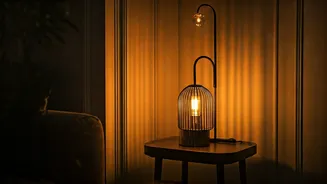
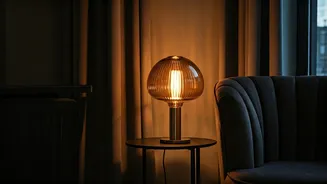
Now, imagine a different scene. A room bathed in a soft, golden-amber glow, reminiscent of candlelight or a fading sunset. This is the magic of warm lighting, typically found in the 2200K to 3000K range. This type of light contains very little of the disruptive blue light. Instead of jarring your system, it works in harmony with your natural biology.
When your eyes perceive this warm light, your brain gets the correct signal for the evening: the day is over, and it’s safe to relax. Melatonin production proceeds as scheduled, preparing you for a restful night’s sleep. This isn’t just about biology; it’s about psychology. Warm lighting is universally associated with comfort, intimacy, and safety. It’s the light of a cozy café, a romantic restaurant, and a welcoming fireplace—all feelings you want to cultivate in your own personal sanctuary.
Crafting the Perfect Mood and Ambiance
Beyond sleep science, warm lighting is the single most effective tool for creating ambiance. Interior designers have known this secret for decades. Stark white light can feel clinical and flat, highlighting imperfections and washing out colours. It creates harsh shadows and a general feeling of being ‘on display.’
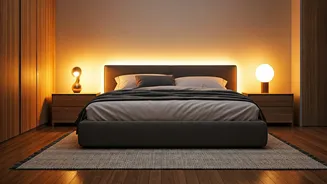
Warm amber light, on the other hand, is forgiving and flattering. It makes skin tones look healthier, adds richness and depth to the colours of your furniture and decor, and creates soft, gentle shadows that add a sense of mystery and dimension to a room. It’s the key to achieving that coveted feeling of ‘hygge’—the Danish concept of cozy contentment. By simply changing your bulbs, you can make your living room feel more inviting for guests, your dining room more intimate for meals, and your bedroom a true haven for relaxation.
Your Practical Guide to Making the Switch
Ready to transform your home? It’s easier than you think. Here’s what to look for:
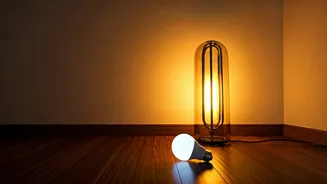
1. Check the Kelvin (K): This is the most important number. Ignore watts and focus on the colour temperature, measured in Kelvin. For that soft, cozy glow, look for bulbs rated between 2200K and 2700K. Anything labelled “Soft White” or “Warm White” is usually in this range, but always check the “Lighting Facts” on the box to be sure. Avoid “Cool White” (around 4000K) or “Daylight” (5000K+) for your relaxation zones.
2. Think by Room: You don’t need to change every bulb. Bedrooms, living rooms, and dens are the highest-priority areas for warm light. You might prefer brighter, cooler light in task-oriented spaces like a kitchen prep area, a workshop, or a bathroom vanity where colour accuracy is key. The goal is layered lighting, not a one-size-fits-all solution.
3. Embrace Dimmers: Installing dimmer switches is the ultimate upgrade. Pairing a warm-toned bulb with a dimmer allows you to adjust the brightness to suit any activity, from bright enough to read to a low, moody glow for watching a movie. Many modern LED bulbs are dimmable, but check the packaging to ensure compatibility.