





Decoding Your 'Hidden' Metabolism
You might think your daily calorie burn comes from two things: your resting metabolism and your workouts. But there's a third, often overlooked, factor: Non-Exercise Activity Thermogenesis, or NEAT. This term describes the energy you expend doing everything
that isn't sleeping, eating, or structured exercise. It’s the energy used for walking to the kitchen, fidgeting during a meeting, carrying groceries, or even just standing instead of sitting. While each action seems minor, their cumulative effect can be significant, accounting for a large portion of the variation in daily energy expenditure between people.
The Problem with Prolonged Sitting
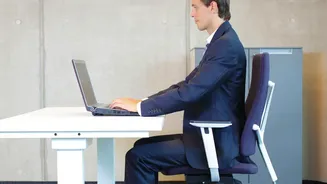
The modern workday, for many, is defined by long hours spent in a chair. This prolonged sitting has been linked to a host of health concerns, including an increased risk of obesity, diabetes, and cardiovascular disease. A major reason for this is that sitting dramatically reduces your NEAT. When you're seated, your largest muscle groups are largely inactive, and your overall energy expenditure plummets. Studies have shown that people with obesity may spend more time seated compared to their leaner counterparts, highlighting the impact of these daily habits. Essentially, our chairs are working against our body's natural need for movement.
How Standing Desks Increase NEAT
This is where a standing desk becomes a simple yet effective upgrade. By choosing to stand for portions of your workday, you immediately engage more muscles in your legs, core, and back just to keep yourself upright. This constant, low-level muscle engagement requires more energy than sitting, directly increasing your NEAT calorie burn without you having to think about it. It transforms static, passive time into an active state. Studies show standing burns more calories per minute than sitting, and while the number may seem small, it adds up significantly over a day, a week, and a year.
The Calorie-Burning Math
So, what kind of difference are we talking about? On average, standing burns approximately 20 to 50 more calories per hour than sitting, depending on factors like your body weight. For someone weighing around 77 kg, sitting might burn about 100 calories per hour, while standing could burn closer to 138 calories. If you were to substitute six hours of sitting with standing, you could burn an extra 54 calories a day. That might not sound like a marathon, but over a year, it could equate to over five pounds, all else being equal. The key is consistency; this small change integrates more activity seamlessly into your existing routine.
Beyond the Calorie Burn
The benefits of a standing desk go far beyond just NEAT. Users often report improved mood and higher energy levels. Standing can also help reduce back pain by encouraging better posture and strengthening core muscles. Furthermore, breaking up long periods of sitting by standing can improve blood circulation and may help regulate blood sugar levels, especially after meals. It's a holistic upgrade that contributes to overall well-being, not just a weight management tool.
Making the Switch Work for You
Switching to a standing desk doesn't mean you should stand all day. In fact, prolonged standing can lead to its own set of issues like foot and leg fatigue. The goal is balance. Start by standing for 30-60 minutes at a time, and alternate with periods of sitting. Listen to your body. Ensure your desk is set up ergonomically: your monitor should be at eye level, and your elbows should be at a 90-degree angle to the desktop to avoid strain on your neck and wrists. Using an anti-fatigue mat and wearing supportive shoes can also make standing for longer periods much more comfortable.