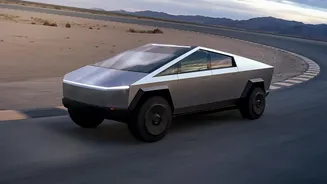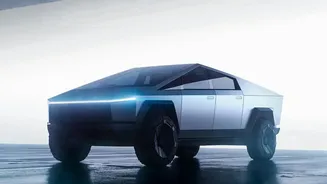







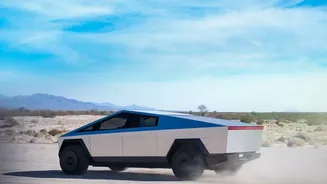
Tesla’s Cybertruck has been a symbol of futuristic ambition since its reveal. Now, a new production timeline extending to summer 2027 offers a dose of reality, revealing just how challenging it is to bring such a radical vehicle to the masses.
A New Horizon for Production
Recent reports
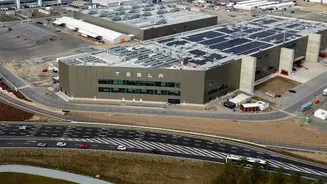
based on internal communications, including a memo from CEO Elon Musk, have clarified Tesla's production goals for the Cybertruck. The new plan outlines a roadmap to achieve a stable, mass-production volume of approximately 250,000 units per year by the summer of 2027. It's crucial to understand that this is not a 'delay' in the traditional sense, as deliveries of the Cybertruck have already begun. Rather, it is a strategic adjustment, setting a longer-term and perhaps more realistic target for when the Gigafactory in Texas will be running at full capacity. This timeline extension signals that the journey from initial, low-volume production to fulfilling a backlog of over a million reservations will be a marathon, not a sprint.
The Unprecedented Manufacturing Puzzle
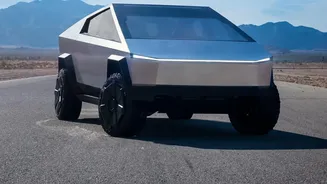
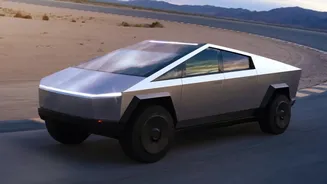
The core reason for this extended production ramp-up lies in the Cybertruck's revolutionary, yet notoriously difficult, design. The vehicle’s most striking feature—its exoskeleton made of ultra-hard stainless steel—is also its biggest manufacturing hurdle. Unlike traditional automotive production that uses stamped steel or aluminum panels, working with this rigid alloy requires entirely new processes for shaping, welding, and finishing. Musk himself has acknowledged the immense difficulty, noting that manufacturing a product that breaks convention is a monumental task. Furthermore, scaling the production of Tesla’s proprietary 4680 battery cells, which are essential for the Cybertruck's performance and efficiency, remains a critical bottleneck. Achieving consistent quality and high volume for both the steel body and the advanced batteries is a complex industrial dance that Tesla is now scheduling over the next few years.
A Long Wait for Eager Buyers
For the hundreds of thousands of reservation holders, this news provides clarity, but also confirms a long wait ahead. While a trickle of early-production models is making its way to customers, the vast majority of people who placed a deposit years ago will likely not see their vehicle until 2025, 2026, or even early 2027. The production rate of 250,000 units per year is a future target, meaning the current output is significantly lower. This extended timeline may test the patience of many would-be owners, some of whom have held a spot in line since 2019. The slow ramp-up also raises questions about potential price adjustments and configuration availability as production slowly matures and material costs fluctuate over the coming years.
Navigating a Competitive EV Truck Market
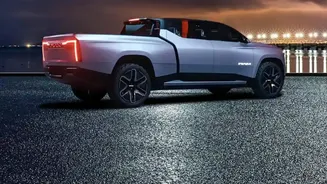
While Tesla tackles its unique manufacturing challenges, the electric truck market has not stood still. Competitors like Ford with its F-150 Lightning and Rivian with its R1T have already established a strong presence, having been on the market for several years. These companies are capturing market share and building brand loyalty among truck buyers transitioning to electric. However, Tesla is betting that the Cybertruck’s unparalleled design and promised performance will keep it in a class of its own, insulating it from direct competition. The 2027 timeline can be seen as a calculated move, reflecting Tesla's confidence that the demand for its disruptive product will remain strong, even if customers have to wait. The company is prioritizing getting the manufacturing process right over rushing a flawed product to market, a strategy that could pay dividends in the long run if it results in a higher-quality vehicle.