
A dining nook offers a cosy, intimate spot for meals, but in a compact room, it can quickly feel cluttered. With a few strategic design choices, however, you can create a charming and spacious-feeling dining area that enhances your home.
Choose a Space-Saving Table
The right table
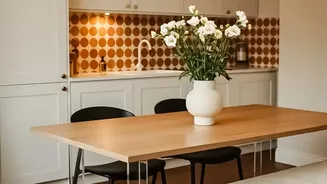
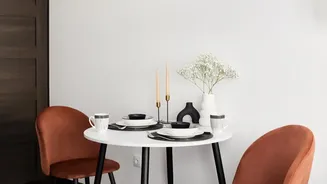
is crucial for a dining nook that feels open. Round or oval tables are ideal because they lack sharp corners, which improves traffic flow and makes the space feel less constricted. A pedestal base is another game-changer, as it eliminates bulky legs and frees up valuable floor space, allowing you to tuck chairs in more easily and creating more legroom. For very tight spots, consider a drop-leaf or extendable table that can be made smaller for daily use and expanded only when you have guests. A table with a glass or light-coloured top can also make the area feel less heavy and more open by allowing light to pass through or reflect off its surface.
Embrace Banquette Seating
Banquette or bench seating is a small nook's best friend. By pushing a bench flush against one or two walls, you eliminate the need for space behind chairs, which can save a significant amount of room. An L-shaped banquette tucked into a corner is especially efficient, as it makes use of an often-awkward space and can seat more people than individual chairs. For added functionality, opt for a banquette with built-in storage under the seat, perfect for stashing away table linens, seasonal decor, or other items to keep the area clutter-free. On the open side of the table, use slim, armless chairs that are visually lightweight and can be tucked away neatly.
Lighten Up the Space
Good lighting is essential for making any small space feel larger. If possible, position your nook near a window to take advantage of natural light, which creates a bright and airy atmosphere. For artificial lighting, a single pendant light hung over the center of the table defines the zone without taking up floor space. Choose a fixture that is visually light, such as one made of glass or with a slim profile. Wall sconces are another excellent option, as they provide ambient light without cluttering the table or ceiling. Adding a dimmer switch will allow you to adjust the mood from bright and functional to soft and intimate.
Use Color and Mirrors Strategically
Your color palette can dramatically affect the perception of space. Lighter, neutral colors like soft whites, beiges, and pale greys on the walls will make the nook feel more open and expansive. Painting the walls, trim, and even the ceiling the same color can erase visual boundaries and make the room appear taller and wider. To create the illusion of more space, hang a large mirror on the wall opposite a window or light source. The mirror will bounce light around the room and create a sense of depth, effectively making the nook feel double its size.
Define the Zone with a Rug
In an open-plan living area or a larger room, a rug can help define the dining nook and make it feel like an intentional, distinct space. A rug anchors the furniture and adds a layer of texture and warmth, making the nook feel cosier and more inviting. When choosing a size, ensure that the rug is large enough so that the chairs remain on it even when they are pulled out from the table. This prevents chair legs from catching on the edge of the rug and creates a more cohesive, polished look. A patterned rug can also add personality without overwhelming the small area.