



The Challenge of Breathable Air
On Earth, we take our planet's massive, self-regulating life support system for granted. In the sealed environment of a spacecraft or a lunar habitat, it’s a different story. Astronauts exhale carbon dioxide (CO2), which is toxic in high concentrations.
On the International Space Station (ISS), this CO2 is scrubbed from the air using complex physico-chemical systems. These systems are reliable but require regular maintenance and resupply of consumables from Earth. For short missions in low-Earth orbit, this is manageable. But for long-duration stays on a lunar station like the planned Gateway, or an eventual Mars mission, relying on resupply missions is not a sustainable option. A new approach is needed—one that closes the loop.
Enter the Bioreactor
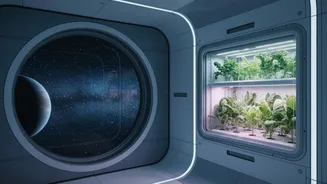
This is where bioregenerative life support systems come into play. The star of this approach is the photobioreactor, a device that uses living organisms—most commonly, algae—to perform critical life support functions. In essence, NASA and its international partners like the European Space Agency (ESA) are looking to harness one of nature's most efficient processes: photosynthesis. By cultivating algae, such as the species Chlorella vulgaris, in a controlled environment, engineers can create a living system that scrubs CO2 from the air and, as a byproduct of photosynthesis, produces fresh oxygen for the crew to breathe.
How Algae Power the System
The concept is both elegant and powerful. Cabin air containing the crew's exhaled CO2 is circulated through the photobioreactor, which is a container filled with water and a culture of algae, exposed to a light source. The algae absorb the CO2 and, through photosynthesis, convert it into organic matter (biomass) and release oxygen. This oxygen is then returned to the cabin's atmosphere. Experiments like the German Aerospace Center's PBR@ACLS, tested on the ISS, have demonstrated the potential of these hybrid systems, where a photobioreactor works alongside traditional chemical systems to increase overall efficiency. The goal is to create a fully closed-loop system where the biological and mechanical components work in harmony to maintain a breathable atmosphere indefinitely, with minimal input from Earth.
More Than Just Air
The benefits of bioreactors extend beyond just air revitalization. The rapidly growing algal biomass is a source of protein and other nutrients, meaning these systems could double as a food production source for the crew. This helps solve another major logistical challenge of deep-space missions: packing enough food. Furthermore, these biological systems are being designed to integrate with water and waste recycling. Recent NASA projects, like the Divergent Deployable Wastewater Treatment Facility being tested at the University of North Dakota, use different types of bioreactors to process wastewater from the crew. This system can convert human waste into nutrient-rich water suitable for hydroponic plant growth, creating another source of fresh food and further closing the resource loop.
From Lab to Lunar Gateway
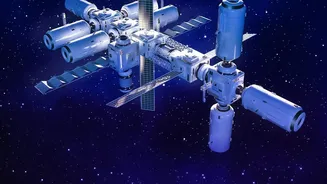
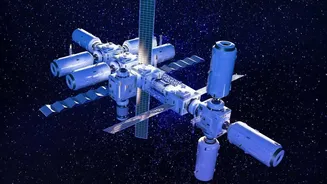
The technology is a critical component for future outposts. NASA's Artemis program plans to establish the Gateway, a small space station in lunar orbit that will serve as a staging point for missions to the Moon's surface and eventually Mars. For astronauts living and working on Gateway for months at a time, a regenerative life support system is not a luxury, it's a necessity. International partners are heavily involved in developing these systems. For instance, the Japan Aerospace Exploration Agency (JAXA) is contributing to the life support systems for the Lunar I-Hab module. While many of these bioreactor systems are still in the advanced testing phase on Earth and on the ISS, they represent the technological leap required to make a sustained human presence beyond our planet a reality.