








What Is ‘Earthing’?
At its core, the trend is rooted in the concept of ‘earthing’ or ‘grounding’. Proponents believe that making direct physical contact with the Earth’s surface transfers free electrons from the ground into the body. This, they claim, can help neutralise
free radicals, reduce inflammation, improve sleep, and lower stress. Walking barefoot on natural surfaces like grass, dirt, or sand is the most common way to practise it. While many of these claims are popular in wellness circles, they are often viewed with scepticism by the mainstream medical community, which points to a lack of large-scale, high-quality studies. However, the conversation doesn't end there. Separate from the theory of electrical transfer, the physical act of walking barefoot has well-documented benefits that are much less controversial.
The Real Benefits for Your Feet
Putting aside the electrical theories, let’s talk about biomechanics. Our feet, with their complex network of 26 bones, 33 joints, and over 100 muscles, tendons, and ligaments, are engineering marvels. Constantly encasing them in rigid, cushioned shoes can weaken these intricate muscles and dull the sensory feedback from the ground to your brain. Walking barefoot, a practice known as ‘proprioception’, stimulates the thousands of nerve endings in your soles. This enhances your brain's awareness of your body's position in space, improving balance and stability. Furthermore, it encourages a more natural gait, often leading you to land on the midfoot or forefoot rather than crashing down on your heel. This can reduce impact forces travelling up your legs and spine.
So, What's the Posture Connection?
This is where the headline's claim comes into focus. Poor posture often starts from the ground up. Weak foot muscles or unnatural gait patterns caused by ill-fitting shoes can lead to a chain reaction of misalignment. Your ankles might roll inward, causing your knees to turn, which in turn can tilt your pelvis and force your spine out of its natural curve. By strengthening the muscles in your feet and ankles, walking barefoot creates a more stable foundation for your entire body. The improved proprioception helps your body make subtle, automatic adjustments to maintain balance and alignment. Over time, this stronger, more aware foundation can contribute to a more upright and efficient posture. It’s not a magic fix, but a logical consequence of improving your body’s base of support.
Why Damp Grass Specifically?
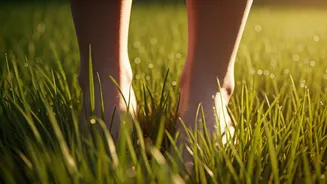
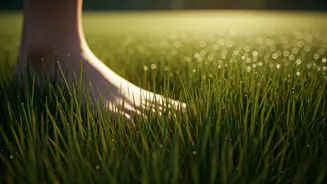
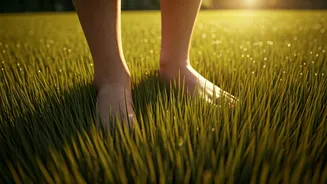
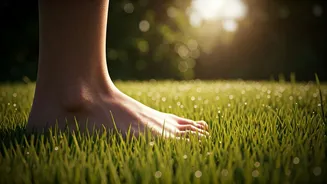
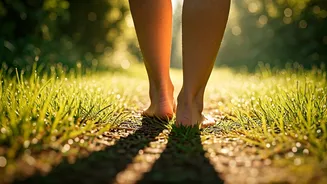
The ‘damp’ part of the trend comes from the earthing theory, which suggests that moisture increases conductivity, supposedly enhancing the transfer of electrons from the earth. From a purely physical standpoint, damp grass is soft and yielding, providing a gentle and sensory-rich surface. The cool moisture can also be soothing and refreshing, adding a psychological element of calm and connection to nature. For many people, the feeling of dew-kissed grass under their feet is a powerful stress reliever in itself, a form of mindfulness that grounds them in the present moment. So, while the scientific jury is out on the electrical benefits, the sensory experience is undeniably pleasant and calming for many.
A Reality Check: Is It Safe?
Before you rush out to your local park, it’s crucial to consider safety. The world inside your shoes is sterile; the world outside is not. Public parks and lawns can hide sharp objects like glass, stones, or thorns. There's also the risk of bacterial and fungal infections. In India, especially during and after the monsoon, damp soil can be a breeding ground for bacteria, including the kind that causes leptospirosis. Always choose your location carefully. A clean, private garden is ideal. If you're in a public space, scan the area thoroughly before you begin. Start with short durations, just 5-10 minutes, to allow your feet to adapt. If you have diabetes or any condition that causes reduced sensation in your feet (neuropathy), you should avoid walking barefoot outdoors due to the high risk of injury and infection.