





The Great Airline Unbundling
Not long ago, an airline ticket was a relatively all-inclusive package. Your fare covered your seat, a meal on longer flights, and the transport of both you and your luggage. But starting around 2008, facing financial pressures and rising fuel costs,
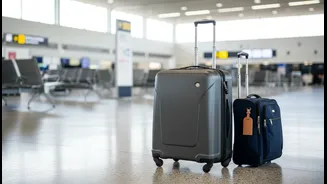
major airlines began a process called "unbundling". This involved stripping services out of the base ticket price and selling them back to customers separately. The first and most significant item to be unbundled was the checked bag. Airlines argued this allowed them to offer lower base fares, benefiting travelers who packed light. In reality, it created a massive new revenue stream. This category, known as ancillary revenue, is projected to reach an astounding $145 billion globally in 2026, making up nearly 14% of total airline income.
A Fee or a Feature?
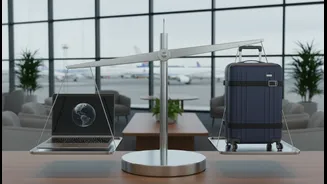
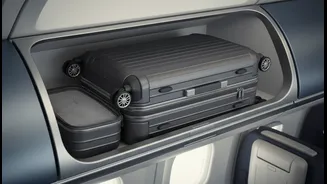
The psychological effect of unbundling has been profound. Seeing a fee for a checked bag feels like a penalty, an extra cost for something that feels essential to travel. This is where a change in perspective becomes a powerful tool for the consumer. Instead of viewing the cabin bag as a perk or an add-on, we should view it as an integral feature of the product we are buying, which is air transportation. The ability to carry a reasonable amount of belongings is not an accessory to the journey; for most people, it is the journey. When an airline removes this from the base fare, they are not adding a fee, they are degrading the core product and then charging you to restore it to its expected state. This isn't just semantics; it changes how you evaluate the price from the very beginning.
The Indian Airspace
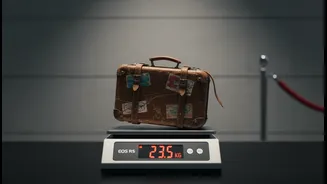
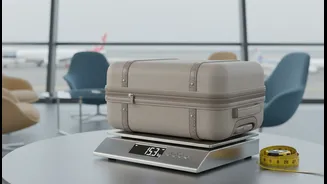
In India, the rules are slightly different but the principle holds. The Bureau of Civil Aviation Security (BCAS) and the Directorate General of Civil Aviation (DGCA) mandate a standard allowance, which for most domestic economy passengers is one cabin bag of up to 7 kg, plus a small personal item like a handbag or laptop bag. However, enforcement has become much stricter, and the concept of unbundling is taking hold in other ways. For example, IndiGo recently introduced a 'Lite' fare, offering a discount for passengers traveling with only cabin baggage. This frames the checked bag as an extra purchase. But if we flip the perspective, the standard fare now implicitly includes the cost of that checked bag. Recognizing this allows you to see the true price of travel from the outset, rather than feeling surprised by charges for what should be a standard inclusion.
How to Be a Smarter Traveller
Adopting this mindset has practical benefits. When searching for flights, ignore the headline fare. That number is often an illusion designed to lure you in. Instead, use flight comparison tools that allow you to filter prices including baggage. When you see the full, all-in price, you can make a genuine comparison. A flight that looks ₹2,000 cheaper on its base fare may end up being more expensive once you add the cost of your bag back in. Think of the total cost as the 'real' ticket price. This approach forces transparency and prevents you from falling for the psychological trick of a low entry price followed by a series of mandatory 'upgrades'. You are not buying add-ons; you are simply reassembling the complete product that you needed in the first place.