



The Soul of Bengal: Nolen Gurer Payesh
In Bengal, winter brings with it a prized culinary treasure: nolen gur, or fresh date palm jaggery. This seasonal ingredient is the heart and soul of Nolen Gurer Payesh, a creamy rice pudding that defines Bengali winter celebrations. [36, 35] Made with fragrant,
small-grained Gobindobhog rice, full-fat milk, and the star ingredient, nolen gur, this payesh has a distinctively smoky, caramel-like sweetness that sugar can't replicate. [27, 34] The jaggery imparts a beautiful light brown colour and an aroma that is both rustic and deeply comforting. [36] Traditionally prepared for festivals like Poush Sankranti, this dish is not just a dessert but an experience, connecting generations to the agricultural rhythms and sweet traditions of the region. [35]
A Royal Treat for Eid: Sheer Khurma
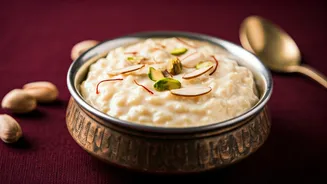
Come Eid, and kitchens across the Indian subcontinent are filled with the rich aroma of Sheer Khurma. [26] Translating to "milk with dates" in Persian, this festive dessert is a celebratory breakfast dish marking the end of Ramadan. [15, 28] It’s a luxurious and creamy pudding made by simmering fine vermicelli (seviyan) in milk, sweetened with sugar, and loaded with dates (khurma). [14, 15] A generous helping of ghee-fried nuts like almonds, pistachios, and cashews adds a delightful crunch and richness. [32, 28] While recipes vary from family to family—some preferring it thin, others thick and creamy—the essence of Sheer Khurma remains the same: a symbol of joy, togetherness, and sweet beginnings. [14, 26]
Kerala’s Festive Pride: Ada Pradhaman
No Onam sadya (feast) in Kerala is complete without a serving of Ada Pradhaman. [3, 9] Considered the king of desserts in the region, this is a unique type of payasam that uses rice flakes called 'ada'. [9, 3] Traditionally, these flakes are made from scratch, but ready-made versions are now common. The ada is cooked in a luscious mixture of coconut milk and jaggery, which gives it a deep, earthy sweetness and a distinctly southern flavour profile. [2, 7] Unlike milk-based kheers, the use of coconut milk—often in three stages of thickness—lends it a unique creaminess without being dairy-heavy. [10] Garnished with coconut bits and cashews fried in ghee, Ada Pradhaman is a true taste of God's Own Country. [3, 9]
The Fasting Favourite: Makhane Ki Kheer
When fasting days like Navratri or Mahashivratri come around, Makhane ki Kheer becomes a go-to dessert in many North Indian homes. [4] This kheer is made from phool makhana, or puffed fox nuts, which are light, airy, and highly nutritious. [4, 13] The makhana are first roasted in ghee until they become crisp, which prevents them from becoming chewy in the milk. [4, 16] They are then simmered in milk, which slowly thickens as the makhana soften and release their starch. [4, 31] Often flavoured with cardamom and saffron and sweetened with sugar or condensed milk, the resulting kheer has a unique, almost melt-in-the-mouth texture. It's a dish that is both light enough for a fast and satisfying enough for a celebration. [4, 13]
Hyderabad’s Hidden Gem: Gil-e-Firdaus
Meaning 'Clay of Paradise', Gil-e-Firdaus is a heavenly dessert from the royal kitchens of Hyderabad. [22, 11] While lesser known than other kheers, it is a staple at Hyderabadi weddings and celebrations. [24, 18] What makes this kheer unique is its surprising main ingredient: grated bottle gourd (lauki or kaddu). [11, 22] This is combined with sago pearls (sabudana), basmati rice, and milk, which are slow-cooked to a thick, creamy consistency. [24] Enriched with khoya, condensed milk, and a paste of almonds, the final dish is exceptionally rich and fragrant. [11, 22] Served chilled in earthen bowls, Gil-e-Firdaus is a testament to the intricate and luxurious culinary traditions of the Nizams. [11]