





A New Era of Propulsion
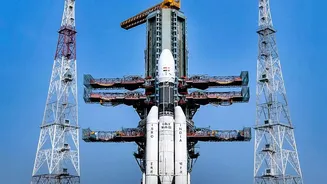
For decades, satellites have navigated space using chemical propulsion. This is similar to the large rockets that launch them from Earth, relying on controlled chemical reactions to produce thrust. This method is powerful but has a significant drawback:
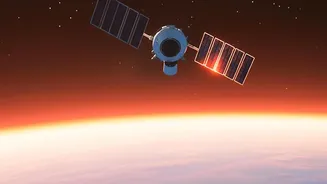
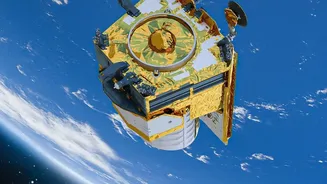
it requires a large amount of heavy fuel. A substantial portion of a satellite's launch weight is just the propellant it needs for tiny adjustments to maintain its correct position, or 'station-keeping', over its lifetime. This is where ISRO's new direction comes in. The agency is moving towards electric propulsion systems, specifically Stationary Plasma Thrusters (SPTs), which represent a fundamental shift in how satellites operate millions of kilometres away from home. In March 2025, ISRO successfully completed a 1,000-hour life test on a 300mN (millinewton) plasma thruster, a critical milestone demonstrating the system's reliability for future missions.
How Do Plasma Thrusters Work?
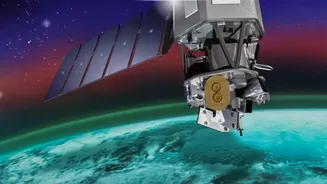
Instead of a fiery chemical reaction, a plasma thruster uses electricity to create and accelerate a stream of charged particles, or plasma. Think of it like a highly efficient, super-powered garden hose. The system takes a small amount of an inert gas, typically xenon, and uses electrical power from the satellite's solar panels to strip electrons from the atoms. This process creates a cloud of positively charged ions—plasma. A magnetic field then accelerates these ions at extremely high speeds out of the thruster. This gentle but continuous stream of particles produces a small amount of thrust. While the force is tiny at any given moment (measured in millinewtons, or thousandths of a newton), its incredible efficiency is the real game-changer. This method provides a much higher 'specific impulse,' which is the engineering term for how much push you get from a certain amount of fuel. ISRO's plasma thrusters are at least six times more efficient than conventional chemical systems.
The Weight-Loss Advantage
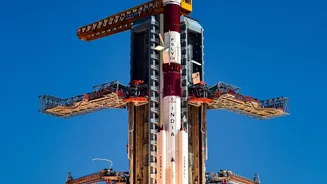
The primary benefit of this high efficiency is a massive reduction in the amount of fuel a satellite needs to carry. Chemical propulsion systems are thirsty, requiring hundreds of kilograms of propellant. In contrast, an electric propulsion system can achieve the same orbital manoeuvres with a fraction of that mass. This weight saving is a huge advantage for ISRO. When a satellite is lighter, it costs less to launch. More importantly, the mass saved on fuel can be reallocated to the satellite's primary mission. This means a communication satellite can carry more transponders, increasing its data-handling capacity. An Earth observation satellite can be fitted with more advanced sensors, and a scientific probe can host more instruments. Essentially, ISRO can launch more capable and commercially valuable satellites on the same rockets, like the PSLV and LVM3, making each launch more productive.
Extending a Satellite's Lifespan
A satellite's operational life is often not determined by its electronic components failing, but by it running out of fuel. Once it can no longer make the precise adjustments to fight gravitational pulls and stay in its designated orbit, it is considered defunct. Because plasma thrusters are so fuel-efficient, a satellite equipped with them can continue making these station-keeping manoeuvres for a much longer time. This has the potential to double the service life of some satellites. An operational lifespan extended from 10 years to 15 or even 20 years means a greater return on a very expensive investment. For a country like India, which relies on its satellite constellations for communication, broadcasting, weather forecasting, navigation, and national security, longer-lasting assets in space translate directly into more robust and reliable services on the ground for a longer period.
India's Strategic Edge in Space
ISRO's adoption of this technology is not just an engineering upgrade; it is a strategic move. The global space economy is increasingly competitive, and the ability to launch lighter, more powerful, and longer-lasting satellites gives India a significant commercial advantage. It makes ISRO and its commercial arm, NSIL, more attractive to international customers looking to launch their own satellites. Internally, this technology will be crucial for ambitious future projects, including the Gaganyaan human spaceflight mission and the proposed Bharatiya Antariksh Station (Indian Space Station). The technology is slated for validation on the upcoming Technology Demonstration Satellite (TDS-01). By mastering electric propulsion, ISRO is ensuring that India's space program remains efficient, cost-effective, and at the cutting edge of global innovation.