






The Daily Gamble of a Rose Farmer
Floriculture in India is a significant industry, with small and marginal farmers forming its backbone. For those cultivating roses around Bengaluru, a major hub for the flower trade, the business is fraught with uncertainty. A freshly cut rose has a very
short shelf-life, meaning farmers must sell their harvest almost immediately. This leads to a situation known as distress selling, where they are forced to accept whatever price is offered at the market that day, even if it is below their cost of production. The alternative is spoilage. Without access to cold storage, a delay of even a day can mean wilted petals and lost income. This problem is compounded by market volatility; prices for roses can fluctuate wildly, soaring during festival seasons like Diwali and weddings, but plummeting during periods of low demand. For a small farmer, being unable to wait for the right price represents a massive financial risk and a barrier to profitability.
A Sun-Powered Solution Arrives
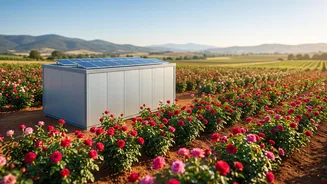
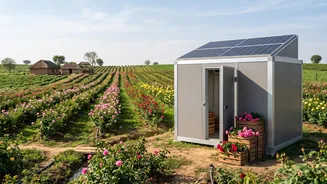
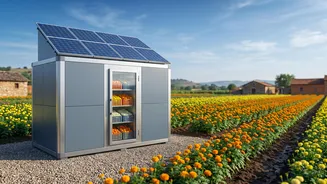
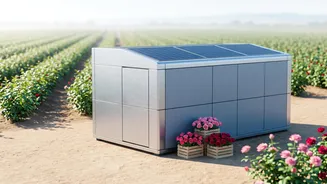
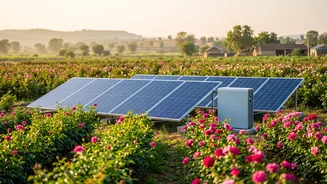
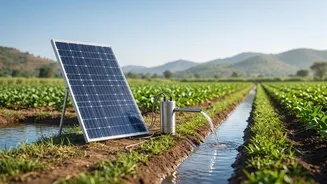
Enter solar micro-warehousing, a more technical name for small, decentralised, solar-powered cold storage units. These are not the massive, centralised warehouses that are often located far from rural farms and are too expensive for smallholders. Instead, these are compact units, with capacities ranging from two to twenty metric tonnes, that can be installed directly on or near farms. Powered by solar panels, these systems are a game-changer in rural areas where grid electricity can be unreliable or completely absent. By harnessing the sun's energy, they provide a consistent, low-cost cooling solution that is perfectly suited to the needs of agricultural communities. Companies and social enterprises are now deploying these units across India, often in partnership with Farmer Producer Organisations (FPOs), making the technology accessible to groups of farmers rather than just individuals.
How Cold Storage Rewrites the Rules
The principle is simple, but its impact is profound. By storing their roses in a cold environment (typically between 2 and 15 degrees Celsius), farmers can extend the flowers' vase life by several days. This crucial buffer of time completely changes their market power. Instead of being price-takers forced into a distress sale, they become price-setters who can choose when to sell. They can aggregate their produce and wait for market prices to improve, effectively timing their entry into the market to coincide with peak demand. One project implemented by The Energy and Resources Institute (TERI) in Sadali, a village in Karnataka's Chikkaballapura district near Bengaluru, demonstrates this perfectly. Local horticulture farmers, including those growing roses, gained access to a solar-powered cold room. This allowed them to store their produce affordably, reducing spoilage and giving them the leverage to negotiate better prices instead of selling immediately at the nearest market yard.
The Financial Ripple Effect
The reduction in financial risk is not theoretical; it translates into tangible income gains. Studies and reports from organisations deploying these technologies show that farmers can see their income increase by as much as 30 percent. This boost comes from two primary sources: significantly reduced post-harvest losses and higher average selling prices. Less waste means more product to sell, and the ability to hold produce means selling it at a better price. Furthermore, many FPOs are adopting a "Cooling-as-a-Service" (CaaS) model. Here, farmers can rent space in a shared cold storage unit for a nominal fee, making the benefits accessible without requiring a large upfront investment. For instance, one FPO in Karnataka began charging just ₹10 per crate for storage after an initial free period, empowering even the smallest farmers. This model not only reduces individual risk but also fosters community cooperation and resilience.
The Future is Climate-Smart
Solar micro-warehousing is more than just a fix for floriculture; it represents a broader shift towards climate-smart, resilient agriculture. These systems reduce reliance on fossil fuel-powered generators and unstable electrical grids, lowering both operational costs and carbon footprints. The success with roses and other flowers is a proof-of-concept for a wide range of other perishable goods, from fruits and vegetables to dairy products. As India continues to focus on strengthening its agricultural supply chains and empowering its farmers, such decentralised, renewable energy solutions are critical. They address the core challenges of infrastructure gaps and market access at the grassroots level. For the rose farmers of Bengaluru and beyond, it means their hard work is no longer a race against the clock, but a sustainable business with a brighter, more secure future.