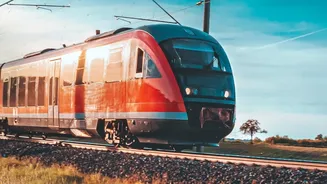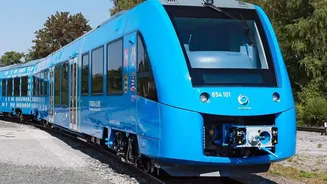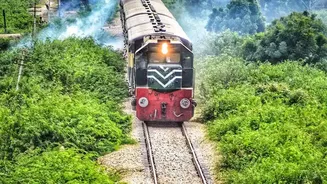





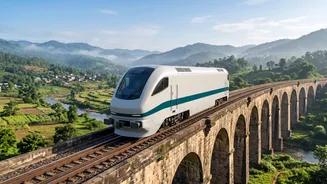
What Exactly is a Hydrogen Train?
Think of a hydrogen train as a self-contained, mobile power plant. Unlike diesel locomotives that burn fuel or electric trains that draw power from overhead wires, a hydrogen locomotive creates its own electricity. It does this through a device called
a fuel cell, which chemically combines hydrogen stored in onboard tanks with oxygen from the air. This reaction generates electricity to power the motors, with the only emission being clean, harmless water vapour. It’s a zero-emission solution that’s remarkably quiet, promising to transform the ambient sounds of scenic travel from the roar of a diesel engine to the gentle hum of progress.
A Landmark Moment for Indian Railways
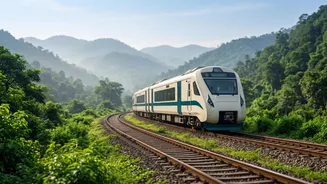
The revolution isn't just a distant dream; it has already begun. In July 2026, Indian Railways flagged off its first-ever hydrogen-powered train on the Jind-Sonipat section of the Northern Railway. This indigenously developed train, a proud achievement under the 'Atmanirbhar Bharat' initiative, serves as a crucial pilot project. By operating on a regular passenger route, it allows the railways to test the technology's performance, safety, and reliability under real-world Indian conditions. The experience gained from this initial rollout is the foundation upon which the future of hydrogen rail in India is being built, marking the country's entry into a select group of nations pioneering this advanced technology.
The ‘Hydrogen for Heritage’ Vision
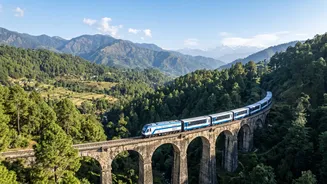
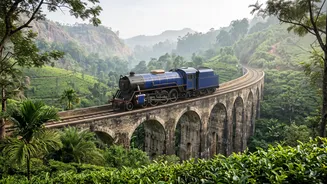
The true magic of this initiative lies in the 'Hydrogen for Heritage' project. Indian Railways has an ambitious plan to deploy 35 hydrogen trains across its most cherished and ecologically sensitive heritage routes. These include the iconic narrow-gauge lines like the Kalka-Shimla Railway, the Darjeeling Himalayan Railway, and the Nilgiri Mountain Railway. These UNESCO World Heritage sites often run through pristine natural landscapes where the noise and pollution from traditional diesel engines are particularly intrusive. Furthermore, the challenging terrain and heritage status of these lines make overhead electrification difficult or undesirable. Hydrogen offers a perfect solution: a clean, quiet power source that preserves both the environment and the historical integrity of these beloved 'toy trains'.
More Than Just a Scenic Ride
While the initial focus is on heritage tourism, the strategic importance of hydrogen power extends far beyond scenic routes. This push is a key part of India's larger goal to achieve net-zero carbon emissions by 2030 and reduce its heavy reliance on imported diesel fuel. Each hydrogen train in operation directly cuts down on greenhouse gas emissions and air pollutants. The successful pilot on the Jind-Sonipat line has already demonstrated significant diesel savings. By mastering this technology, India not only moves towards its climate goals but also fosters domestic innovation, creating a self-reliant ecosystem for next-generation transport solutions.
The Challenges on the Track Ahead
Despite the immense promise, the track to a full-scale hydrogen revolution has its obstacles. The primary challenge is cost and infrastructure. Producing 'green' hydrogen—which is made using renewable energy—is currently more expensive than diesel or electricity. Moreover, a whole new ecosystem for the production, transportation, and safe storage of hydrogen needs to be built from the ground up, requiring massive capital investment. While the pilot project at Jind included the creation of a dedicated refuelling facility, scaling this across multiple remote, hilly heritage routes is a complex logistical puzzle. These economic and infrastructural hurdles mean that the transition will be gradual rather than overnight.