





Could cancer, Alzheimer's, and heart disease become 'relics of the past' within a decade? That's the audacious prediction from Anthropic CEO Dario Amodei, a top leader in artificial intelligence, sparking a major debate across science and tech.
The Bold Prediction
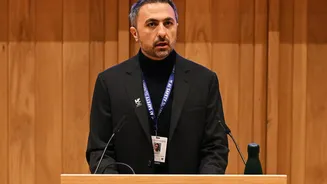
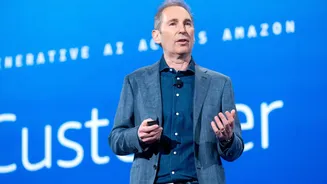
Dario Amodei,
the chief executive of AI powerhouse Anthropic, has repeatedly made headlines with his stunning forecast. During a recent video for his company's IPO roadshow, he stated that major diseases including cancer could be made historical footnotes in less than ten years, thanks to the power of AI. He envisions an 'age of miracles' where AI accelerates biological research and drug discovery at a pace never seen before, compressing what might have taken a century of medical progress into a single decade. This isn't a one-off comment; Amodei has been vocal about this vision, arguing that as AI systems become more sophisticated, they will transform how we identify therapeutic targets and design new medicines.
The Case for AI-Driven Cures
The optimism from tech leaders like Amodei, and others such as Google DeepMind's Demis Hassabis, is rooted in AI's proven ability to solve massive biological puzzles. A prime example is DeepMind's AlphaFold, which predicted the structures of over 200 million proteins—a feat that has supercharged biological research. The theory is that next-generation AI can go further. It can analyse immense datasets of genetic information, clinical records, and cellular imagery to spot patterns humans can't. This could rapidly identify new drug targets, design novel molecules from scratch, and predict how they will behave in the body. Anthropic is already putting this into practice through partnerships with firms like Bristol Myers Squibb to accelerate immunotherapy and other treatments. The goal isn't just to find drugs faster, but to design better, more personalised ones with fewer side effects.
A Sobering Dose of Reality
However, many in the medical and pharmaceutical communities are highly skeptical of the ten-year timeline. Critics argue that while AI is a powerful tool for the discovery phase, it doesn't change the fundamental, time-consuming realities of bringing a drug to market. This includes years of rigorous laboratory research, animal testing, and multi-phase human clinical trials to prove safety and efficacy. These stages, along with regulatory approvals, are the main bottleneck in the 10-to-12-year drug development process. As one pharmaceutical executive noted, after evaluating thousands of drug compounds from AI companies, none have independently produced a working drug that has reached clinical adoption yet. Furthermore, cancer is not one disease but over 200 distinct, complex conditions, making the idea of a single 'cure' an oversimplification.
Skepticism from the Medical World
Medical experts have also voiced significant concerns. Germany's former health minister, Karl Lauterbach, called the ten-year prediction 'impossible', questioning whether tech leaders understand the complexities of medicine or are 'deliberately misleading the public'. Others, like cognitive scientist Gary Marcus, have pointed out that current AI lacks the true biological understanding and causal reasoning needed for consistent medical breakthroughs. Oncologists and researchers on the front lines agree that AI can create millions of hypotheses, but humans are still needed to design the experiments to determine which are true. Many see the bold claims as hype driven by the competitive AI market and IPO ambitions, creating expectations that science may struggle to meet.