



Getting Your Visas Sorted
For Indian passport holders, securing visas for both countries is a straightforward online process. For Vietnam, the 90-day e-visa is the most practical option. You can apply through the official government portal, a process that typically takes 3-5 working
days. Be sure to have a passport valid for at least six months, a digital photo, and a credit card to pay the fee, which is around $25 for a single entry. For Cambodia, Indian citizens can obtain either an e-visa online before departure or a visa on arrival at major airports and land borders. The e-visa, which costs about $36 including processing fees, is recommended to save time. The visa on arrival costs $30, payable in cash (US dollars). Both options grant a stay of up to 30 days.
Flights and Getting There
While direct flights are not always available, several airlines like IndiGo, AirAsia, Singapore Airlines, and Thai Airways offer convenient one-stop flights from Chennai (MAA) to Vietnam’s major hubs, Ho Chi Minh City (SGN) and Hanoi (HAN). Similarly, flights connect Chennai to Cambodia's key cities, Phnom Penh (PNH) and Siem Reap (REP), usually with a layover in a Southeast Asian city. A typical round-trip flight can take between 9 to 11 hours, including layovers. Booking a multi-city ticket—flying into Ho Chi Minh City and out of Siem Reap, for example—is often the most efficient way to structure your trip, saving you the time and cost of backtracking.
Crafting a 10-Day Itinerary
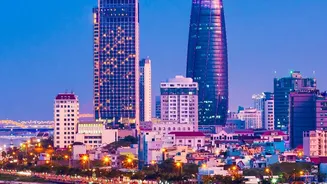
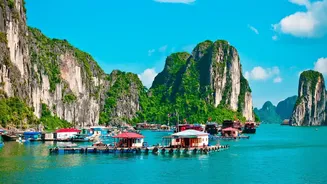
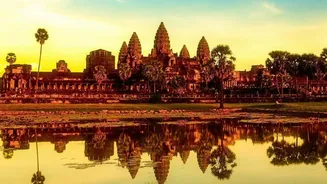
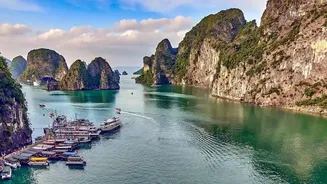
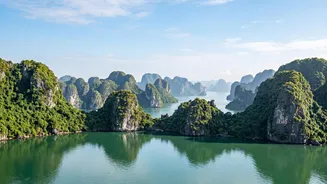
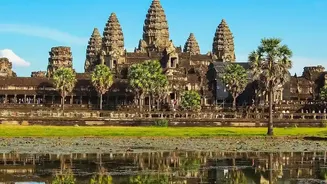
A 10-day trip allows you to experience the highlights of both nations. A popular route starts in southern Vietnam and moves into Cambodia. You could spend three days in and around Ho Chi Minh City, exploring the vibrant streets, the War Remnants Museum, and taking a day trip to the Mekong Delta. From there, travel overland or take a short flight to Cambodia. Dedicate two days to Phnom Penh to see the Royal Palace and learn about the country's history at the Tuol Sleng Genocide Museum. Finish your trip with three days in Siem Reap, the gateway to the magnificent temples of Angkor Wat, where you should set aside a full day to explore the main complex and another for surrounding temples like Angkor Thom and Ta Prohm. Alternatively, start in Hanoi, explore Ha Long Bay, and then fly to Siem Reap.
Crossing the Border
The most common way to travel between southern Vietnam and Cambodia is by bus. The journey from Ho Chi Minh City to Phnom Penh takes about six to seven hours, including the border crossing at Moc Bai (Vietnam) and Bavet (Cambodia). Several comfortable and reliable bus companies like Giant Ibis and Mekong Express operate this route, and their staff often assist passengers with the immigration process. The buses are air-conditioned and cost between $15 to $25. Flying is also an option, with direct flights connecting Ho Chi Minh City and Hanoi to both Phnom Penh and Siem Reap, taking about one to two hours. For a more scenic journey, you can even take a boat from Chau Doc in Vietnam’s Mekong Delta to Phnom Penh.
Money Matters: Currency and Budget
Vietnam's official currency is the Vietnamese Dong (VND), and it's best to use it for most transactions, from street food to local shopping. While some tourist-focused businesses may accept US dollars, you will get a better rate using the local currency. ATMs are widely available in cities. In Cambodia, the US dollar is the de facto currency for almost everything, from hotel bills to tuk-tuk rides. The local currency, the Cambodian Riel (KHR), is mainly used as small change for amounts less than a dollar. For a comfortable mid-range trip, budget around $50-$60 (₹4,200-₹5,000) per person per day in both countries to cover food, transport, and activities.
Culture and Etiquette
Both Vietnam and Cambodia are conservative societies where respect for elders and traditions is paramount. When visiting temples and pagodas, it is essential to dress modestly by covering your shoulders and knees. It is also customary to remove your shoes before entering temples and private homes. In Cambodia, the traditional greeting is the 'Sampeah,' a prayer-like gesture with a slight bow, which is always appreciated by locals. While handshakes are becoming more common in Vietnam, a polite nod and a smile are always a safe and respectful way to greet someone. Always ask for permission before taking photos of people, especially in rural areas and at religious sites.