


A New Polygon in the Solar System
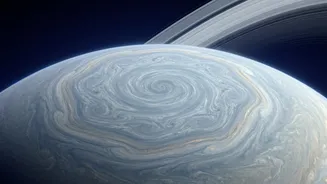
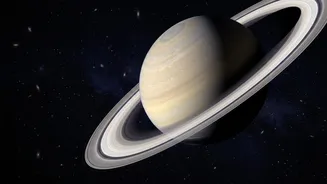
Saturn, the ringed jewel of our solar system, is known for its spectacular and sometimes bizarre weather. For over 40 years, scientists have been captivated by a massive, stable hexagonal jet stream at its north pole. Now, it has a southern counterpart.
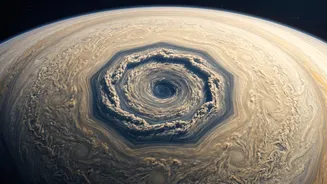
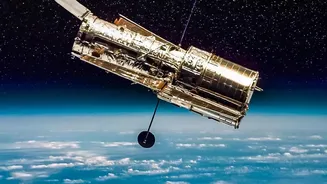
Recent observations from NASA's Hubble Space Telescope have revealed a giant, 10-sided atmospheric wave—a decagon—circling the planet's south pole. This is the first time such a large, regular-sided pattern has been spotted in the planet's southern hemisphere, and unlike the seemingly permanent northern hexagon, this one appears to be brand new and still growing stronger.
How the Discovery Was Made
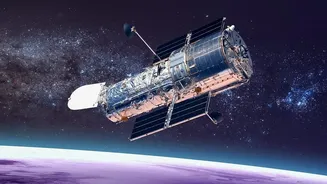
The discovery was a patient game of cosmic hide-and-seek. The decagon was first hinted at in images from 2023, captured as part of Hubble's Outer Planet Atmospheres Legacy (OPAL) program, which annually photographs our solar system's outer planets. As Saturn's seasons changed due to its axial tilt, its south pole gradually came into better view from Earth. This improved vantage point allowed researchers, including amateur astronomers, to notice a faint, wavy pattern in 2024, which became much more defined in subsequent observations into 2025. While NASA's Cassini spacecraft, which orbited Saturn from 2004 to 2017, saw no hint of this structure, the newer Hubble data confirms its recent formation.
More Than Just a Cloud Pattern
This isn't just a superficial feature painted on the cloud tops. The decagon appears to be a deep, vertically extended structure embedded within one of Saturn's powerful jet streams. Scientists can tell this because its apparent location shifts slightly when viewed in different wavelengths of light, and each wavelength allows astronomers to peer at different altitudes in the atmosphere. The fact that it extends through multiple layers suggests it's a planetary-scale wave, a fundamental component of the planet's atmospheric engine. These types of waves are crucial for transporting energy and are responsible for most weather phenomena, even here on Earth.
Unlocking Saturn's Weather Secrets
The birth of a new, giant atmospheric wave is a goldmine for planetary scientists. It provides a rare, real-time opportunity to study how these colossal patterns form and evolve. The northern hexagon has been a meteorological mystery for decades; watching the southern decagon develop could provide crucial clues to how these features are created and why they are so stable. Scientists theorize that the wave may be a type of Rossby wave, which arises when a jet stream is disturbed, or that it could be influenced by other storms, with its shape being trapped by the powerful winds. Studying its dynamics—how it moves, wobbles, and strengthens—will help refine models of how atmospheres on gas giants work, not just on Saturn but on Jupiter and planets far beyond our solar system.