




Keep It Simple: Your Starter Kit
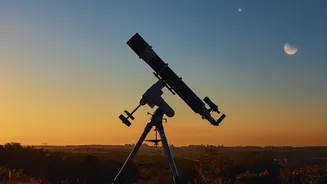
You might think you need an expensive telescope to start, but your most essential tools are your own eyes. The key is comfort and patience. Dress in warm layers, as temperatures can drop significantly after sunset. Bring a blanket or a comfortable folding
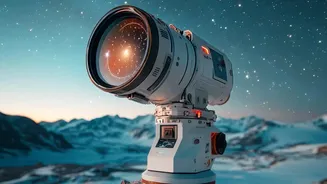
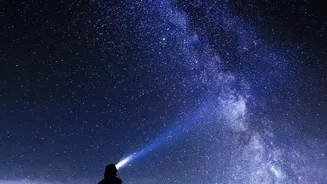
chair you can lean back in. While not essential, a pair of basic 7x50 or 10x50 binoculars can dramatically enhance your view, revealing details on the Moon, the moons of Jupiter, and faint star clusters. Finally, a red flashlight is a must-have. White light from a regular torch or your phone screen will ruin your night vision, but red light allows you to read a star chart or find things in your bag without resetting your eyes.
Find Your Spot: Escape the Lights
The single most important factor for good stargazing is a dark sky. City and suburban light pollution washes out all but the brightest stars and planets. For your first outing, try to find a location away from direct city glow. Local parks, rural areas, or designated dark-sky spots are ideal. The goal is to find a place with a wide-open view of the sky, especially towards the east and south for this month's main events. Before you go, check a light pollution map online to find the darkest accessible spot near you. Plan to arrive before sunset to get your bearings and set up comfortably.
Let Your Eyes Adapt
Once you're in a dark location, the magic begins, but it takes time. Your eyes need at least 20 to 30 minutes to fully adapt to the darkness and achieve their peak night vision. During this time, avoid looking at any bright screens or white lights. This adjustment period allows the pupils to dilate and the photoreceptor cells in your eyes, known as rods, to take over. You'll be amazed how many more stars become visible after you give your eyes time to adjust. Patience is truly a virtue in stargazing, and this simple step makes a huge difference.
October’s Planets: Saturn Takes Center Stage
October 2026 is a fantastic month for planet spotting. The main attraction is Saturn, which reaches opposition on October 4. This means Earth is passing directly between Saturn and the sun, making the ringed planet appear at its biggest and brightest for the year. Look for it as a bright, steady, yellowish point of light rising in the east around sunset and visible all night long. While you need a telescope to see its rings clearly, even knowing that bright 'star' is the famous ringed planet is a thrill. Early risers can also catch a beautiful pairing in the pre-dawn sky on October 5, when the crescent Moon will be near reddish Mars, with bright Jupiter visible as well.
Look for These Constellations
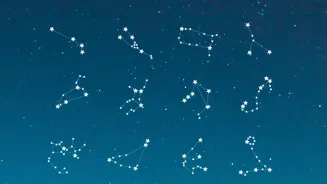
Finding constellations can feel daunting, but start with the big and obvious shapes. The Great Square of Pegasus is a massive square of four stars high in the sky this month and is easy to spot. From there, you can try to trace out the rest of the winged horse. For observers in the Northern Hemisphere, another easy-to-find shape is the 'W' of Cassiopeia. Also, look for the Summer Triangle, made of three very bright stars—Vega, Altair, and Deneb—which will be high overhead after sunset. Using a simple stargazing app on your phone (in red-light mode) can be a great help in identifying these patterns for the first time.
Catch a Shooting Star: Two Meteor Showers
October hosts two meteor showers. First are the Draconids, which peak on the evening of October 8-9. This is a minor shower, with about 10 meteors per hour, but the moon will be a thin crescent, making for dark skies and favorable viewing conditions just after sunset. The main event is the Orionid meteor shower, which peaks in the pre-dawn hours of October 21-22. Produced by debris from the famous Halley's Comet, the Orionids are known for fast, bright meteors, with up to 20 per hour possible from a dark site. While a bright moon will be in the sky for part of the night, it sets a few hours before dawn, leaving a perfect window of darkness to watch the show at its best.