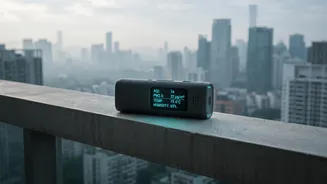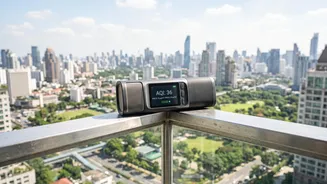




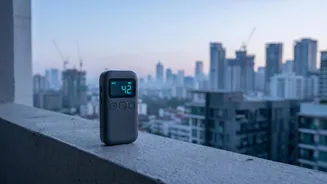


Worried about air quality before your morning walk or evening plans? A quick check of the Air Quality Index (AQI) can help you decide. Here are some simple, accessible tools to get real-time air quality data for your Indian city.
First, What Is the AQI?
The Air Quality Index,
or AQI, is a simple scale from 0 to 500 that tells you how polluted the air is. It converts complex data from eight major pollutants, including PM2.5 and PM10, into a single, easy-to-understand number and colour code. PM2.5, or fine particulate matter, is often the main pollutant in Indian cities because these tiny particles can travel deep into the lungs and even enter the bloodstream. A lower AQI number means cleaner air, while a higher number indicates worse pollution and greater health risk.
Understanding the AQI Levels
Knowing the number is one thing; knowing what to do is another. According to India's Central Pollution Control Board (CPCB) categories, here's a general guide:
- 0-50 (Good): Air quality is excellent. It's safe for everyone to be active outdoors.
- 51-100 (Satisfactory): The air is generally acceptable. However, people who are unusually sensitive to pollution might experience minor breathing discomfort.
- 101-200 (Moderate): This level can cause breathing discomfort for people with lung or heart disease, children, and older adults. These groups should consider reducing prolonged or heavy exertion outdoors.
- 201-300 (Poor): Most people may experience some breathing discomfort with prolonged exposure. Sensitive groups are at higher risk and should avoid strenuous outdoor activity.
- 301 and above (Very Poor to Severe): This is a high-risk zone. Everyone should avoid or significantly reduce outdoor activities.
Government-Backed Tools: SAFAR and SAMEER
For the most authoritative data, turn to official government sources. The SAMEER app, developed by the CPCB, provides hourly AQI updates from its network of monitoring stations across more than 100 cities. It's considered the gold standard for official data and also allows users to register complaints about pollution. SAFAR-Air (System of Air Quality and Weather Forecasting and Research) is another excellent government initiative from the Ministry of Earth Sciences. It provides AQI forecasts primarily for major metros like Delhi, Mumbai, Pune, and Ahmedabad, giving you a heads-up on expected air quality.
Popular Third Party Apps
Several user friendly third party apps provide granular real time data. IQAir AirVisual is a popular global app with strong coverage in India, offering forecasts, historical data, and health recommendations. AQI.in is another platform built specifically for India, often providing hyperlocal readings from multiple points within a single city. Other reliable options include BreezoMeter and Plume Labs (now part of AccuWeather), which use AI and multiple data sources to provide street level pollution maps and forecasts.
Check Your Smartphone's Built In Features
You may not even need to download a new app. Many smartphone weather applications now have AQI information built in. Google's default weather information, often seen by simply searching 'air quality near me', provides a quick snapshot of the current AQI. Google Maps has also integrated an AQI layer, allowing you to see air quality data mapped out across different areas of your city, which can be useful for planning travel routes. Similarly, Apple Weather and AccuWeather often include an AQI reading alongside the temperature and rain forecast, making it convenient to check both at once.