






Every December, Nagaland's Hornbill Festival explodes with colour, music, and dance. But what makes this 'Festival of Festivals' truly unique is its home: a purpose-built village that is a living museum of tribal heritage.
A Festival with a Purpose-Built Home
The Hornbill Festival, which
brings together all the major tribes of Nagaland, is not held in a generic fairground but at the Naga Heritage Village, Kisama. Located about 12 kilometres from the state capital Kohima, this unique venue was established by the Nagaland government in 2003 as a permanent site for the festival. The name 'Kisama' is a tribute to the communities that provided the land; it's a portmanteau of two neighbouring villages, Kigwema (Ki) and Phesama (sa), with 'ma' meaning village. This gesture is baked into the very name of the site, reflecting the spirit of collaboration that the festival itself champions. The village was intentionally designed to protect, preserve, and showcase the diverse cultural traditions of the Naga people in one accessible location.
A Village of Villages: The Morungs
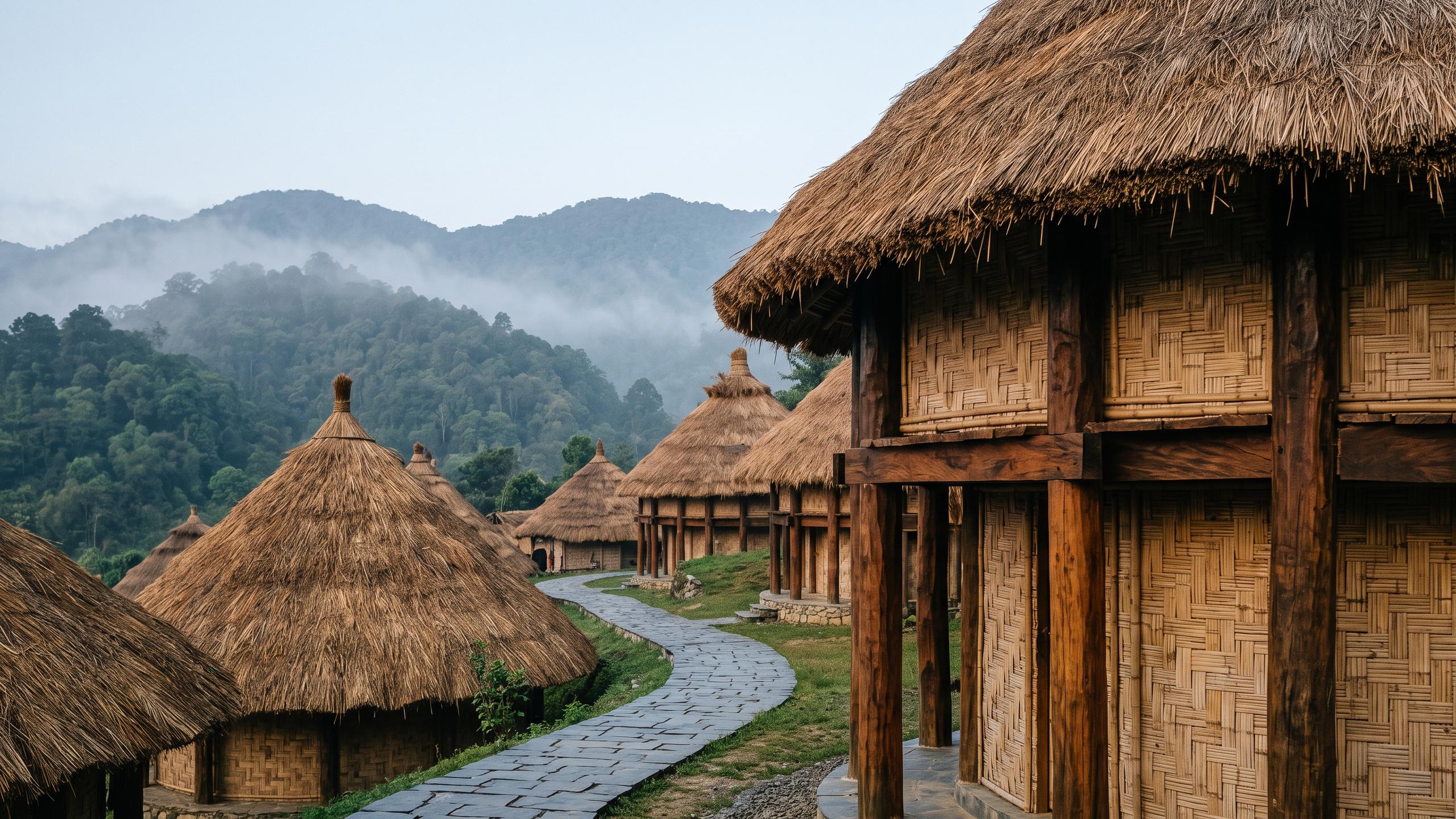
The heart of Kisama's design is the collection of 'morungs', or traditional youth dormitories, that dot the hillside. There are distinct structures representing each of Nagaland's major tribes, built in their own unique architectural styles. Historically, the morung was the centre of village life. It was a school where young men learned not from books, but from their elders—absorbing lessons on customs, folklore, craftsmanship, and warfare. It was a social club, a guardhouse, and a council hall where important community decisions were made. At Kisama, these reconstructed morungs serve as individual pavilions for each tribe during the Hornbill Festival. Visitors can walk from one to the next, experiencing the cultural and architectural diversity of Nagaland in a matter of hours.
An Open-Air Museum and Cultural Stage
The layout of Kisama is deliberately theatrical, set on a terraced hillside that forms a natural amphitheatre. During the ten-day festival, this arena becomes the main stage for a rotating schedule of vibrant cultural performances, from warrior dances to harvest songs. But Kisama is more than just a performance venue; it is a living museum. Each morung becomes an interactive exhibit where tribes display their specific arts, crafts, and culinary traditions. You can see demonstrations of weaving, wood carving, and traditional games, or sample local cuisines specific to each community. This layout allows for an immersive experience, giving visitors a deeper understanding of the traditions behind the spectacle.
Life Beyond the Festival
While the Hornbill Festival is Kisama's busiest period, the village doesn't shut down for the rest of the year. It remains open as a cultural complex and tourist site. Visiting outside of the December rush offers a different, quieter experience. Without the bustling crowds, one can wander through the morungs at a slower pace, appreciating the intricate woodwork and architectural details that define each structure. The complex also houses a World War II Museum and a Bamboo Pavilion, providing further context on the region's history and resources. This yearround accessibility ensures that the Naga Heritage Village functions not just as a festival ground, but as a continuous guardian of Naga culture, open to anyone curious to learn its stories.