






Understanding Purity: What 'Karat' Really Means
The fundamental difference between 22K and 24K gold lies in its purity, measured in karats (K). Think of it as a scale out of 24 parts. 24-karat gold is the purest form you can buy, containing 99.9% pure gold, often marked with a fineness of '999'. It
has a distinct, bright yellow lustre. On the other hand, 22-karat gold consists of 22 parts gold and 2 parts other metals like silver, copper, or zinc. This means it has a purity of 91.6%, which is why hallmarked 22K jewellery in India is stamped with '916'. This alloy mixture is not a flaw; it's a deliberate feature with a very practical purpose.
Durability and Design: Wearable Beauty vs. Pure Asset
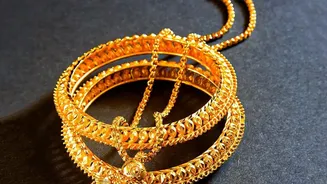
Pure 24K gold is incredibly soft and malleable. While beautiful, this softness makes it unsuitable for regularly worn jewellery, as it can easily scratch, bend, or deform. This is why you'll rarely find intricate daily-wear items made from 24K gold. Its primary form is as an investment vehicle: coins and bars. Conversely, the addition of alloys in 22K gold makes it significantly harder and more durable. This strength allows artisans to craft intricate designs and ensures that necklaces, bangles, and rings can withstand the rigours of daily life, making 22K the preferred choice for most Indian jewellery.
The Cost Calculation: Making Charges and Hidden Fees
While 24K gold has a higher price per gram due to its purity, the final cost of your purchase is heavily influenced by additional charges. For 22K jewellery, these are known as 'making charges', which cover the craftsmanship involved. These charges can range anywhere from 8% to over 25% of the gold's value, depending on the complexity of the design. Gold coins, on the other hand, have lower 'minting' or 'packing' charges, typically between 1% and 5%. This means that for the same amount of money, a larger portion of your spend on a 24K coin goes directly towards the gold itself, rather than labour and design costs that are rarely recovered upon sale.
Purchase Purpose: Adornment or Pure Investment?
Your reason for buying gold should be the deciding factor. 22K jewellery serves a dual purpose: it is an adornment with immense cultural and emotional value that also functions as a store of wealth. It is bought for weddings, festivals, and personal milestones. 24K coins and bars are a more straightforward financial instrument. Their purpose is purely investment and wealth preservation. They are easier to value, store, and trade based on market rates, making them the preferred option for those focused solely on financial returns without the emotional or aesthetic attachment of jewellery.
Resale Value and Liquidity: Cashing In Your Gold
When it comes time to sell, purity and form matter greatly. 24K coins generally offer higher liquidity and a better resale value because their price is tied directly to the spot market rate for pure gold. The valuation is simple and transparent. When you sell 22K jewellery, you will not get back the making charges you paid. Furthermore, jewellers will only pay for the value of the 91.6% pure gold content after deducting for wastage, which can result in a loss of 10-15% of the original purchase price. For this reason, from a purely financial perspective, 24K coins are the superior asset for retaining value over time.