




The Problem with Speed and Momentum
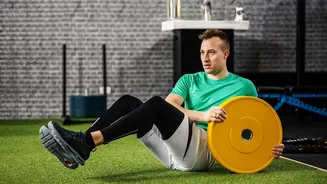
In the quest for a stronger core, it’s common to see people in the gym twisting their torsos with rapid, uncontrolled force. This approach, often called ballistic twisting, relies on momentum rather than muscle engagement. While it might feel like you’re
working hard, you're actually creating a dangerous situation for your spine. Fast, jerky twists can place excessive shearing stress on the vertebrae and spinal discs, especially in the lumbar (lower back) region. The lower spine is not designed for a high degree of rotation. Forcing it to twist rapidly can lead to muscle strains, ligament sprains, and even painful disc injuries. Furthermore, when you use momentum, your core muscles, particularly the obliques, don't have to work as hard. Your arms and shoulders end up doing most of the swinging, which defeats the purpose of the exercise entirely.
Why Control Is King for Core Strength
The true benefits of the torso twist are unlocked when you slow down and focus on deliberate, controlled movement. This approach shifts the workload directly onto the target muscles: the internal and external obliques. A slow and controlled twist forces these muscles to engage throughout the entire range of motion, from the beginning of the turn to the return to centre. This method not only strengthens and tones the obliques more effectively but also enhances the mind-muscle connection, improving your ability to consciously activate your core. A stronger core provides better support for your spine, which can improve your posture and reduce the risk of back pain. It also improves your body's overall stability and balance, which is crucial for both athletic performance and everyday activities like carrying groceries or lifting a child.
How to Do the Perfect Standing Torso Twist
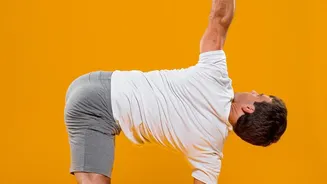
Mastering the standing torso twist is about precision, not power. Follow these steps for perfect form: 1. Stand with your feet shoulder-width apart and your knees slightly bent. This creates a stable base. 2. Engage your core by bracing your abdominal muscles, as if you're about to be punched in the stomach. This is crucial for protecting your spine. 3. Position your arms. You can either cross them over your chest or extend them straight out in front of you at shoulder height. 4. Initiate the twist from your core. Slowly rotate your torso to one side, leading with your rib cage, not your arms. The movement should be focused in your mid-back (thoracic spine), which is designed for rotation. 5. Keep your hips and legs as still as possible. Avoid letting your hips sway or pivot with the twist. 6. Twist only as far as you can comfortably go while maintaining control and keeping your hips stable. 7. Pause for a moment at the peak of the twist, then slowly and with control, return to the starting position. 8. Repeat the movement on the other side. Exhale as you twist and inhale as you return to the centre.
Common Mistakes to Avoid
To get the most out of this exercise and prevent injury, watch out for these common errors: Swinging your arms: The work should come from your obliques, not from flinging your arms side to side. If your arms are moving but your torso isn't rotating, you're not engaging the right muscles. Twisting from the lower back: The rotation should originate from your mid-back. The lower back has very limited rotational capacity, and forcing it can lead to pain and injury. Focus on turning your rib cage. Moving your hips: Your lower body should remain stable. If your hips are swinging from side to side, you're using momentum and taking the focus off your core. Going too fast: Rushing through repetitions is the most common mistake. Slow down the tempo to ensure your muscles are under tension for longer, which leads to better results.