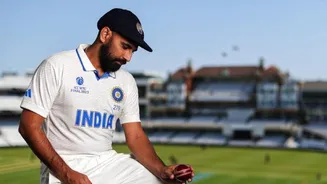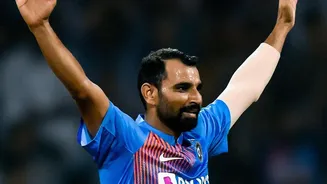





The news is in: Mohammed Shami has bowled his final ball in Test cricket. The announcement, made with a heavy heart, has left the Indian cricket world debating one big question: was it the right time for the master of seam to hang up his whites?
The Body Knows Best
The argument
for Shami’s retirement is a pragmatic one, rooted in the brutal physical demands of fast bowling. At 36, after a career marked by incredible highs and gruelling injury lay-offs, the decision appears to be a sensible acknowledgement of his body's limits. His last Test appearance was in the World Test Championship final back in June 2023, and a subsequent ankle surgery kept him out of action for an extended period. Fast bowling is a young person's game, and the rigours of five-day cricket exact a toll unlike any other format. By stepping away from Tests, Shami not only preserves his body for white-ball cricket—where he remains a potent force—but he also chooses to exit on his own terms. It’s a graceful departure, avoiding a potential decline and ensuring fans remember him at his peak, rather than as a fading force struggling for fitness.
The Heart Says One More Tour
But cricket, especially for fans, is often a matter of the heart. And the heart says Shami deserved one more chapter. There’s a strong feeling that he had one last great overseas tour left in him. Shami wasn’t just any bowler; he was a magician with an old ball, a second-innings specialist who could turn a match on its head when the pitch offered little. His record in countries like South Africa, where he delivered match-winning spells, speaks volumes about his unique skill set. Four of his six five-wicket hauls came in SENA countries (South Africa, England, New Zealand, Australia). With 229 wickets in 64 Tests, his ability to make the ball talk, regardless of the conditions, was a captain's dream. The argument against his retirement is an emotional one: we were denied the chance to see that upright seam and wrist position conjure magic one last time in a tough away series.
A Legacy Etched in Seam
Beyond the debate, Shami’s legacy is secure. He was a vital cog in what became India’s most feared pace battery in history, alongside Jasprit Bumrah, Ishant Sharma, and Umesh Yadav. Commentators have noted his 'romance with the seam', an almost mystical ability to get the ball to nip back or straighten, often when a partnership looked unbreakable. His contributions weren't limited to the ball either. Who can forget his heroic unbeaten 56 with the bat at Lord's in 2021, a knock that turned the tide and set up a famous Indian victory? He was more than a bowler; he was a warrior who, as he said in his farewell message, learned something from every injury and every comeback. His journey from a debut where he took nine wickets, six of them bowled, defined a career built on relentless accuracy and skill.
Passing the Torch to a New Guard
Ultimately, Shami's retirement is also about the future. Indian cricket is in a phase of transition, and his departure, while poignant, creates a necessary space for the next generation of fast bowlers. The selectors had already started looking past him for Test squads, indicating a shift in focus toward younger talent. Players like Prasidh Krishna, Harshit Rana, and Akash Deep are already in the pipeline, having been part of recent Test squads. While it's hard to replace a bowler of Shami's calibre, his exit is an essential part of the team's evolution. It allows India to invest fully in building a new pace attack around the established duo of Jasprit Bumrah and Mohammed Siraj. In this light, Shami's decision can be seen not just as a personal choice, but as a selfless act of passing the torch.