







The Digital Chef With No Taste Buds
The fundamental problem with AI-generated recipes is that the AI has no body. It has never tasted a ripe strawberry, smelled garlic sizzling in olive oil, or felt the difference between sticky and tacky dough. Large language models like ChatGPT create
recipes by identifying and replicating patterns from a massive database of text scraped from the internet. It becomes an expert at writing about food, not an expert in cooking itself. The AI assembles ingredients and instructions based on statistical likelihood, not on a real-world understanding of chemistry, physics, and flavour. A human chef knows why you brown butter or why you rest a steak, but an AI only knows that these phrases often appear in similar recipes. This lack of physical, sensory experience is its biggest blind spot.
A Hallucination in the Kitchen
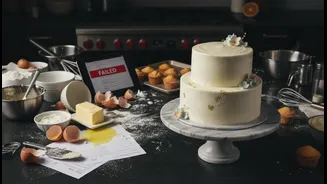
In the world of AI, a 'hallucination' is when the model generates false or nonsensical information with complete confidence. In the kitchen, this can be messy, unpalatable, or even dangerous. Testers have seen AIs generate recipes calling for impossible ingredients like "moon-dried saffron petals" or absurd quantities like two kilos of butter for a simple dish. In one infamous case, a meal-planning AI in New Zealand suggested a recipe for an aromatic water mix that, if created, would have produced deadly chlorine gas. More common failures involve mismatched ingredients, such as Thai green curry lasagna, or nonsensical instructions like boiling lettuce for 30 minutes before broiling it. These recipes might look plausible at a glance, but they haven’t been tested and lack the critical thinking a human cook applies.
The Problem with an Internet-Sourced Pantry
An AI's culinary knowledge is only as good as the data it was trained on. Unfortunately, the internet is filled with untested, inaccurate, and poorly written recipes. The AI learns from professional food blogs and curated cookbook databases, but it also learns from a Reddit user's dorm room experiment and a long-forgotten forum post with typos in the measurements. It cannot distinguish between a recipe tested a dozen times by a professional and one that was never made at all. This leads to inconsistent and unreliable outputs. If you ask for the same chocolate chip cookie recipe three times, you'll likely get three different versions with varying ingredients and instructions. The AI is not retrieving a proven recipe; it’s mashing together patterns from its vast, unevenly-quality training data every single time.
Missing the All-Important Human Touch
Cooking is as much an art as it is a science, full of nuance that text alone cannot capture. An experienced cook understands instructions like "cook until fragrant" or "knead until the dough is smooth and elastic." An AI doesn't. One food writer testing a muffin recipe from ChatGPT noted that the AI correctly advised not to overmix the batter, but then instructed them to stir in vanilla extract in a later step, which would inevitably lead to over-mixing. This highlights the AI's lack of sequential and practical logic. Good recipes are born from experience, imagination, and experimentation. They are refined through trial and error—a process of tasting, tweaking, and feeling that an algorithm simply cannot replicate.
How to Use AI as a Kitchen Assistant
Despite these significant flaws, AI can still be a useful tool in the kitchen if you treat it as an assistant, not the head chef. It excels at brainstorming and ideation. You can use it to generate creative concepts, find new flavour pairings, or get ideas for using up leftover ingredients. For instance, if you have chicken, spinach, and red cabbage, an AI can quickly generate several potential meal ideas. The key is to use its output as a starting point. Always read through an AI-generated recipe with a critical eye. Does it make sense? Are the quantities reasonable? Are the cooking times and temperatures safe? Trust your own culinary intuition, and use the AI for inspiration before turning to a reliable, human-tested recipe to guide the actual cooking process.