
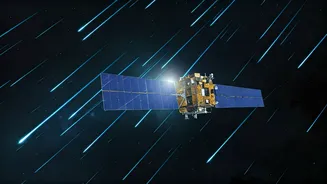


A Sky Full of Satellites
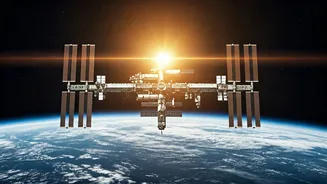
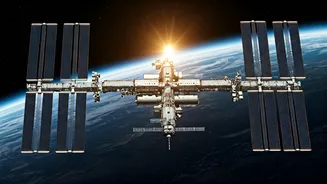
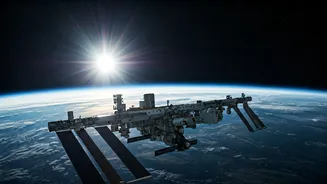
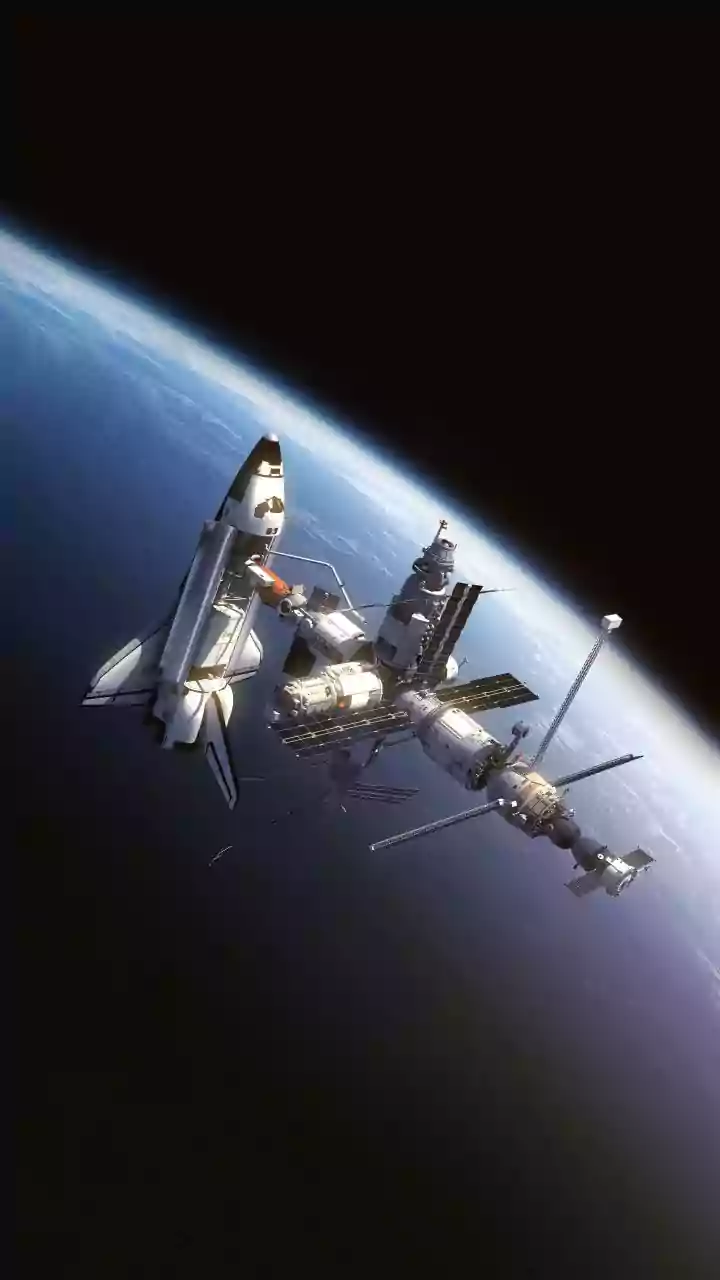
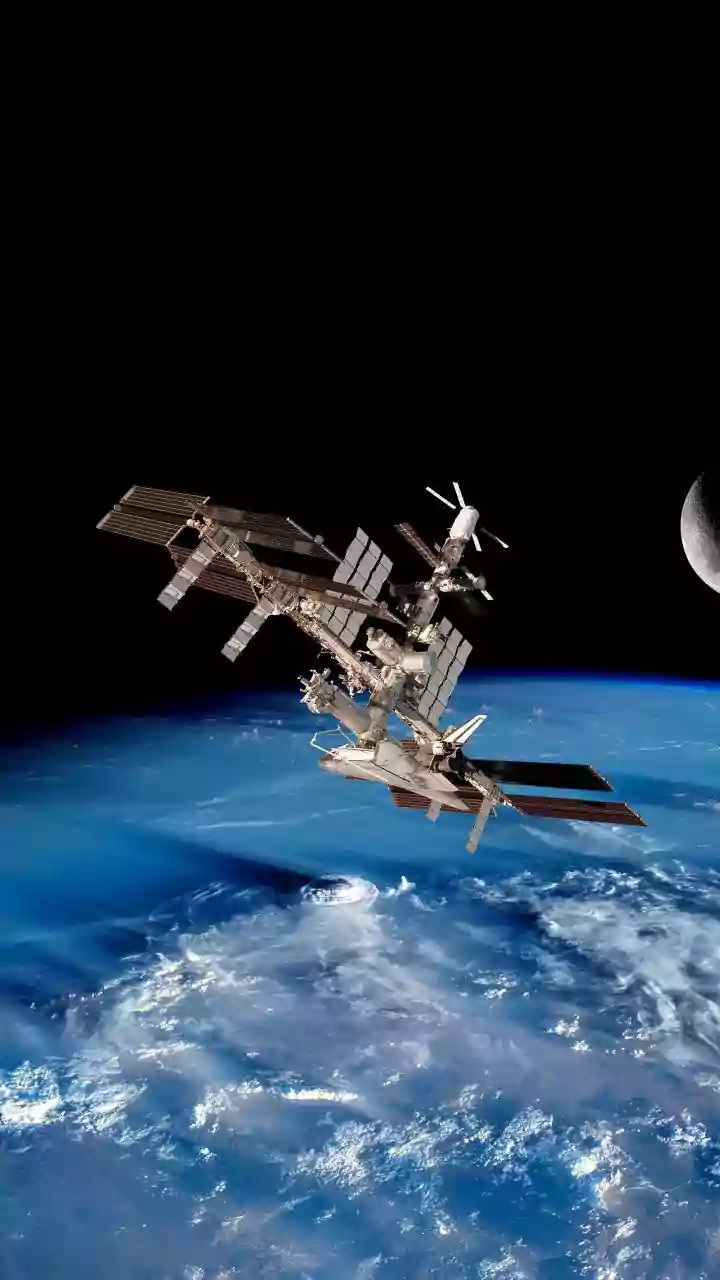
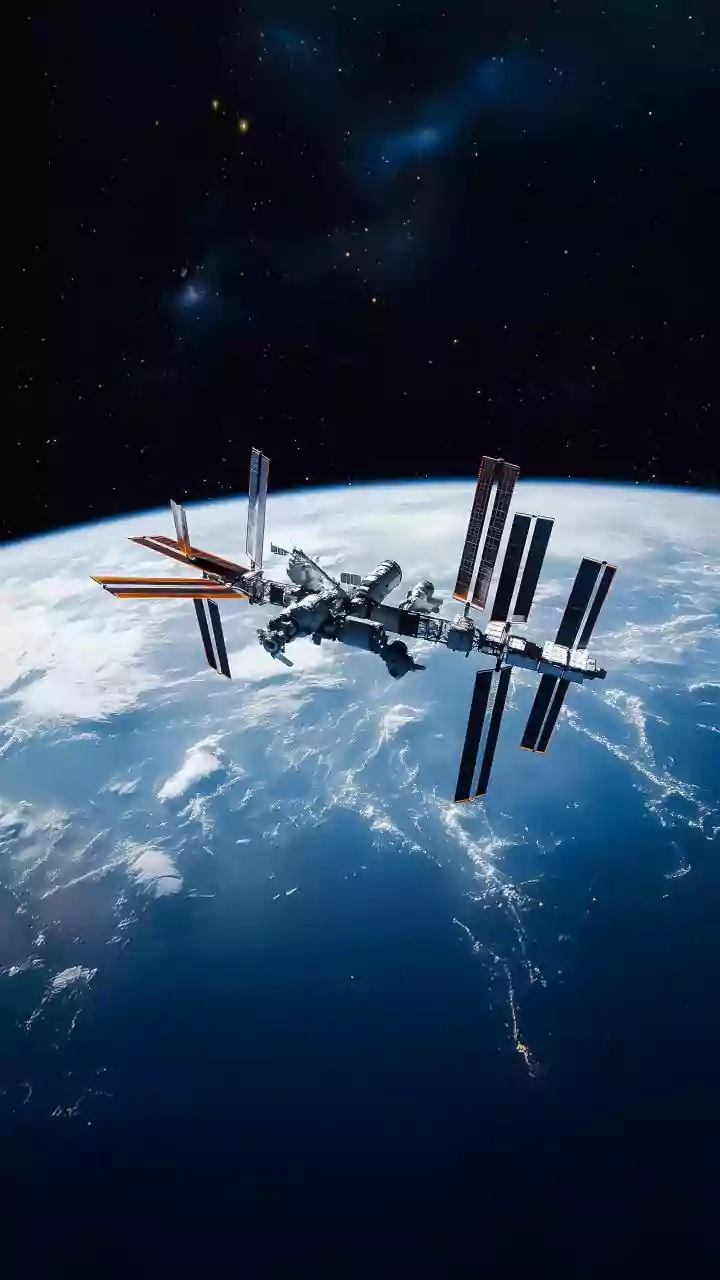
The most dramatic change to our night sky is the rapid deployment of satellite mega-constellations. Companies like SpaceX, with its Starlink project, are launching thousands of satellites into low-Earth orbit to provide global internet access. While a laudable
goal, a side effect is a sky filled with fast-moving points of light. Shortly after sunset and before sunrise, these satellites catch the sun's rays and reflect them down to Earth, appearing as a string of bright pearls moving across the twilight sky. For astronomers, both professional and amateur, these satellites are not a beautiful sight. They create bright streaks across long-exposure images, contaminating scientific data and potentially obscuring faint, distant objects or near-Earth asteroids. Before 2019, the number of satellites was a minor nuisance, but with projections of tens, or even hundreds, of thousands of new satellites in the coming years, observatories face a future where a significant percentage of their images could be ruined.
The Glow From Below
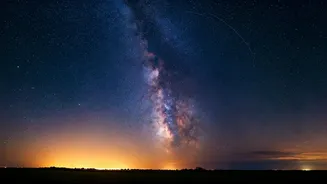
While satellites represent a new frontier of interference, a more familiar problem continues to worsen on the ground: light pollution. The glow from our cities, created by inefficient and poorly shielded streetlights, advertising, and buildings, scatters in the atmosphere, creating a pervasive haze that washes out the stars. This 'skyglow' is increasing at an alarming rate, with some estimates suggesting a nearly 10% increase in brightness per year. Today, the vast majority of the world's population lives under a light-polluted sky, unable to see the Milky Way. This not only represents a cultural loss but also directly impacts scientific work. Even the most remote, high-altitude observatories, built specifically to escape urban light, are now seeing their pristine skies threatened by the creep of nearby development and industrial projects.
The Unprecedented Challenge
The combination of these two phenomena—satellites from above and light from below—presents an unprecedented challenge to astronomy. Ground-based telescopes are fighting a war on two fronts. For wide-field surveys designed to map the entire sky, such as the work done by the Vera C. Rubin Observatory, the constant passage of satellites is a serious operational issue. These surveys are crucial for discovering potentially hazardous asteroids and understanding the large-scale structure of the universe. At the same time, light pollution reduces the contrast of celestial objects, making it harder to study faint galaxies and nebulae. Even space telescopes like Hubble are not immune; because they are in low-Earth orbit, the new satellite constellations are in the same orbital space, photobombing their observations. For amateur astronomers, the experience is also diminished, as capturing a clean image of the night sky becomes an exercise in frustration, dodging satellite trails and fighting against a brightened background.
The Search for a Clearer Future
The astronomical community is not standing still. In response to widespread concern, satellite operators have begun collaborating with scientists to find solutions. SpaceX has experimented with darkening treatments for its satellites, including special anti-reflective coatings and sunshades to reduce their brightness. The goal is to make them invisible to the naked eye at their operational altitude and reduce their impact on sensitive telescopes. There are also new software algorithms being developed to better identify and remove satellite trails from astronomical data. On the ground, advocacy groups like the International Dark-Sky Association are working with communities to promote more responsible lighting practices—such as shielded fixtures that direct light downwards and using warmer-colored bulbs. The International Astronomical Union has also established a centre dedicated to coordinating global efforts to protect the dark and quiet sky. These efforts represent a critical dialogue about how to balance technological progress with the preservation of our shared natural and scientific resources.