
Why Venus, Earth’s Twin?
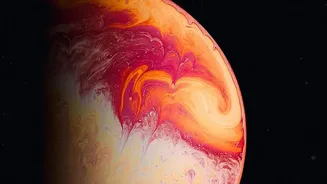
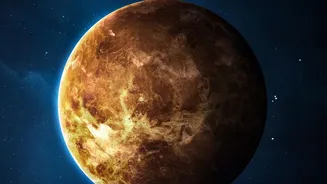
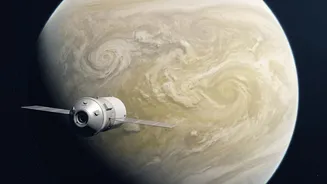
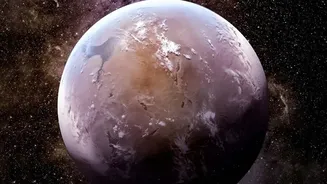
Venus and Earth are similar in size, mass, and composition, suggesting they could have been planetary twins when they formed. Yet today, they couldn't be more different. Venus is the hottest planet in our solar system, with surface temperatures high enough
to melt lead. Its atmosphere is over 90 times denser than Earth's and composed almost entirely of carbon dioxide, with thick clouds of sulfuric acid. Scientists believe Venus may have once had oceans but suffered a runaway greenhouse effect that boiled them away, transforming it into a hellish landscape. This makes Venus a crucial natural laboratory for understanding how planetary climates evolve and provides a cautionary tale for Earth’s own climate challenges.
Introducing Shukrayaan-1
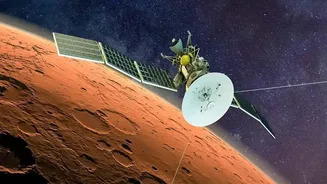
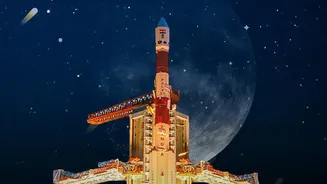
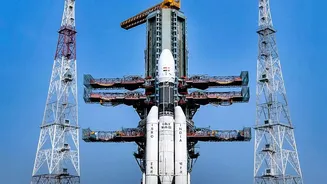
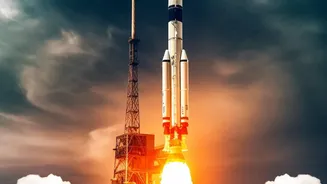
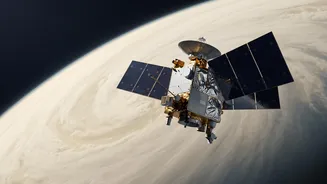
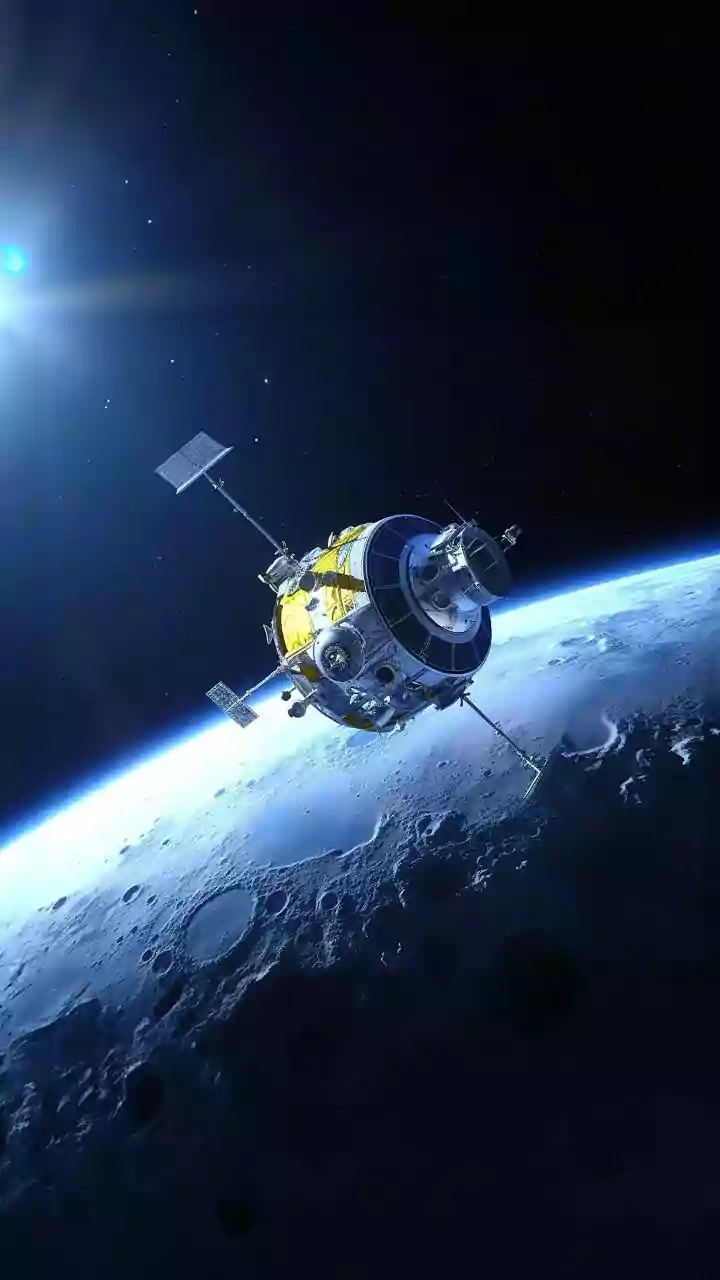
Shukrayaan-1, which means “Venus Craft” in Sanskrit, is ISRO's first dedicated mission to our neighbouring planet and its second interplanetary venture after the celebrated Mangalyaan Mars mission. Officially approved by the Indian government in September 2024, the Venus Orbiter Mission is a testament to India's growing prowess in deep space exploration. Scheduled for launch on March 29, 2028, aboard the powerful LVM-3 rocket, the spacecraft will embark on a 112-day journey to reach Venusian orbit by July 19, 2028. The mission's primary goal is to conduct a comprehensive investigation of Venus from orbit.
Peering Beneath the Veil
The central challenge of studying Venus is its thick, opaque cloud cover. To overcome this, Shukrayaan-1 will be equipped with a suite of advanced instruments designed to see what the naked eye cannot. The flagship instrument is a high-resolution Synthetic Aperture Radar (SAR), which can penetrate the dense clouds to map the planet's surface in detail, searching for signs of active volcanoes and other geological features. This radar is expected to have a resolution up to four times better than NASA's Magellan mission from the 1990s. In a global first, the mission will also carry a ground-penetrating radar to study the subsurface of Venus, offering an unprecedented look at its geological layers.
A Toolkit for Discovery
The orbiter will carry a payload of approximately 100 kg, comprising around 19 scientific instruments. These tools will investigate everything from the planet’s surface geology to its atmospheric chemistry and its interaction with the solar wind. International collaboration is a key part of the mission. Payloads developed in partnership with Russia, Sweden, and Germany will be on board. One instrument, a collaboration with Russia and France called VIRAL, will specifically investigate atmospheric gases, including searching for phosphine, a chemical that some scientists have speculated could be a potential indicator of life.
What This Mission Means for India
For ISRO and India, Shukrayaan-1 is more than just a scientific mission; it is a major step forward. It builds on the legacy of Chandrayaan and Mangalyaan, solidifying India's position as a key player in planetary science. The mission will also see ISRO employ aerobraking for the first time on a major mission—a complex technique that uses a planet’s own atmospheric drag to slow the spacecraft and lower it into its final, stable science orbit without burning large amounts of fuel. The insights gained from studying Venus's extreme greenhouse effect will provide invaluable data for climate scientists on Earth, helping to refine models that predict our planet’s future. By exploring why Earth's twin took such a different path, we can learn vital lessons about protecting our own world.