





A Moon Hiding an Ocean
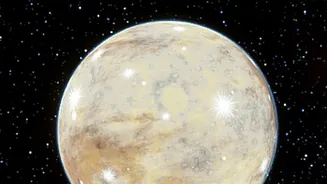
From a distance, Europa looks like a smooth, white marble cracked in a thousand places. It's slightly smaller than Earth's own moon, but it isn't a dead rock. Strong evidence suggests that beneath an ice shell estimated to be 15 to 25 kilometers thick,
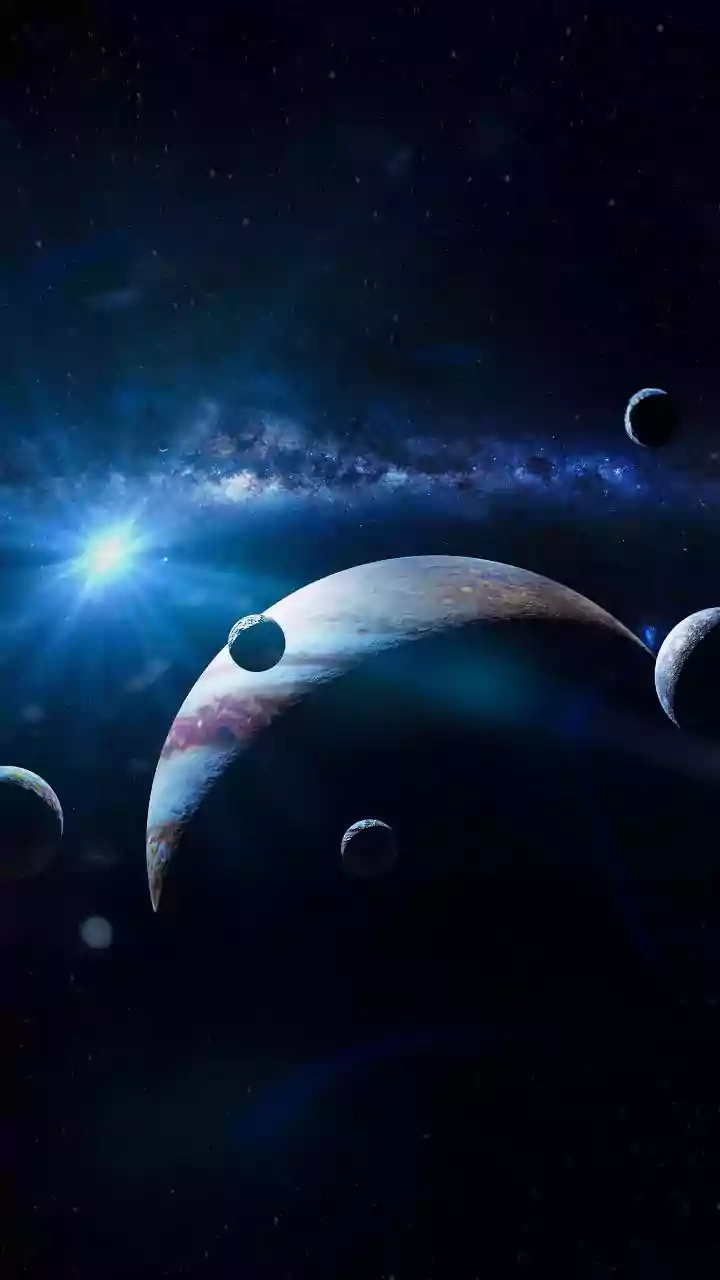
Europa conceals a global ocean of liquid saltwater. This ocean could be 60 to 150 kilometers deep, meaning this small moon may hold more than twice the volume of all of Earth's oceans combined. The reason this ocean can exist so far from the Sun is due to tidal heating. As Europa orbits the colossal planet Jupiter, the gas giant's immense gravity constantly squeezes and stretches the moon, generating enough internal heat to keep the water from freezing solid.
The Quest of the Europa Clipper
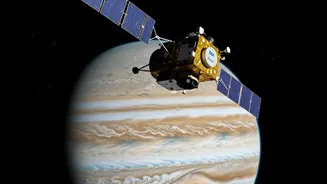
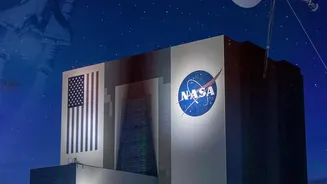
Launched in October 2024, NASA's Europa Clipper spacecraft is undertaking a nearly 3-billion-kilometer journey to arrive in orbit around Jupiter in 2030. It isn't a lander; instead, it's a sophisticated orbiter designed to perform dozens of close flybys of Europa, some as low as 25 kilometers above the surface. During these passes, a powerful suite of nine scientific instruments will work together to essentially give the moon a detailed check-up. The mission has three primary objectives: to investigate the ice shell and the ocean beneath it, to study the moon's composition, and to characterize its geology. Ultimately, the goal is to determine if Europa has the necessary conditions for life.
Searching for the Ingredients of Life
Europa Clipper is fundamentally a habitability mission, not a life-detection mission. It's looking for three key ingredients that scientists agree are necessary for life as we know it: liquid water, essential chemical elements, and an energy source. We know the water is likely there. For the chemistry, instruments will map the composition of the surface and its tenuous atmosphere, looking for salts, organic molecules, and other elements like carbon, hydrogen, nitrogen, oxygen, phosphorus, and sulfur. As for energy, beyond tidal heating, scientists theorize that hydrothermal vents, similar to those on Earth's ocean floors that support entire ecosystems without sunlight, could exist on Europa's seafloor. The mission will investigate whether such energy sources are possible.
What Could We Actually Find?
While the mission won't directly detect living organisms, it could find tantalizing clues. One of the most exciting possibilities is flying through a plume of water vapor erupting from the moon's surface. If these plumes originate from the ocean, as some scientists suspect, the Clipper could directly sample the ocean's chemical makeup without having to drill through miles of ice. This could reveal the ocean's salinity and whether it contains the chemical building blocks for life. Instruments like ice-penetrating radar will map the ice shell to find potential pockets of trapped water, while a magnetometer will measure the magnetic field to confirm the ocean's depth and saltiness. The discovery of a complex chemical environment or an active energy exchange between the seafloor and the ocean would be a monumental step in the search for extraterrestrial life.
A New Understanding of Ocean Worlds
Even if Europa Clipper finds no definitive evidence of habitability, the mission will still revolutionize planetary science. By providing the first in-depth exploration of an ocean world, it will offer unprecedented insights into how such moons form and evolve. There is some scientific debate about how active Europa's seafloor might be; some recent research suggests it could be geologically quiet, which would reduce the chances of life-sustaining hydrothermal vents. Clipper's data will help settle these debates. The mission's findings will not only help us understand Europa but will also inform the search for life on other icy moons in our solar system, like Saturn's Enceladus and Titan, and on countless ocean worlds believed to exist in other star systems.