




For centuries, medicine has grappled with a fundamental question: why do some people get sick while others stay healthy? Google's AI division, DeepMind, just unveiled a new tool that offers a powerful new way to find the answers.
A New Tool in the Geneticist's Toolkit
Google's DeepMind has
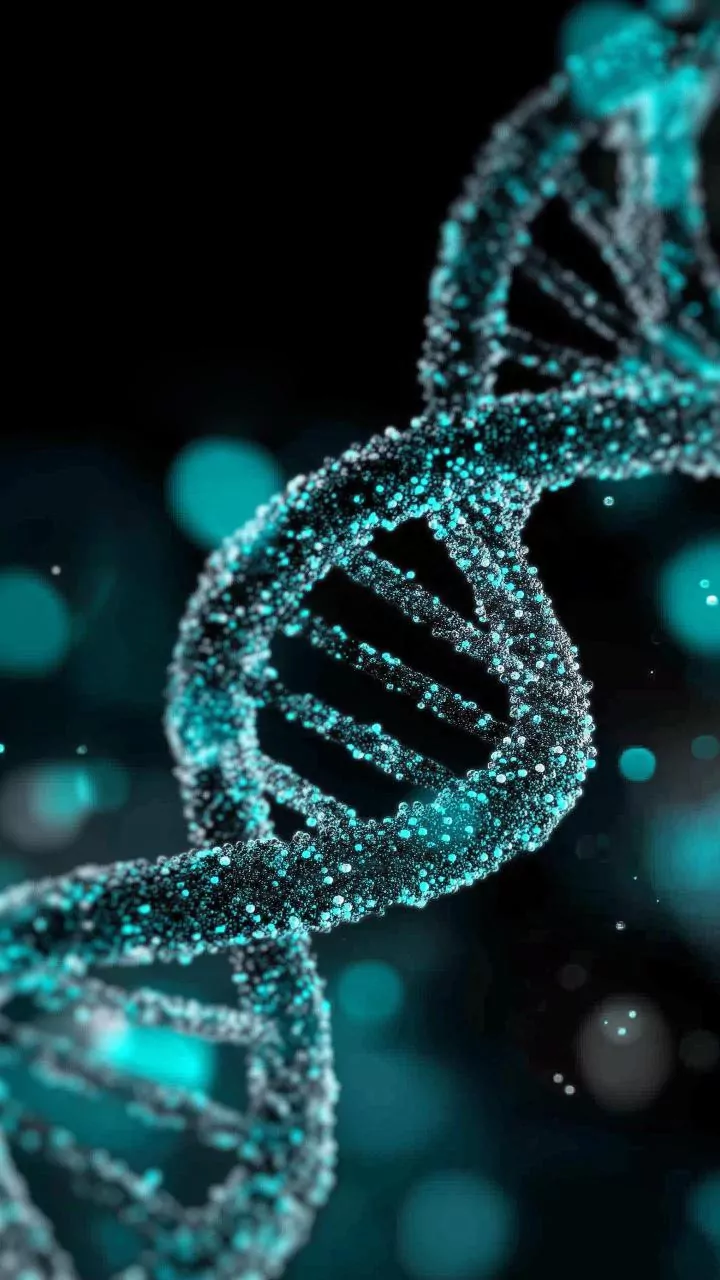
presented a new AI model designed to predict how tiny changes in our DNA could lead to disease. This technology builds on the success of its predecessor, AlphaFold, which famously solved the challenge of predicting the 3D structure of proteins. The new model, in some cases referred to as AlphaMissense or a similar advanced genomic model, tackles the next big mystery: which of the millions of tiny genetic variations in the human population are harmless, and which ones are likely pathogenic, or disease-causing. Historically, only about 0.1% of these 'missense' mutations—tiny swaps in the code that builds proteins—have been classified by human experts. This new AI has analyzed all 71 million possible missense variants and classified 89% of them as either likely to be harmless or likely to cause disease, providing a monumental resource for scientists.
How It Deciphers Our DNA
The AI model works by analyzing a massive amount of data on the human genome. It was trained using data on genetic variations found across human and primate populations. The underlying logic is that genetic variants commonly seen in healthy populations are likely benign, while those that are very rare or have never been seen before might be pathogenic. The model combines this population-level data with the structural and evolutionary information from AlphaFold. It assesses how a single amino acid change—the result of a missense mutation—might affect a protein's function. By assigning a score from 0 to 1, it predicts the likelihood that a specific mutation could contribute to a disease. This allows researchers to get a preview of a mutation's potential impact without costly and time-consuming lab experiments.
From Rare Diseases to Cancer Research
The implications of this technology are vast, particularly for understanding rare genetic disorders. Many patients endure a long 'diagnostic odyssey' as doctors struggle to pinpoint the single genetic cause of their illness from millions of possibilities. This AI model can help researchers and clinicians by flagging the most suspicious mutations, dramatically speeding up the search for answers. The potential extends to more common conditions as well, including heart disease, cystic fibrosis, and cancer, many of which have a genetic component. By understanding the root genetic causes, scientists can better identify targets for new drugs and develop more personalized treatments.
Promise, Not Panacea
Despite its groundbreaking potential, it's crucial to understand the model's limitations. This is a research tool, not a diagnostic one. A high 'pathogenic' score from the AI is a strong suggestion for scientists to investigate further, not a confirmed diagnosis for a patient. The predictions must be validated through laboratory experiments and clinical studies before they can be used to make medical decisions. Furthermore, like any AI, the system is only as good as the data it's trained on, and there are concerns in the broader field about potential biases in genetic datasets that could affect outcomes for different population groups. Google has made the model's predictions freely available to the research community to accelerate scientific discovery, but it is not yet intended for direct clinical or diagnostic use.