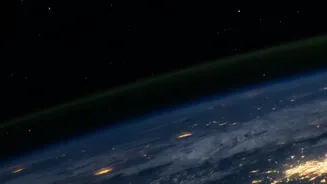





The concept sounds like science fiction: vast data centres, the engines of our digital world, orbiting Earth. While this could solve immense energy and cooling problems on the ground, it creates a new one in the sky for astronomers.
Why Move Data Centres to Space?
The explosive growth
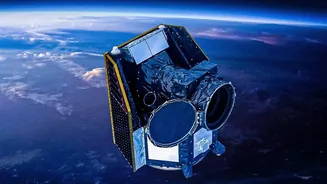
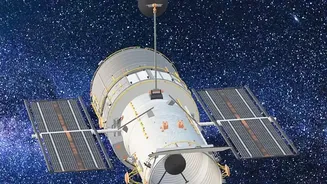
of artificial intelligence and digital services has created a ravenous demand for energy. Terrestrial data centres consume vast amounts of electricity, not just for computing, but also for cooling, often requiring millions of litres of water. Several companies, from startups like Starcloud and Aetherflux to giants like SpaceX, see an elegant solution in low-Earth orbit. The concept is to place server farms on satellites powered by massive solar arrays. In a sun-synchronous orbit, these satellites would have near-continuous access to solar power, which is about 40% more intense without atmospheric interference. This translates to a far greater and more consistent energy supply than ground-based solar farms.
The Promise of Zero-Gravity Cooling
Besides constant power, space offers another huge advantage: a natural, free cooling system. On Earth, data centres fight a warm atmosphere and use power-hungry chillers. In the vacuum of space, heat doesn't transfer through air. Instead, satellites can use large radiator panels to vent waste heat into the cold expanse of deep space, which is approximately -270 degrees Celsius. This passive cooling method eliminates the need for water and reduces a major operational cost, making the economics of orbital data centres potentially competitive with their terrestrial counterparts, especially as launch costs continue to fall. Proponents also argue that orbital facilities are secure from earthly threats like natural disasters and geopolitical instability.
A New, Bright Obstacle for Astronomy
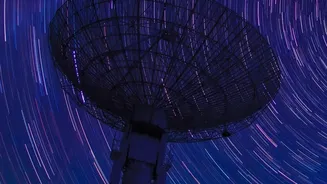
While the business case is compelling, the astronomical community is raising serious alarms. The problem is light pollution. To power these compute-heavy satellites, their solar arrays would need to be enormous—in some proposals, spanning several kilometres. These massive, reflective surfaces would act like mirrors, catching sunlight and shining brightly in the hours after sunset and before sunrise. One analysis suggests a single large facility could appear 100 times brighter than the brightest stars, with a constellation of them creating a chain of bright objects moving across the twilight sky. This would be a far greater challenge than existing satellite constellations like Starlink, which have already caused significant issues for astronomers by leaving bright streaks across long-exposure images.
More Than Just Ruined Pictures
The threat goes beyond spoiled astrophotography. Faint, distant galaxies are some of the most important targets for modern astronomy, holding clues about the early universe, dark matter, and cosmic expansion. The light trails and increased background sky brightness from these satellite constellations could easily drown out these faint signals. This interference affects not only optical telescopes but also radio astronomy, as the satellites would transmit vast amounts of data, creating radio frequency interference that could blind sensitive radio observatories. Furthermore, the American Astronomical Society has warned that these constellations could interfere with the critical task of detecting potentially hazardous near-Earth asteroids, many of which are first spotted in the twilight hours when the satellites would be most visible.
A Crowded Sky and an Uncertain Future
The debate over space-based data centres is part of a larger conversation about the commercialisation of space. With proposals for tens of thousands, or even a million, new satellites, low-Earth orbit is becoming increasingly crowded. This raises concerns not only about light pollution but also about the growing risk of orbital debris from collisions, which could trigger a chain reaction that makes entire orbits unusable. Astronomers and policy experts are calling for urgent regulation and international cooperation, pushing for 'dark and quiet skies' principles to be applied to all new satellite designs. While some companies are working on mitigation efforts, such as anti-reflective coatings, the sheer scale of the proposed data centre constellations presents an unprecedented challenge.