

Your Pocket Guide to the Cosmos
Meteor showers are one of nature's most dazzling displays, but knowing where to point your gaze can be tricky. This is where astronomy apps come in. Using your phone's GPS and internal sensors, these apps create a real-time map of the sky. By simply pointing
your phone upwards, you can identify stars, planets, constellations, and most importantly, the radiant point of a meteor shower—the spot from which the meteors appear to originate. This technology removes the guesswork, making it easier than ever for anyone to become an amateur astronomer for the night.
Mark Your Calendar: The Perseids 2026
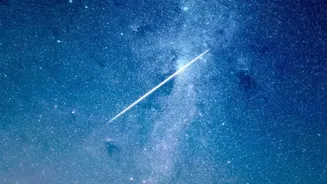
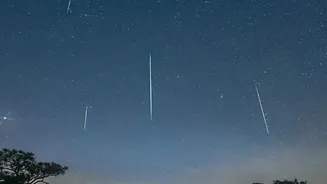
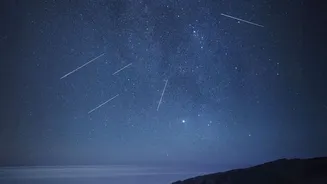
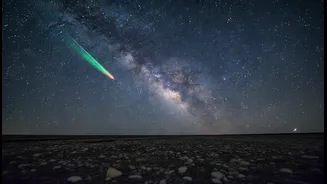
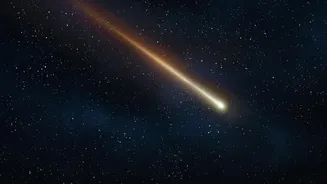
One of the best celestial events for sky-watchers in India is the annual Perseid meteor shower. In 2026, this shower will be active from mid-July to late August, peaking on the night of August 12-13. What makes this year special is that the peak coincides with a new moon, meaning the skies will be exceptionally dark and perfect for viewing. Under ideal conditions, you could see between 50 and 100 meteors per hour. While the monsoon season can bring cloudy skies to much of India, areas like Ladakh and Spiti, which are in a rain shadow, offer clearer viewing opportunities.
Top Apps for Stargazing
With so many apps available, here are a few of the most reliable and user-friendly options for both Android and iOS: Star Walk 2: A popular choice for beginners, this app provides a real-time sky map, information on celestial events, and beautiful 3D models of constellations. Its augmented reality (AR) mode overlays the star map onto your camera's view, making it incredibly intuitive to find objects in the sky. SkyView Lite: This free app is excellent for casual stargazers. It uses AR to identify celestial bodies as you point your phone at them, day or night. It can function without Wi-Fi or GPS, making it perfect for remote, dark-sky locations. Stellarium Mobile: Known for its realistic 3D sky simulation, Stellarium is like having a planetarium in your pocket. It shows a vast catalogue of stars, nebulae, and galaxies and can simulate the view from any date, time, and location. The base version is powerful, with an even more detailed version available for serious enthusiasts.
How to Use Your App for a Meteor Shower
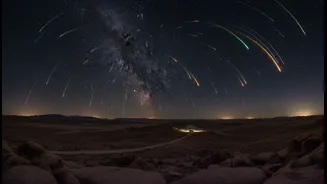
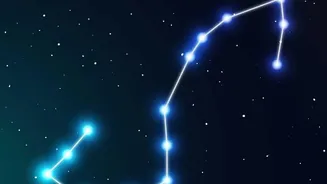
Once you've downloaded your chosen app, using it is simple. First, grant it location access so it can calibrate to your position. On the night of the shower, use the app's search function to find the radiant constellation—for the Perseids, this is Perseus. The app will then guide you, usually with an on-screen arrow, to point your phone in the right direction. While the meteors will appear to come from this point, they can streak across any part of the sky. The best approach is to lie back and take in as wide a view as possible, using the app as your initial guidepost.
Tips for the Best Viewing Experience
An app can point you in the right direction, but a little preparation goes a long way. For the best experience, find a location far from city lights, as light pollution can wash out all but the brightest meteors. Give your eyes about 20-30 minutes to adjust to the darkness; avoid looking at your phone screen during this time or use the app's red-light 'night mode' to preserve your night vision. No special equipment is needed—meteors are best seen with the naked eye. Get comfortable on a reclining chair or a blanket, and be patient. The celestial show is well worth the wait.