






The Science of Comfort Cravings
There's a scientific reason behind the sudden urge for indulgent food when the skies turn grey. The drop in sunlight during the monsoon can lead to lower levels of serotonin, a hormone that regulates happiness and appetite. [19, 20, 22] To compensate,
our bodies crave foods that can provide a quick mood boost, particularly carbohydrates and fats, which help produce serotonin. [20, 22] This physiological response explains why a plate of hot, sweet mithai feels so deeply satisfying on a damp, chilly day. [19, 22] It’s not just about taste; it’s a natural quest for warmth and emotional comfort when the weather takes a gloomy turn.
Ghevar: The Quintessential Monsoon Delight
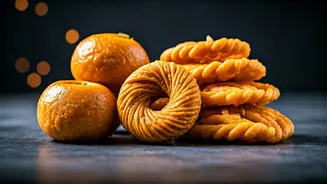
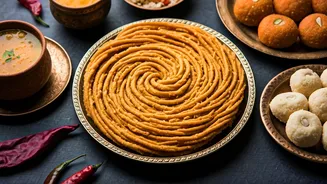
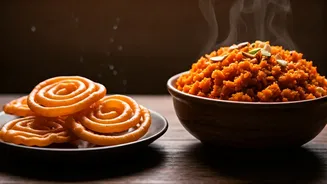
No sweet is more synonymous with the rainy season than Ghevar. [7, 11] This disc-shaped, honeycomb-textured delicacy from Rajasthan appears in sweet shops precisely as the monsoon begins. [7, 11] Its preparation is uniquely dependent on the weather; the high humidity of the monsoon months is essential for creating its signature light, crispy, and porous texture. [11] Traditionally associated with the festivals of Teej and Raksha Bandhan, which fall during the monsoon, Ghevar is more than just a dessert. [7, 15] Often gifted to married daughters by their parents, it symbolises love, blessings, and celebration. [7] Whether enjoyed plain, soaked in sugar syrup, or topped with rich malai and nuts, Ghevar is an annual treat that makes the season feel special. [7, 11]
The Irresistible Charm of Hot Jalebi
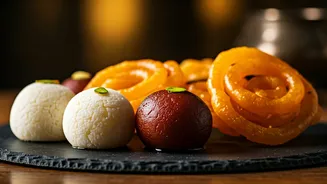
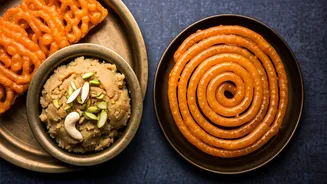
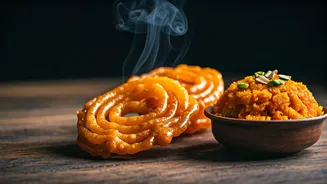
Imagine the sound of rain outside, and a plate of hot, crispy, syrup-drenched jalebis in front of you. This pairing is nothing short of magical for many. [9] The vibrant orange spirals, crunchy on the outside and chewy within, are a crowd favourite year-round, but they become especially popular during the monsoon. [8, 10] Often paired with a dollop of creamy rabri, the contrast of warm, sweet jalebi with the cool, damp weather creates a comforting sensory experience. [9] In many parts of North India, the sight of jalebis being freshly fried on a rainy day is a cherished cultural scene, an invitation to indulge in a moment of pure bliss.
A Culinary Tour of Regional Monsoon Sweets
The love for monsoon sweets extends across India, with each region offering its own unique delicacies. In Goa, the arrival of rain means it's time for Patoleo, a fragrant sweet where a paste of rice is spread on turmeric leaves, filled with a mixture of coconut and jaggery, and then steamed. [6, 17] The turmeric leaves, which are abundantly available during this season, impart a distinct aroma. [16, 17] Meanwhile, Maharashtra offers the comforting Puran Poli, a sweet flatbread stuffed with a mix of jaggery and lentils, served warm with ghee. [8, 9] In states like Bihar and Odisha, soft, pancake-like Malpuas soaked in sugar syrup are a rainy-day staple. [5, 8] Further south, homes might be filled with the aroma of Payasam or Kheer, a creamy milk-based pudding served warm to ward off the chill. [9, 12]
More Than Just a Treat
The connection between rain and mithai is woven into the cultural and emotional fabric of India. It’s a tradition passed down through generations, evoking nostalgia for childhoods spent watching the rain with a sweet treat in hand. [6] These sweets are often central to monsoon festivals, reinforcing community bonds and a shared sense of celebration. [11, 14] The act of preparing or sharing these desserts becomes a ritual that marks the season, turning a simple craving into a meaningful experience. It’s a celebration of nature’s rhythm and the simple joys that come with it—a reminder that a little sweetness can make even the greyest of days feel bright.