






The Slow Descent
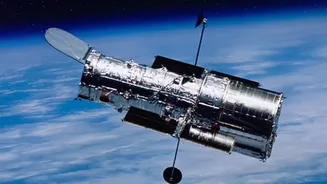
Like all objects in low-Earth orbit, the Hubble Space Telescope is subject to atmospheric drag. Even at its altitude, hundreds of kilometres above the surface, there are trace amounts of atmospheric gases that create a tiny but constant friction. This
friction gradually slows the telescope, causing its orbit to decay. Since the final Space Shuttle servicing mission in 2009, which did not include a reboost, Hubble's altitude has been steadily decreasing. Without an engine of its own to counteract this pull, its fate is a gradual descent toward Earth, with a predicted re-entry sometime in the mid-2030s. This orbital decay is the single biggest threat to an otherwise healthy and scientifically productive observatory whose instruments could function for years to come.
A New Kind of Rescue Mission
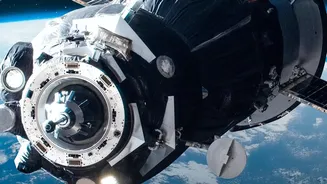
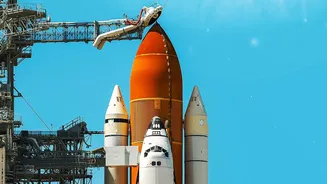
In the past, Hubble was serviced by astronauts on crewed Space Shuttle missions. These complex operations allowed for repairs, upgrades, and orbital reboosts. With the shuttle program retired, NASA is now looking at a different model. On October 29, 2026, the agency released a formal Request for Information (RFI), asking private companies for their ideas on how to save the iconic telescope. This is not a contract, but rather a market survey to see what is possible. The RFI outlines three potential missions: reboosting Hubble to a higher, more stable orbit; servicing it with new components; or ensuring its safe, controlled de-orbit at the end of its life.
The Commercial Opportunity
NASA's call to the private sector signals a significant shift. The agency is leveraging the rapid growth of the commercial space industry, which has seen companies develop new capabilities for satellite servicing, rendezvous, and docking. For any company that can present a viable plan, the mission would be a landmark achievement. The RFI specifies that a reboost mission would need to raise Hubble to an altitude of at least 600 kilometres by 2032. Such a boost could extend the telescope's life by 25 years or more. The contractor would be responsible for nearly the entire mission, including the launch vehicle, the servicing spacecraft, and all mission operations, potentially even including a crew if the proposal calls for it. While NASA has not allocated funding for a mission yet, this RFI opens the door for companies like SpaceX, Northrop Grumman, and startups such as Astroscale to pitch their solutions.
Why Hubble Is Still Crucial
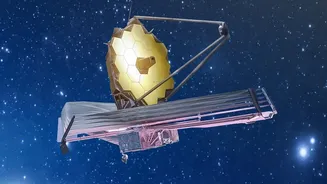
While the James Webb Space Telescope (JWST) has captured the world's imagination with its stunning infrared images, it is not a replacement for Hubble. Hubble remains unique in its ability to observe the universe in visible and ultraviolet light, providing a different, but equally crucial, perspective on the cosmos. Losing Hubble would create a gap in astronomy that might not be filled until the proposed Habitable Worlds Observatory launches in the 2040s. Extending Hubble's life ensures that this vital scientific capability is not lost, allowing for continued discoveries and providing a critical bridge to the next generation of great observatories.
What Happens Next?
Private companies have until November 30, 2026, to submit their ideas to NASA. This is not the first time the idea has been explored; a 2022 study with SpaceX and the Polaris Program considered a crewed mission, but NASA ultimately decided not to proceed at that time. This new request is broader and comes as the timeline for a solution becomes more urgent. The failure of a recent, fast_tracked mission to save the Swift Observatory serves as a cautionary tale, highlighting the immense difficulty of these operations and the need for careful, early planning. The responses to this RFI will give NASA a clear picture of the technical maturity, cost, and risks of various commercial options, paving the way for a decision that could keep humanity's window to the universe open for another decade or more.