



What is a Planetary Conjunction?
First, let's clear up a common misconception sparked by the headline. Planets don't 'flash' their own light like stars do. Instead, they shine by reflecting the light of our Sun. A 'conjunction' is an astronomical event where two or more celestial objects
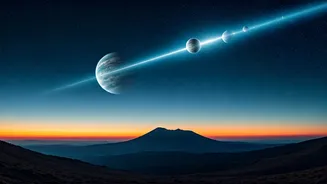
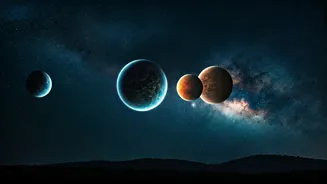
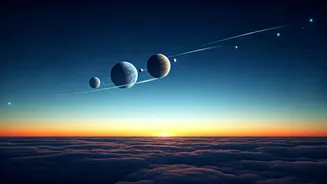
appear to be close to one another in the sky, as seen from our vantage point on Earth. Think of it as a cosmic photo-op. The planets aren't actually close to each other in space—in fact, they remain millions of kilometres apart on their own orbits. It’s purely a line-of-sight illusion, but a spectacular one nonetheless. When three prominent planets like Jupiter, Saturn, and Mars get involved, it creates a truly memorable alignment that captures the imagination.
The Celestial Trio: Jupiter, Saturn, and Mars
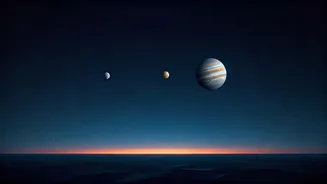
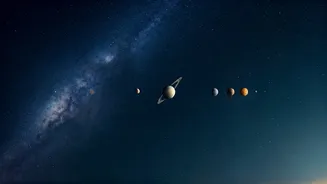
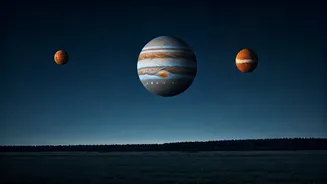
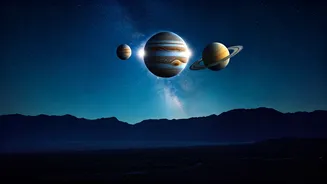
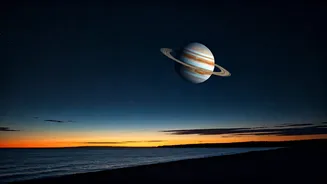
While different planets can be part of a conjunction, a common and striking trio involves Jupiter, Saturn, and Mars. These are often called 'major' planets for good reason. Jupiter, the king of the planets, is the largest in our solar system and shines with a bright, steady, silvery light. Saturn, famous for its magnificent rings (though you’ll need a telescope to see them), often appears as a yellowish-white point of light. Mars, the 'Red Planet', is easily identifiable by its distinct rusty hue. When these three wanderers appear to gather in the same patch of sky, it’s a chance to see a significant part of our solar system's architecture in a single glance. Each moves at a different speed in its orbit, so these gatherings are special and don't happen every day.
How to Tell Planets from Stars
When you look up at the night sky, how can you be sure you're looking at a planet and not just a bright star? There's a simple trick: stars twinkle, planets don't (at least not as much). Twinkling, or 'scintillation', happens because the light from distant stars gets bent and distorted by Earth’s turbulent atmosphere. Because stars are so far away, they are essentially single points of light, making this distortion very noticeable. Planets, being much closer to us, appear as tiny discs rather than points. This larger apparent size makes their reflected light much more stable as it passes through our atmosphere, so they tend to shine with a steady, unwavering glow. Look for the bright 'stars' that aren't twinkling—chances are, you've found a planet.
Best Ways to Watch from India
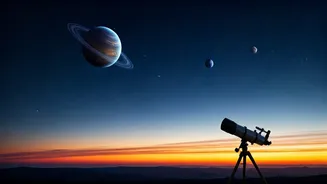
You don't need expensive equipment to enjoy a planetary conjunction. The most important thing is a clear, dark sky. For the best experience, try to get away from the light pollution of major cities. Find an open area like a park, a rooftop, or a location on the outskirts of town with an unobstructed view of the horizon. Check online astronomy calendars or apps for the specific dates and times of the next visible conjunction. These events are often best viewed just after sunset in the western sky or just before sunrise in the eastern sky. While you can see the planets with your naked eye, a simple pair of binoculars will enhance the view, potentially revealing Jupiter's largest moons or giving you a better sense of Mars's colour. A small telescope will, of course, bring them into even sharper focus.
A Dance of Orbital Mechanics
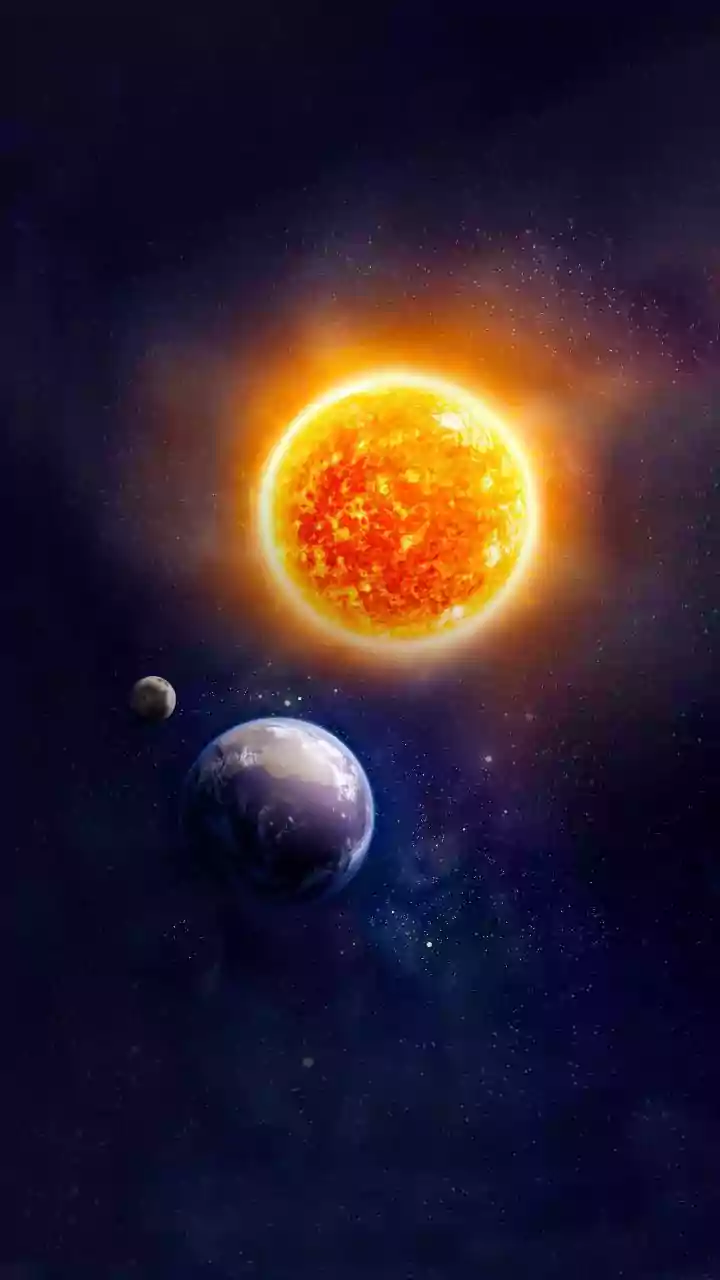
These celestial alignments are not mystical omens but the beautiful and predictable result of gravity and motion. Every planet in our solar system, including Earth, is constantly moving, orbiting the Sun on a relatively flat plane called the ecliptic. Because we are all moving at different speeds and distances from the Sun, our views of each other are always changing. A conjunction is simply a moment when, from our moving platform (Earth), two or more other moving planets happen to line up in our field of vision. It's a reminder of the immense, clockwork-like nature of our solar system—a silent, graceful dance that has been playing out for billions of years.