
The Science of a Sizzle
At its heart, tempering spices—known as tadka, chaunk, or baghar in different parts of India—is a rapid chemical extraction. Most of the aromatic compounds responsible for the signature flavour of spices like cumin, mustard, and coriander are fat-soluble,
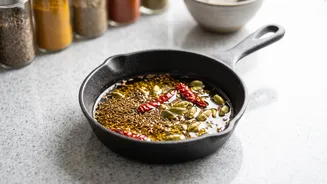
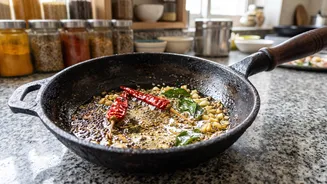
not water-soluble. This means they need fat, like oil or ghee, to unlock their full potential. When whole spices hit hot oil, the heat ruptures their tough cellular walls, releasing the volatile essential oils trapped inside. The hot fat acts as a solvent, dissolving these oils and becoming a carrier that distributes flavour evenly throughout a dish, a feat that boiling in water simply cannot achieve. The process is incredibly fast, often lasting less than a minute, but its impact is profound, transforming a simple dish into something aromatic and complex.
The ‘Goldilocks’ Zone for Oil
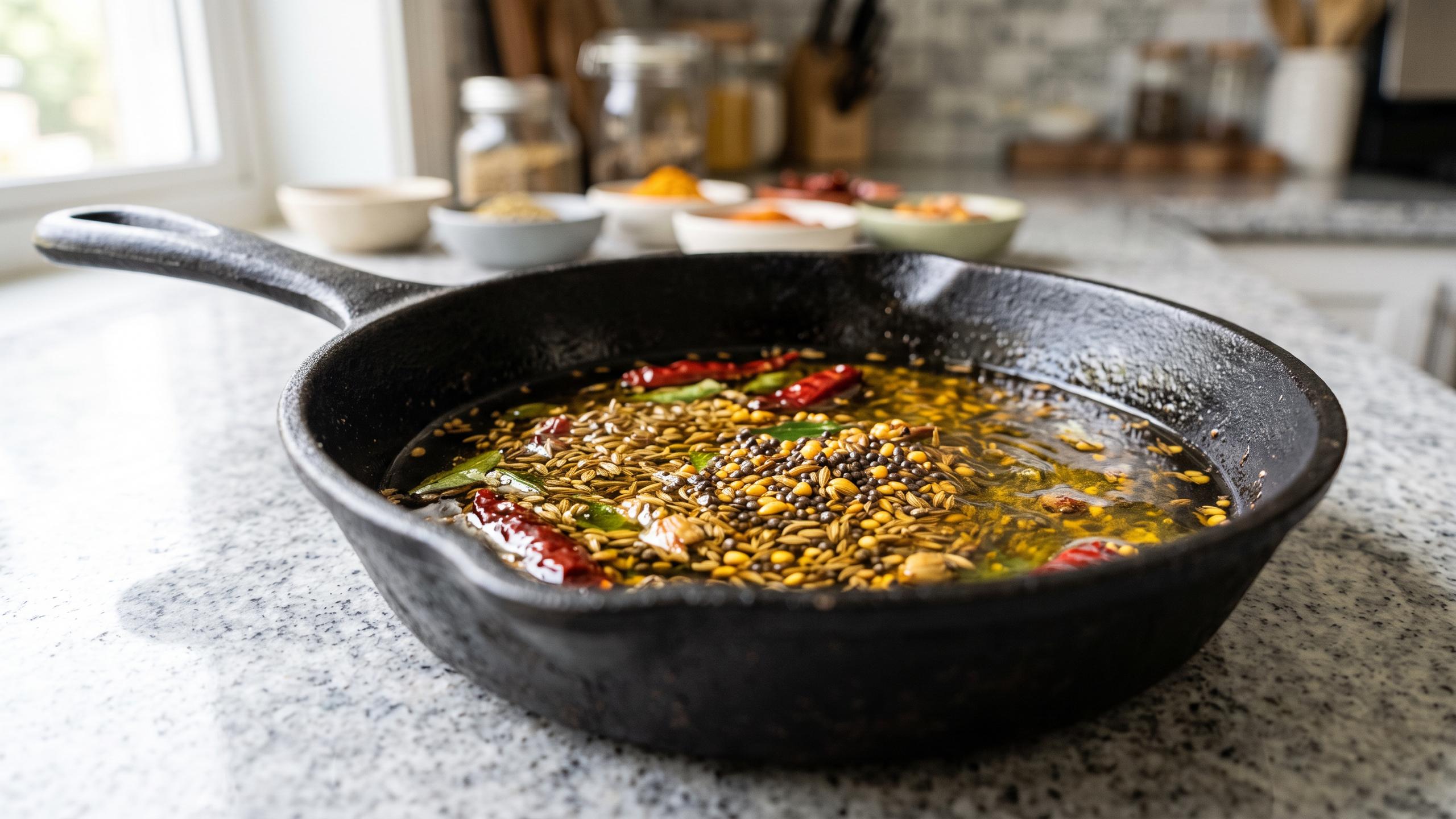
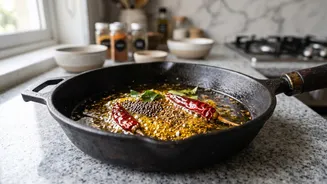
The temperature of your oil is the single most critical factor in a successful tadka. Too cool, and the spices will just sit there, absorbing oil without releasing their essence, leading to a raw, weak flavour. Too hot, and they will scorch in seconds, creating a bitter, acrid taste that can ruin the entire meal. The ideal temperature range for tempering is generally between 160°C and 200°C. In this sweet spot, the oil is hot enough to make mustard seeds pop and cumin seeds sizzle, signalling that the essential oils are being released effectively. The high heat also triggers the Maillard reaction on the surface of the spices, creating deeper, toasted notes that didn't exist in their raw state.
How to Judge Temperature Without a Thermometer
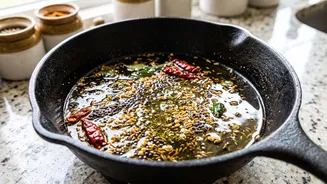
You don't need a thermometer to nail your tadka. Indian kitchens have relied on sensory cues for generations. The most common test is to drop a single mustard or cumin seed into the heated oil. If it sizzles and pops immediately, your oil is ready. If it sinks and does nothing, the oil is too cold. If the seed turns dark instantly and the oil is smoking, it's far too hot and you risk burning your spices. Another simple method is to dip the handle of a wooden spoon into the oil; if the oil bubbles steadily around the wood, it's at the right temperature for frying. Learning to read these cues is the key to consistency.
The Right Order of Operations
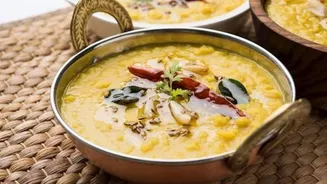
Because different spices have different densities and burn points, the order in which you add them to the hot oil is crucial. The golden rule is: whole spices first, ground spices last. Start with hard, dense seeds that need the most heat and time, like mustard seeds. Wait for them to pop completely, which indicates they've released their flavour and prevents bitterness. Next, add other whole seeds like cumin, which only need a few seconds to sizzle and turn aromatic. More delicate ingredients like dried chillies and curry leaves follow, as they cook very quickly. Finally, ground spices like turmeric, chilli powder, and hing (asafoetida) should be added at the very end, often after the heat has been turned off. Their large surface area means they can burn in less than 10 seconds in hot oil. Adding them last to the residual heat ensures they release their colour and aroma without scorching.