






Colour, Taste and Texture
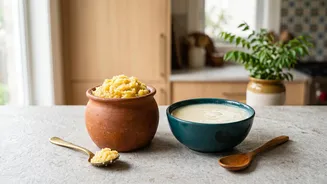
The most obvious difference is colour. Cow ghee has a distinct golden-yellow hue, while buffalo ghee is creamy white. This isn't a sign of purity but of physiology. Cows pass beta-carotene from their plant-based diet directly into the milk fat, giving
the resulting ghee its colour. Buffaloes, on the other hand, efficiently convert beta-carotene into colourless Vitamin A, so their ghee remains white. This also affects taste and texture. Cow ghee is often described as lighter with a nutty aroma, whereas buffalo ghee is richer, denser, and has a more intense flavour. At room temperature, buffalo ghee tends to be firmer due to its different fatty acid structure.
A Look at the Fat Content
Both ghees are nearly 100% fat, but the composition differs. Buffalo ghee generally contains a higher percentage of fat and is more calorie-dense. This makes it a good source of energy for those with high physical demands or who are looking to gain weight. Cow ghee, with its slightly lower fat content, is often considered a lighter option. While both are high in saturated fats, some analyses show buffalo ghee has a slightly higher concentration. Conversely, cow ghee tends to contain more polyunsaturated fatty acids (PUFA), which are considered beneficial fats. For those managing cholesterol, some dieticians suggest cow ghee is a better option in moderation due to its fat profile.
The Vitamin and Mineral Profile
Ghee is a good source of fat-soluble vitamins, including A, D, E, and K, which are vital for everything from immunity to bone health. Cow ghee is particularly celebrated for its high Vitamin A content, which is readily available from the beta-carotene that gives it its yellow colour. Buffalo ghee also contains these vitamins, but often in different concentrations. While some sources claim buffalo ghee is richer in minerals like calcium, magnesium, and phosphorus, it's important to remember that ghee is almost pure fat. Most minerals from the original milk are left behind in the milk solids during the clarification process.
Digestibility and Gut Health
One of the most significant differences is how easily each is digested. Cow ghee is widely considered to be lighter on the stomach. This is attributed to its fatty acid profile and smaller fat globules, which make it easier for the body to break down. With a digestion rate said to be around 96%, cow ghee is often recommended for children, the elderly, and those with sensitive digestive systems. Buffalo ghee, being denser and higher in fat, is considered heavier and may be slower to digest. For this reason, those with a delicate gut may prefer cow ghee for daily consumption.
The Ayurvedic Perspective
In Ayurveda, cow ghee is highly revered and considered a 'sattvic' food, believed to promote positivity and clarity of mind. It is seen as a tridoshic substance, meaning it is generally balancing for all body types (Vata, Pitta, and Kapha). Buffalo ghee, in contrast, is considered more 'tamasic' or heavy. It is said to have a cooling effect on the body and is often recommended for those looking to improve sleep or build strength. Due to its medicinal properties, cow ghee is used as a carrier for many herbal preparations in Ayurveda, helping to deliver the herbs' benefits deep into the body's tissues.
So, Which Ghee Is for You?
The choice between cow and buffalo ghee ultimately depends on your personal health goals and needs. Choose cow ghee if you are looking for a lighter, easily digestible option for daily consumption. It's often the preferred choice for weight management, children's diets, and for those with sensitive digestion. Choose buffalo ghee if you need a source of dense energy, are aiming to gain weight, or engage in intense physical activity. Its rich texture also makes it ideal for preparing traditional sweets and rich curries. Neither ghee is inherently 'bad'. Both are natural, nourishing fats that have been part of the Indian diet for centuries. Understanding their unique nutritional profiles allows you to make an informed choice that best suits your body and lifestyle.