

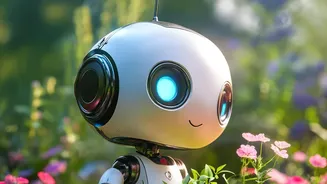


The New Digital Coworker
Forget the idea of a robot sitting at the next desk. For most professionals in India and around the world, AI's arrival has been far more subtle. It has integrated itself into the software we already use, acting as a 'copilot' or a smart assistant. Tools
like Microsoft's Copilot in Excel and Word, and Google's generative AI features, are now embedded in daily workflows. These systems don't replace human professionals; they augment their capabilities by handling repetitive, time-consuming parts of the job. Think of it less as a replacement and more as a powerful intern that can draft emails, summarize long documents, and organise data, freeing up employees to focus on strategy, creative problem-solving, and client relationships.
From Blank Page to First Draft
For anyone in a role that involves writing—be it marketing, sales, or even software development—the 'blank page' problem is a familiar hurdle. Generative AI tools have fundamentally changed this process. Professionals are now using AI to brainstorm ideas, create outlines, and generate initial drafts for reports, proposals, and even code. This dramatically speeds up content creation, shifting the human's role from a generator to an editor and strategist. The skill is no longer just about writing, but about crafting the right prompts and critically evaluating the AI's output to ensure accuracy, tone, and originality. This partnership allows teams to produce more, faster, turning what was once a multi-hour task into a much shorter refinement process.
Making Sense of the Data Deluge
Modern businesses run on data, but professionals can easily get bogged down trying to analyse it. AI is transforming this by automating data analysis and report generation. For example, an AI assistant can now scan a complex sales spreadsheet and instantly identify key trends, create charts, and summarise findings in plain language. This capability democratises data analysis, allowing team members without a deep statistical background to derive insights and make data-informed decisions. The result is a workforce that is more agile and responsive, able to spot opportunities and risks without waiting for a dedicated analyst. Productivity gains in this area are significant, with some studies showing that AI support can make employees dramatically more efficient.
Smarter Communication and Administration
A significant portion of any professional's day is spent on administrative tasks like managing emails and scheduling meetings. AI is chipping away at this 'productivity tax'. Intelligent email clients can now filter messages, draft replies, and adjust the tone of your writing for different audiences. Similarly, AI-powered assistants can schedule meetings by coordinating with multiple participants' calendars, eliminating the frustrating back-and-forth. Tools that provide automated transcriptions and summaries of virtual meetings mean that team members can focus on the discussion itself, confident that the key points are being captured accurately. These small efficiencies add up, saving professionals several hours each week.
The Shifting Skill Set
As AI takes over more routine tasks, the value of uniquely human skills is rising. The future of work isn't just about learning to use AI tools; it's about strengthening the abilities that AI cannot replicate. According to research, skills like critical thinking, creativity, strategic decision-making, and emotional intelligence are becoming more crucial than ever. The most effective professionals will be those who can work alongside AI, using it to handle the 'what' so they can focus on the 'why' and 'how'. This shift requires a commitment to continuous learning and adaptability. As AI capabilities evolve, the jobs of tomorrow will be defined not by the tasks we perform, but by the problems we solve and the value we create.