






The Great Retreat of the Southwest Monsoon
The single biggest factor defining October is the withdrawal of the Southwest Monsoon. By the beginning of the month, the monsoon, which brings the majority of India's annual rainfall, has typically retreated from the northern plains. This happens as the sun's
position shifts southward, cooling the Indian landmass and creating a high-pressure system. This reversal of pressure gradients causes the moisture-laden southwesterly winds to weaken and pull back. The retreat is a gradual process, starting in the northwest in September and moving south and east, usually completing its exit from most of the country by mid-October. This withdrawal leads to clearer skies and a significant drop in rainfall for most of northern and central India, heralding the start of the dry season.
The Uncomfortable 'October Heat'
Just as the rains depart, many regions, particularly in northern and western India, experience a phenomenon known as 'October Heat'. This isn't just a simple return to hot weather. The post-monsoon atmosphere is still laden with high humidity. When the cloud cover from the monsoon disappears, the land is exposed to direct, strong sunlight. The combination of rising temperatures and high moisture content creates a uniquely oppressive and sultry heat, which can often feel more uncomfortable than the dry heat of summer. This period of sticky, warm weather is a distinct feature of the transition from the wet monsoon season to the cool, dry winter.
Latitude's North-South Divide
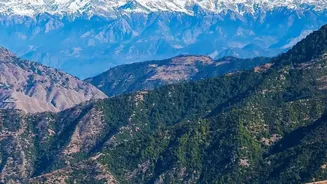
India's vast latitudinal expanse means that October feels very different depending on where you are. While Delhi and the northern plains are experiencing the dry, post-monsoon 'October Heat', the higher altitudes of the Himalayas are already welcoming autumn, with pleasantly cool days and chilly nights. The Tropic of Cancer, which cuts through the middle of the country, acts as a rough dividing line. North of it, in the subtropical zone, the temperature range between day and night grows more significant. To the south, in the tropical zone, temperatures remain more consistently high and the climate is less influenced by the dramatic seasonal shifts felt in the north.
Coastlines, Cyclones, and a New Monsoon
While most of India dries out, the story along the southeastern coast is entirely different. This is where the Northeast Monsoon, also known as the retreating monsoon, comes into play. As the high-pressure system builds over the land, winds start flowing from the northeast. When these dry land winds cross the warm Bay of Bengal, they pick up significant moisture. This moisture is then released over Tamil Nadu, southern Andhra Pradesh, and parts of Kerala, making October to December their primary rainy season. The onset of this monsoon is usually around mid-to-late October. This period is also a peak season for the formation of tropical cyclones in the Bay of Bengal, which can bring destructive winds and torrential rainfall to the eastern coastal states.