
Deconstructing a Culinary Classic
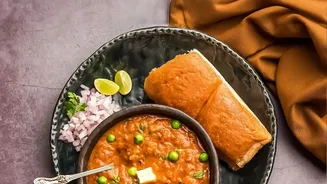
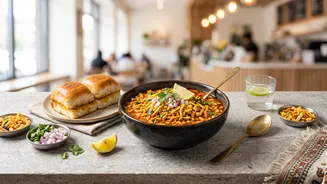
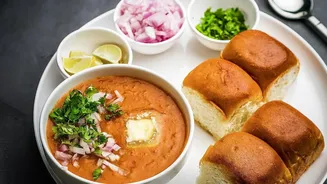
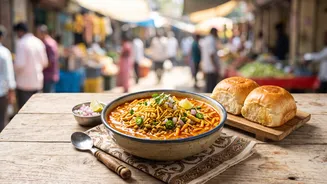
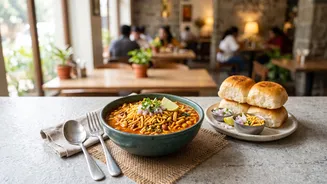
At its heart, misal translates to 'mixture' in Marathi, a name that perfectly captures its essence. The dish is an assembly of several distinct components that come together to create something magical. The foundation is a flavourful curry, which itself
has two parts: a thick stew of sprouted moth beans (matki) called 'usal', and a fiery, thin gravy known as 'kat' or 'rassa'. This base is then generously topped with a variety of garnishes, including chopped onions, fresh coriander, and a squeeze of lemon. But the two elements that define its textural genius are the pillowy 'pav' and the crispy 'farsan'.
The Foundation: Wholesome Matki Usal
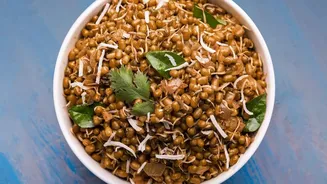
The soul of the misal is the 'matki usal'. Matki, or moth beans, are small, brown legumes with a nutty, earthy flavour. For misal, these beans are sprouted, a process that not only enhances their nutritional value but also gives them a tender bite. The sprouted beans are cooked into a thick, moderately spiced stew, often with onion, ginger, garlic, tomato, and a signature blend of Maharashtrian spices. This 'usal' provides a wholesome, protein-rich base that is hearty and satisfying, forming the perfect canvas for the layers to come.
The Fire: Spicy Kat or Rassa
If the usal is the heart, the 'kat' (also called 'tarri' or 'rassa') is the fiery spirit. This is a thin, watery gravy that is unapologetically spicy and packed with flavour. It's typically made from a base of onion, coconut, and a complex blend of whole and ground spices, which often gives it a vibrant red colour from the chillies. Diners are encouraged to add as much or as little kat as they prefer, allowing them to customise the heat level of their bowl. This spicy liquid seeps into every component, binding the flavours together.
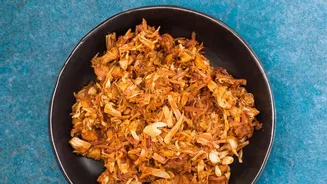
The Essential Crunch: A Shower of Farsan
This is where the magic of texture truly comes alive. 'Farsan' is a broad term for a variety of crunchy, savoury fried snacks. In the context of misal, it’s a generous topping of a mix that can include sev (crunchy chickpea flour noodles), chiwda (a spiced mix with flattened rice), fried lentils, and peanuts. This layer is non-negotiable. It provides a loud, satisfying crunch that stands in stark contrast to the soft, stewed sprouts beneath it. The farsan is added just before serving to ensure it remains crispy, offering a textural surprise in every single bite.
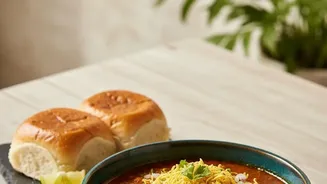
The Perfect Partner: Soft Ladi Pav
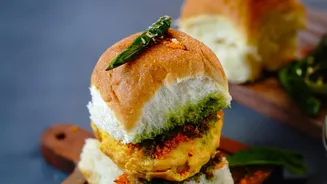
No misal is complete without its partner, the 'pav'. These are soft, fluffy, slightly sweet bread rolls, similar to dinner rolls, that were introduced to the region by the Portuguese. The pav serves a dual purpose. Its primary role is as a vehicle, perfect for tearing and scooping up the complex mixture of curry and toppings. Secondly, its soft, absorbent texture and mild flavour provide a perfect balance to the intense spice of the 'kat' and the crunch of the 'farsan', offering a moment of gentle reprieve in a dish that is otherwise an explosion of sensation.
A Dish with Many Addresses
While the core components remain the same, Misal Pav has many regional identities across Maharashtra. Kolhapuri Misal is legendary for its searing heat, thanks to a special onion-garlic masala. Puneri Misal, from Pune, is often milder, sometimes with a hint of sweetness, and might include potato and pohe (flattened rice) in its toppings. Nashik Misal is famous for its unique 'kala masala' (black spice mix), giving its gravy a darker colour and distinct flavour, and is often served with fried papad. Each version tells a story of its region's palate, but all celebrate the signature interplay of soft and crunchy.