
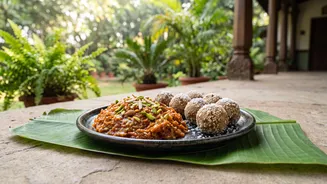
The Royal Feast on a Platter
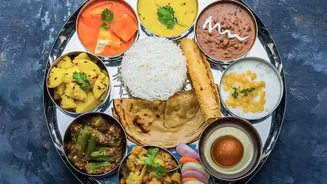
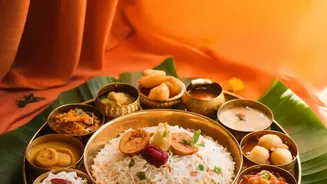
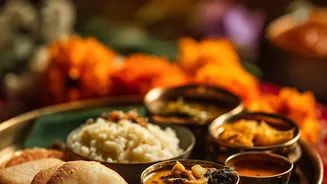
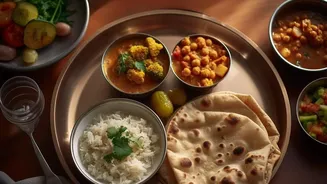
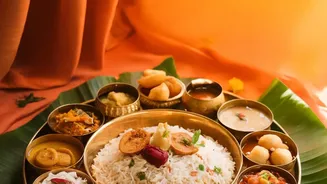
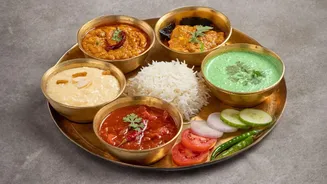
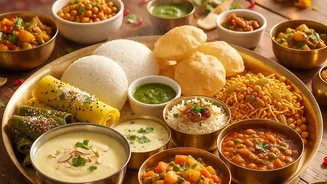
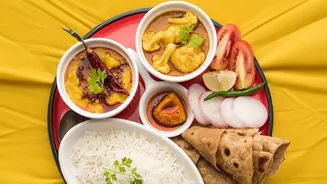
The Rajasthani thali is more than a meal; it’s a panoramic view of the region's culinary philosophy served on a single platter. Shaped by an arid climate and a history of resourcefulness, the cuisine relies heavily on lentils, gram flour, and long-lasting
vegetables. A traditional vegetarian thali is a carefully balanced universe of flavours and textures. You'll find an assortment of small bowls (katoris) filled with dishes like Gatte ki Sabzi (gram flour dumplings in a tangy yoghurt curry), Ker Sangri (a dry curry of desert beans and berries), and perhaps a creamy Malai Pyaaz ki Sabzi. These are complemented by breads like Bajre ki Roti (millet flatbread) and fiery garlic chutney, all working in harmony to create a complete, nutritious, and deeply satisfying experience.
The Holy Trinity: Dal, Baati, Churma
At the heart of any authentic thali lies Dal Baati Churma, Rajasthan's most iconic culinary trio. This dish is a legacy of the state's warrior past, when soldiers would bake balls of dough (baati) in the hot desert sand. Today, the hard wheat baati is baked until golden, broken apart, and generously drenched in ghee. It’s served alongside panchmel dal, a flavourful mix of five different lentils. The experience is completed with churma, a crumbly, sweet dessert made by crushing baked baati and mixing it with ghee and jaggery or sugar. This single combination of savoury, smoky, and sweet encapsulates the soul of Rajasthani hospitality.
Jodhpur’s Savoury Street-Side Stars
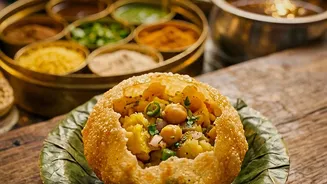
While the thali offers a formal introduction, the streets are where you feel the city’s pulse. Each Rajasthani city has its own signature snacks, and Jodhpur is legendary for its savoury fried treats. The most famous is the Pyaaz ki Kachori, a flaky, deep-fried pastry bursting with a spicy onion filling. Equally beloved is the Mirchi Vada, a large green chilli stuffed with a spiced potato mixture, coated in gram flour batter, and fried to crispy perfection. Enjoying these snacks, often served with a tangy tamarind chutney, is a quintessential Jodhpur experience, connecting you directly to the local way of life.
Jaipur's Sweet and Savoury Delights
Moving to the Pink City, Jaipur, the snack scene diversifies with a greater emphasis on sweets. The undisputed king is Ghevar, a disc-shaped, honeycomb-like sweet made from flour, fried in ghee, and soaked in sugar syrup. It's especially popular during festivals like Teej and Raksha Bandhan. Another must-try is the Mawa Kachori. Unlike its savoury counterparts, this version is filled with a rich, sweetened mixture of khoya (milk solids) and nuts, then dipped in syrup, offering a decadent, melt-in-your-mouth experience. These delicacies are not just desserts; they are edible heritage, representing generations of culinary artistry.
A Tale of Two Flavours
So why is this combination of thalis and snacks the ultimate way to explore Rajasthan’s food? Because it offers two perfectly complementary perspectives. The thali is the grand, composed symphony; it presents the entire culinary repertoire in a structured, balanced format, showcasing the science and tradition behind the cuisine. It’s a sit-down lesson in history and flavour. In contrast, street snacks are the vibrant, improvisational solos. They represent the hyperlocal identity of a place—the specific tastes and textures that define a city's daily rhythm. A Pyaaz ki Kachori in Jodhpur tells a different story from a slice of Ghevar in Jaipur. Together, they offer a complete narrative, from the royal courts to the bustling street corner.