







First, A Refresher On The Deal
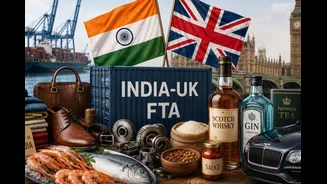
Signed in July 2025, the India-UK Comprehensive Economic and Trade Agreement (CETA) is one of the most significant trade pacts for both nations. The goal is to slash barriers to trade, boost exports, and deepen economic ties, with an aim to double bilateral
trade by 2030. For India, it promises greater access to the British market for goods and services. For the UK, it opens doors to one of the world's fastest-growing economies. The deal officially came into force on July 15, 2026, after years of negotiations.
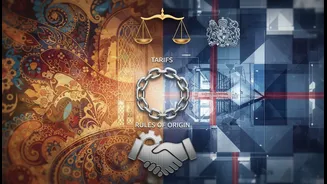
Understanding Tariffs: The Price Of Entry
Think of a tariff as an entry tax on imported goods. Countries use them to protect domestic industries. Under this deal, the UK is eliminating tariffs on nearly 99% of Indian exports. This is a huge win for labour-intensive sectors like textiles, leather goods, and processed foods, which previously faced high duties. In return, India will gradually reduce its own tariffs on certain UK products. For consumers, this means some British goods will become cheaper. The 150% tariff on Scotch whisky, for example, is cut to 75% immediately and will fall further over ten years. Similarly, the hefty 110% import duty on fully built UK cars will be phased down to 10% for a set number of vehicles.
Decoding 'Rules Of Origin'
This might sound technical, but it’s crucial. 'Rules of Origin' determine a product's 'economic nationality'. To qualify for the low- or zero-tariff benefits of the trade deal, goods must prove they were actually made in India or the UK, not just shipped through them. The rules are designed to prevent misuse, ensuring that a company in a third country can't simply slap a 'Made in UK' label on its product after minor packaging in London and export it to India duty-free. For a product to qualify, it must be 'wholly obtained' (like crops grown in India) or undergo 'substantial transformation' within either country. This system supports integrated supply chains between the two nations, as materials from one partner country can be treated as originating in the other.
Social Security: A Win For Indian Professionals
This is a game-changer for India's services sector and its skilled workforce. Previously, Indian professionals sent to the UK on temporary assignments had to make social security contributions in both countries—a system known as 'double contributions'. Since most don't stay long enough to claim UK pension benefits (which typically require about 10 years of contributions), this money was effectively lost. The new agreement, called a Double Contribution Convention (DCC), fixes this. Indian employees on assignment in the UK for up to five years are now exempt from making UK social security payments, provided they continue contributing to their provident fund (EPF) in India. This will benefit an estimated 75,000 Indian professionals and over 900 Indian companies, particularly in the IT sector.