


The Drag Dilemma in Low Orbit
For decades, satellite operators have faced a fundamental trade-off. The closer a satellite is to Earth, the better its performance. For Earth observation, it means higher-resolution images. For telecommunications, it means lower latency and a stronger
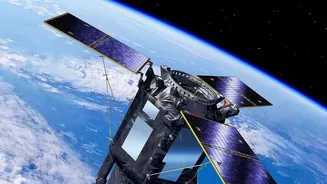
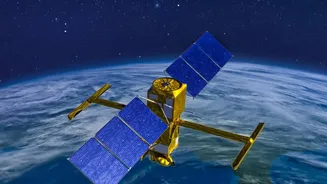
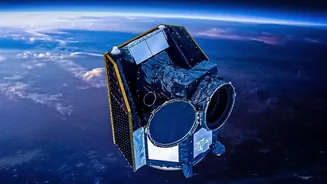
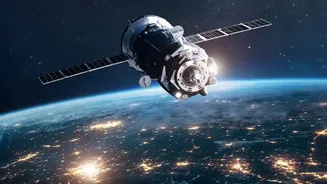
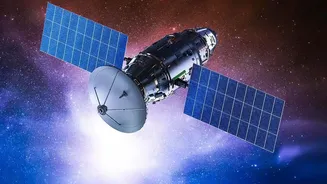
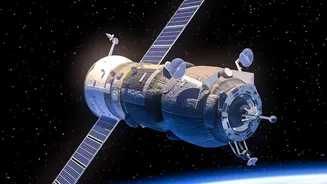
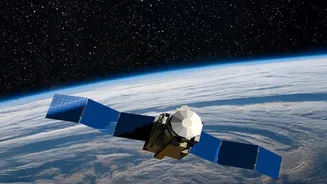
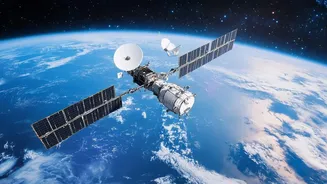
signal. This prime real estate is known as Very Low Earth Orbit (VLEO), an altitude range roughly 150 to 400 kilometres up. But there’s a catch: it's not truly empty space. The residual atmosphere, though incredibly thin, creates constant drag on a satellite moving at over 7 kilometres per second. This friction causes the satellite's orbit to decay, eventually pulling it back to Earth. To stay in orbit, satellites must fire thrusters, but this requires carrying propellant, which is heavy, expensive, and finite. Once the fuel runs out, the mission is over.
A Revolutionary Solution: The Air-Breathing Engine
Imagine a jet engine that works in the near-vacuum of space. That’s the core idea behind Atmosphere-Breathing Electric Propulsion (ABEP). Instead of carrying kilograms of xenon or other propellants, an ABEP system ingests the sparse atmospheric molecules it encounters along its orbit. The technology effectively turns the problem—atmospheric drag—into the solution. By harnessing the very particles that slow it down, a satellite could theoretically maintain its orbit for years without running out of fuel. This innovation transforms satellites from disposable assets with a limited lifespan into potentially permanent fixtures in our upper atmosphere. The European Space Agency (ESA) successfully tested a prototype in 2018, proving the concept was viable.
How Does It Actually Work?
The process is elegant in its simplicity. As the satellite speeds through the VLEO environment, a specially designed intake passive collector scoops up the incredibly few and far-between air molecules, primarily nitrogen and oxygen. These collected particles are then funnelled into an electric thruster. Powered by the satellite’s solar arrays, the thruster uses electric and magnetic fields to ionize the captured gas—stripping electrons from the atoms to create a plasma. This plasma is then accelerated and expelled at extremely high velocity, generating a small but continuous thrust. This thrust is precisely calculated to counteract the atmospheric drag, allowing the satellite to maintain its altitude indefinitely, as long as it has electrical power.
A New Era for Satellites and Space
The implications of this technology are vast. Long-duration missions in VLEO could provide unprecedented high-resolution Earth imagery for climate monitoring, disaster response, and agriculture. For communications, it could lead to even lower-latency global internet coverage than current LEO constellations. Militaries and intelligence agencies are also interested in the potential for persistent surveillance from these lower altitudes. Furthermore, the technology makes space more sustainable. Since these satellites operate in an orbit with atmospheric friction, they naturally deorbit and burn up at the end of their mission when the propulsion system is turned off, reducing the risk of creating long-term space debris. Several entities, from the ESA to private companies in the US and India like Orbitt Space, are actively developing this technology, signalling a new race for the high-value territory of low orbit.