




Our Planet's Invisible Force Field
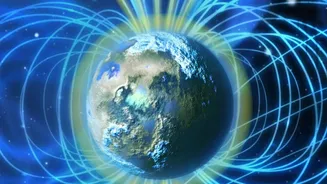
Earth is not defenseless in the vastness of space. Generated by the swirling motion of molten iron in our planet's outer core, a powerful magnetic field surrounds us, creating a protective bubble called the magnetosphere. This shield extends thousands
of kilometres into space, acting as the first line of defense against a constant stream of charged particles flowing from the Sun, known as the solar wind. Without this shield, the solar wind would strip away our atmosphere, leaving the planet exposed and unable to support life as we know it. Most of the time, the magnetosphere deflects the majority of these particles, funnelling some towards the poles to create the beautiful auroras.
The Threat from Our Sun
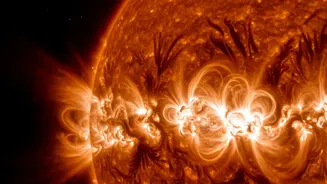
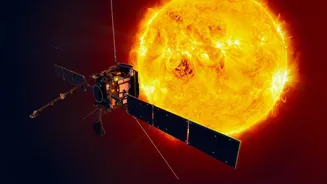
While the solar wind is constant, the Sun occasionally releases much more intense bursts of energy. These events, known as solar flares and coronal mass ejections (CMEs), send huge amounts of radiation and energetic particles hurtling through space. Solar flares are massive explosions on the Sun's surface that release bursts of electromagnetic radiation, including X-rays. CMEs are even more powerful, flinging enormous bubbles of charged particles and magnetic fields into the solar system. When these events are directed at Earth, they can overwhelm our magnetosphere, creating what are known as geomagnetic storms.
A Direct Hit on Plant Life
While Earth's atmosphere and magnetic field protect life on the ground from the most dangerous radiation, intense ultraviolet (UV) radiation from a major solar event can still pose a threat. Plants require sunlight for photosynthesis, but excessive or harmful radiation can be damaging. High levels of UV radiation can inhibit photosynthesis, damage DNA within plant cells, and lead to oxidative stress, where unstable molecules called reactive oxygen species (ROS) harm cell membranes and proteins. This can result in stunted growth, reduced metabolic activity, and ultimately, lower crop yields. While plants have mechanisms to cope with some level of excess light, a sudden, intense spike of radiation could overwhelm these natural defenses.
Technology Under Siege
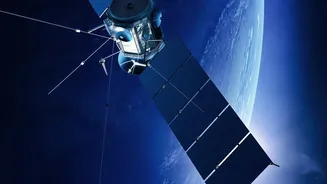
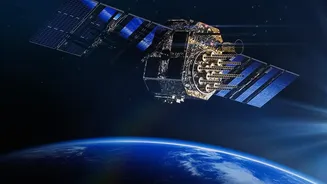
Perhaps the most immediate and significant threat to modern agriculture from a solar storm is not the radiation itself, but its effect on our technology. Precision agriculture has become the backbone of modern farming, relying heavily on the Global Positioning System (GPS) for everything from steering tractors and combines to the precise application of fertilizer and pesticides. Geomagnetic storms directly interfere with these systems. The influx of charged particles disturbs the ionosphere, the layer of the atmosphere that GPS signals must travel through. This disturbance can degrade signal accuracy from a few centimetres to tens of meters, or cause a total signal loss. During major solar storms in May 2024, farmers reported their GPS-guided tractors veering off course or stopping completely, halting planting operations at a critical time. One farmer memorably described the equipment as acting like it was 'demon possessed'.
The Cost of Disruption
The shift to GPS-dependent farming has been swift. While fewer than 10% of industrial farms relied on GPS in 2003, the number is vastly higher today, with some modern tractors not even having a manual override for certain functions. This dependency creates a new vulnerability. A disruption lasting just a few days during peak planting season can lead to significant financial losses from delayed operations and lower yields. Studies have estimated that a major, year-long loss of GPS could result in billion-dollar losses for agriculture in the American Midwest alone. The 2024 storms, which were powerful but short-lived, still caused hundreds of millions of dollars in losses due to disrupted planting schedules. These events highlight how our food supply is now connected to space weather in ways it never was before.