



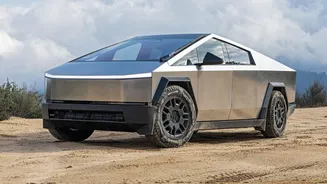
Elon Musk has announced that Tesla will wind down production of its Cybertruck around the middle of 2027. The move is intended to free up manufacturing space at its Giga Texas facility for the company's futuristic, autonomous Cybercab.
A Strategic Pivot, Not a Sudden End
The announcement,
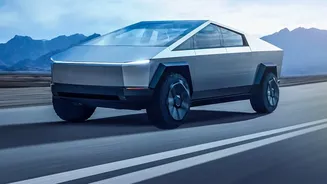
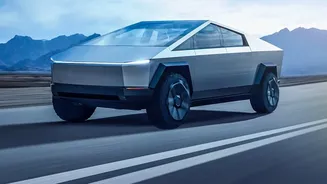
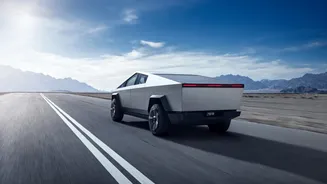
made by Elon Musk on the social media platform X, confirms that the angular, stainless-steel pickup will cease production at the Austin plant in mid-2027. This decision concludes a challenging chapter for a vehicle that was plagued by production delays, quality control issues, and sales figures that fell significantly short of initial projections. After its 2019 reveal, the Cybertruck was originally scheduled for a 2021 launch, but the first deliveries didn't happen until late 2023. Musk himself acknowledged the immense difficulty in scaling production, stating, 'We dug our own grave with Cybertruck'. Sales peaked in 2024 before seeing a sharp decline, making the massive initial sales targets of 250,000 units per year seem unattainable.
The Challenge of Building the Future
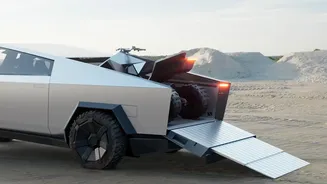
From the beginning, the Cybertruck was a manufacturing marvel and a nightmare rolled into one. Its body is made from a proprietary, ultra-hard, cold-rolled stainless steel that can't be stamped like traditional car panels. Tesla had to invent a new 'air bending' process to shape the thick metal sheets. This unique construction, while providing extreme durability, made mass production incredibly complex and costly. The vehicle suffered from numerous recalls for issues ranging from faulty accelerator pedals to problems with its massive windshield wiper and body panel adhesion. Ultimately, the radical design that captured global attention also became its biggest hurdle, preventing regulatory approval in key markets like Europe due to safety standards.
Making Way for the Cybercab
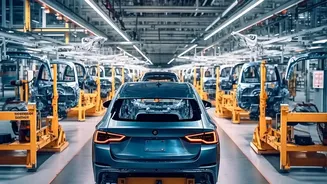
The primary reason cited for winding down the Cybertruck line is to reallocate resources and factory space to the Cybercab. This two-seater, autonomous vehicle, which has no steering wheel or pedals, represents Tesla's strategic shift toward robotics and artificial intelligence. Musk's vision for Tesla's future appears less focused on selling individual cars and more on operating a fleet of self-driving robotaxis. The Giga Texas factory is already expanding to accommodate new projects, including an on-site semiconductor fab and facilities for the Optimus humanoid robot. Ramping up the Cybercab, which began production earlier this year, is now the clear priority for the Austin plant.
What This Means for the Auto Industry
The Cybertruck's short production run serves as a powerful case study in automotive ambition. While it failed as a mass market product, its development pushed boundaries in materials science and manufacturing processes like gigacasting—where large sections of a vehicle's frame are cast as a single piece. These innovations are not disappearing; Cybertruck's lead engineer noted the vehicle was an 'incredible technology development platform' that 'lives on through Cybercab'. While competitors like Ford and Chevrolet have successfully launched more conventional electric pickups, Tesla is doubling down on its 'unboxed' manufacturing strategy and its vision of a driverless future. The decision to sacrifice the Cybertruck suggests the company believes the greater long term value lies in becoming a technology and AI leader, not just a car company.