




The Cardinal Sin of Organising
In the excitement of starting a decluttering project, it’s tempting to jump straight to the fun part: buying stylish bins, baskets, and racks. Many people purchase storage containers without first assessing what they need to hold or measuring the space.
This impulse buy often leads to frustration. An organiser that's too big won't fit, and one that's too small wastes precious space, effectively adding to the clutter instead of solving it. Professional organisers agree that buying products before measuring is one of the biggest mistakes you can make, especially in a small home where every centimetre counts. The perfect storage solution is one that fits your space flawlessly, and that process always begins after you declutter and before you shop.
Your Tape Measure Is Your Best Friend
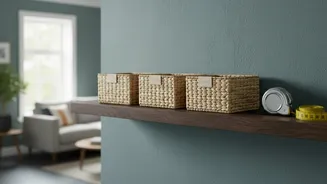
The key to avoiding this common pitfall is simple: measure everything first. But a proper measurement goes beyond a quick check of the shelf’s width. For a perfect fit, you need to measure three key dimensions: the width (side to side), the depth (front to back), and the height (top to bottom). It's wise to take measurements at the front, middle, and back of a shelf, as walls and cabinets are rarely perfectly even. Always use the smallest of these measurements to guide your purchase. Don’t forget to account for any obstructions like hinges, pipes under the sink, or the lip of a shelf that might reduce the usable space. Taking a few extra minutes to get precise dimensions will save you the headache of returns and the disappointment of a disorganised space.
Think in Three Dimensions
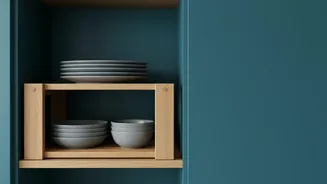
Effective organisation in small Indian homes often means thinking vertically. When shelf space is limited, look up. Utilising vertical space on walls, behind doors, or inside deep cupboards is a game-changer. Consider shelf risers that can double your storage in a kitchen cabinet, allowing you to stack plates or spice jars more efficiently. For deep wardrobes, a common feature in many homes, shelf inserts can create tiers of storage, making it easier to see and access folded clothes. In kitchens, pull-out shelves or slim, wheeled storage carts that fit into narrow gaps can bring order to chaos. But for any of these solutions to work, accurate measurements are critical. You need to know the height between shelves, the clearance needed for a pull-out drawer, and the depth of the cabinet.
A Pre-Shopping Measurement Checklist
Before you head to the store or browse online, create a detailed list on your phone or in a notepad. For each area you plan to organise, note the following:
1. Usable Width: The narrowest side-to-side measurement, accounting for any hardware.
2. Usable Depth: The measurement from back to front, ensuring the container won't hang over the edge.
3. Usable Height: The clearance between shelves or the height of a drawer. This is crucial for stackable bins or drawer dividers to ensure everything closes properly.
4. Item Dimensions: Also measure the items you plan to store. A bin might fit the shelf, but if it’s too shallow for what you need to put inside, it’s not the right solution.
5. Access and Clearance: Leave a little extra room for your hands to easily place and remove items. Don't buy a container that fits so snugly you can't access what's inside.