



Location, Location, Location
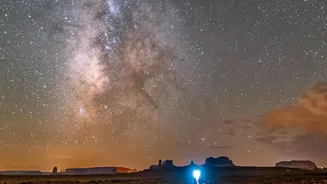
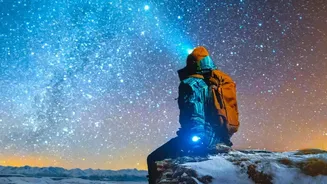
The first step to a great night of stargazing is finding the right spot. The biggest obstacle for most people is light pollution, the glow from cities and towns that washes out fainter stars. While a trip to a designated Dark Sky Park is ideal, it’s not
always necessary. Even in a suburban area, you can significantly improve your view by finding a local park, a field, or any open space away from immediate streetlights and building lights. The goal is to get as much of the horizon in view as possible, far from direct sources of light. When you've found your spot, remember to turn off all your own lights, including your phone screen, to let the darkness truly set in.
Let Your Eyes Adjust
Once you're in a dark location, the most crucial tool you have is your own vision, but it needs time to adapt. It takes about 20 to 30 minutes for the human eye to reach its maximum sensitivity to low light. During this period, avoid looking at any bright lights, especially your phone. A single glance at a bright screen can reset your night vision completely. If you need a light source, use a red flashlight. Red light has a longer wavelength that doesn't trigger the same response in your pupils, allowing you to preserve your hard-earned night vision while still being able to see your surroundings. Many stargazing apps have a red-light mode for this exact reason.
Your Guide in Your Pocket
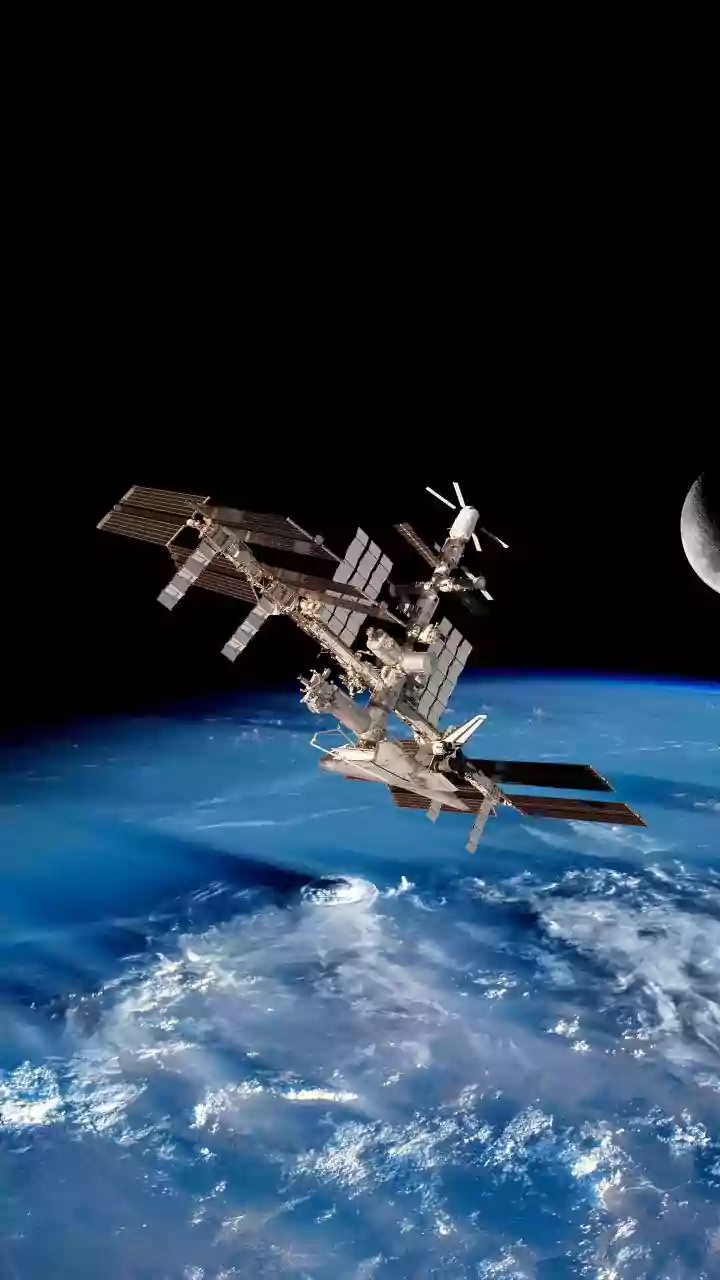
You don't need to memorise star charts to navigate the night sky. A smartphone app can act as your personal planetarium. Apps like SkyView Lite, Star Walk 2, or Stellarium use your phone's GPS and compass to identify what you're looking at in real-time. Just point your device at a bright object in the sky, and the app will tell you if it's a star, a planet, or even a satellite like the International Space Station (ISS). These apps are a game-changer for beginners, helping you learn constellations and track the movement of celestial bodies without any prior knowledge. Many are free or offer very affordable premium versions with even more features.
What to Look For
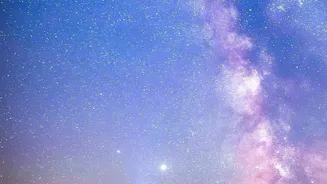
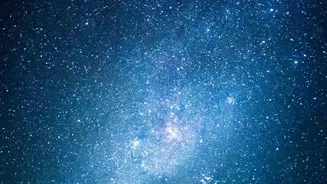
The night sky is full of objects you can spot with the naked eye. The Moon is the most obvious and rewarding target, with its visible seas and craters. Planets are also surprisingly easy to spot; a key difference is that stars twinkle, while planets usually shine with a steady light. Venus is often the brightest object in the sky after the Moon, appearing as a brilliant 'evening star' or 'morning star'. Jupiter and Saturn are also readily visible. On a dark, moonless night, you might see the faint, milky band of our own galaxy, the Milky Way, stretching across the sky. And if you're lucky, you may spot the faint smudge of the Andromeda Galaxy, the most distant object visible to the human eye.
Upgrade Your View with Binoculars
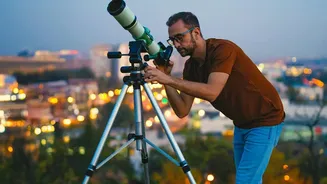
While a telescope is specialist equipment, a simple pair of binoculars is a fantastic and affordable step-up for any budding stargazer. You might even have a pair at home already. Binoculars gather more light than your eyes, revealing details you'd otherwise miss. Even a standard pair, such as 7x50 or 10x50, will offer stunning views of the Moon's craters, reveal the four largest moons of Jupiter, and turn faint, fuzzy patches into sparkling star clusters like the Pleiades. Their wide field of view also makes them great for scanning the Milky Way. Using binoculars is an easy way to deepen your experience without the complexity of a telescope.