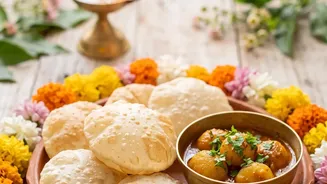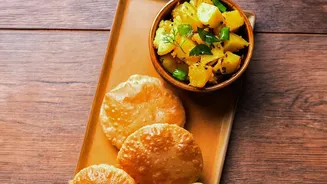






There are few meals in India that evoke as much comfort and nostalgia as a plate of hot, puffy puris served with a flavourful sabzi. This beloved combination is more than just a breakfast; it's a Sunday ritual, a festive tradition, and a travel staple.
The Perfect Pair
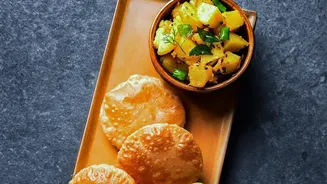
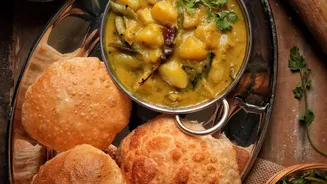
At its heart, Puri Sabzi is a simple yet brilliant pairing. The puri is an unleavened bread made from whole wheat flour (atta), rolled into a small disc and deep-fried until it puffs up into a golden, airy orb. Its partner, the sabzi, is a spiced vegetable dish. While there are countless variations, the most classic is Aloo ki Sabzi—a curry made with potatoes. The magic lies in the contrast: the soft, slightly chewy puri against the savoury, often tangy, and sometimes spicy gravy of the potatoes. It’s a dish that can be found everywhere, from bustling street-side stalls to quiet family kitchens, enjoyed by people of all ages.
A Journey Through India's Regions
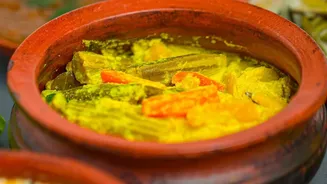
While originating in the Indian subcontinent, Puri Sabzi has been embraced and adapted across the country, with each region adding its own signature touch. In North India, particularly Uttar Pradesh, the aloo sabzi is often tangy and soupy, made with a tomato base and a host of aromatic spices. Travel east to West Bengal, and the puri transforms into 'luchi', made with refined flour (maida) for a softer, whiter finish, and is often served with a milder potato curry or a lentil dish called cholar dal. In Gujarat, the sabzi might have a hint of sweetness, while Maharashtrian Puri Bhaji is often a drier potato preparation. Some versions, like Bedmi Puri popular in Delhi and UP, even stuff the dough with a spiced lentil paste before frying, creating a heartier meal.
More Than Just a Meal
Puri Sabzi is deeply woven into the cultural fabric of India. It's a staple during festivals like Ganesh Chaturthi and Navratri, where the sabzi is often prepared as a 'satvik' dish, without onions or garlic. Its role extends beyond religious occasions; it's the quintessential lazy Sunday breakfast, a celebratory meal for small victories, and a reliable packed lunch for long train journeys. The dish fosters a sense of unity and familiarity, a comforting taste of home that can be found in almost any corner of the country. From roadside dhabas serving hungry travellers to grandmothers cooking for their families, Puri Sabzi is a symbol of hospitality and shared joy.
The Enduring Appeal
In an age of smoothie bowls and avocado toast, the enduring popularity of Puri Sabzi is a testament to its timeless appeal. It is unapologetically indulgent, a dish not meant for calorie counting but for pure satisfaction. Its ingredients are simple and accessible—potatoes, tomatoes, flour, and spices—making it a dish that transcends economic divides. Whether it's the crispiness of the puri as it shatters with the first bite or the comforting warmth of the potato curry, this combination connects with a deep-seated love for simple, flavourful, and soulful food. It's a culinary experience that is both profoundly personal and universally understood.