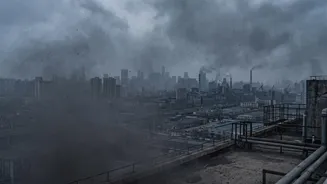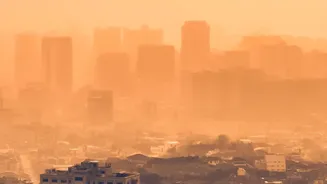







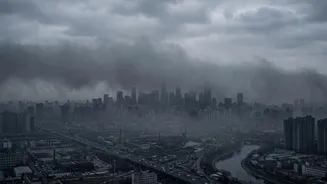
As smog blankets Delhi, many believe shutting the door offers a safe escape. But the city's toxic air crisis doesn't stop at your doorstep; it quietly follows you inside, creating a health hazard that is often unseen but deeply felt.
The Great Indoors Myth
During Delhi's severe
pollution episodes, staying indoors feels like the most logical defense. The reality, however, is far more complex. Studies and field experiments have repeatedly shown that the boundary between outdoor and indoor air is incredibly porous. Fine particulate matter, or PM2.5, the pollutant most notorious for its health impacts, easily infiltrates buildings through gaps in windows, doors, and ventilation systems. Research indicates that indoor PM2.5 levels can often be just as high, if not higher, than the air monitored outside. A 2021 study on Delhi households revealed that indoor PM2.5 concentrations in winter exceeded WHO guidelines by more than 20 times. This means that without active purification, your home may simply be trapping the same toxic haze you're trying to escape, creating a false sense of security while exposure continues unabated.
The Pollutants Hiding in Plain Sight
While outdoor pollutants like PM2.5 from stubble burning and vehicle emissions are a major source of infiltration, they are only part of the problem. Our homes generate their own unique and harmful pollutants. Common culprits in Indian households include volatile organic compounds (VOCs) released from paints, new furniture, cleaning products, and even air fresheners. These chemicals can 'off-gas' for months, releasing substances like formaldehyde and benzene into your living space. Furthermore, daily activities like cooking, especially high-heat frying or preparing 'tadka', release significant amounts of PM2.5 and nitrogen dioxide. The use of incense sticks (agarbatti) and mosquito coils adds to this toxic mix, producing ultrafine particles that penetrate deep into the lungs. When ventilation is poor—a common scenario when windows are sealed shut against outdoor smog—these internally generated pollutants accumulate to dangerous levels.
The Silent Toll on Your Health
The health consequences of breathing this cocktail of indoor and outdoor pollutants are severe and wide-ranging. PM2.5 particles are small enough to bypass the body’s natural defenses, embedding deep in the lungs and even entering the bloodstream. This triggers inflammation and oxidative stress, impacting nearly every organ. Short-term exposure can cause coughing, throat irritation, shortness of breath, and worsen conditions like asthma. Long-term, the risks are far more grave, linked to chronic obstructive pulmonary disease (COPD), heart attacks, strokes, and lung cancer. Children are especially vulnerable, as their lungs are still developing and they breathe more air relative to their body weight. Exposure can lead to reduced lung function and a higher risk of developing respiratory illnesses later in life.
Fortifying Your Home: A Practical Guide
While you can't control the city's AQI, you can take meaningful steps to improve the air inside your home. The most effective strategy is a multi-pronged approach. First, control the source: use an exhaust fan or chimney while cooking, choose low-VOC paints and furniture, and reduce the use of incense and scented candles. Second, improve ventilation, but do it smartly. Open windows for short periods only when outdoor AQI levels are 'moderate' or better. For much of Delhi's winter, this isn't feasible. In that case, sealing windows and using a high-efficiency particulate air (HEPA) filter air purifier becomes critical. Ensure the purifier has a sufficient Clean Air Delivery Rate (CADR) for your room size. Regular cleaning, including wet mopping to remove settled dust, also helps prevent particles from becoming airborne again.
Beyond the Doorstep: The Bigger Picture
Creating a clean-air bubble at home is a necessary act of self-preservation, but it is not a permanent solution. As of November 12, 2026, Delhi's air quality remains in the 'very poor' category, with an average AQI over 300 and some areas hitting 'severe' levels. This highlights that individual actions, while important for immediate health, cannot replace the need for systemic change. The primary drivers of this crisis—including vehicular emissions, industrial pollution, and construction dust—require robust policy intervention and regional cooperation. Protecting your indoor environment is a critical defense mechanism, but the ultimate goal remains cleaner air for everyone, both inside and out. Being aware of the risks indoors empowers you to take protective measures while underscoring the urgency of the broader fight for breathable air.