







Beyond the Mantra of Movement
For decades, the advice has been simple: move more to live longer and healthier. While true, this statement is like saying 'eat food' without discussing nutrition. The conversation around exercise and ageing is maturing, moving beyond broad recommendations
to ask more sophisticated questions. How exactly does exercise keep muscles young at a molecular level? What is more important for molecular health: a few heroic workouts or a steady, consistent routine? And how does exercise counteract the metabolic slowdown that often accompanies ageing? Understanding these nuances is the key to unlocking a more strategic and effective approach to lifelong fitness.
Your Muscles' Molecular Reset Button
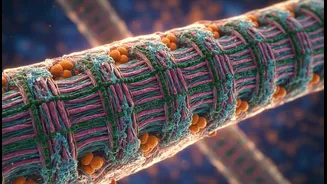
Inside every muscle are complex molecular pathways that control growth and repair. With age, these systems can fall out of balance. Recent research highlights how this happens. A gene called DEAF1, for instance, tends to rise in ageing muscles. This increase disrupts the muscle's ability to clear out damaged proteins, leading to an accumulation of cellular 'junk' that causes weakness and impairs function. Enter exercise. Studies show that physical activity, particularly resistance training, acts like a molecular reset button. It helps lower DEAF1 levels, allowing muscle cells to resume their 'housekeeping' duties, clearing out damage and promoting repair. This process helps preserve not just strength, but the fundamental health of the muscle tissue itself. Researchers found that older adults who exercised regularly had muscles that, on a genetic level, appeared younger and retained more of their mitochondrial function—the energy factories of our cells.
The Critical Role of Consistency
The temptation to go all-out with intense workouts is common, but when it comes to molecular health, consistency may be the more powerful variable. Sporadic, intense exercise can lead to burnout or injury, causing long periods of inactivity that are detrimental. Regular, sustained activity, however, provides a cumulative benefit that builds over months and years. This consistency sends a steady signal to your cells to adapt. For example, habitual exercise has been shown to reduce the number of senescent cells—aged, dysfunctional cells that accumulate in tissues and contribute to inflammation and ageing. A single bout of resistance exercise can trigger an immune response that clears out these senescent cells, but it is the regularity of this process that truly mitigates their accumulation over time. Building a sustainable routine you can stick with is more effective for long-term health than an ambitious plan that you abandon after a few weeks.
Fighting the Age-Related Metabolic Slowdown
One of the most common experiences of ageing is a shift in body composition and a slowing metabolism. This is driven in large part by sarcopenia, the age-related loss of muscle mass. Since muscle is metabolically active tissue that burns calories even at rest, losing it means our resting metabolic rate falls. This is where exercise, especially strength training, becomes a non-negotiable tool. Resistance training is the single most effective intervention for preventing and even reversing sarcopenia. It stimulates muscle protein synthesis at any age, activating stem cells that repair and build muscle fibers. By preserving or increasing muscle mass, you directly counteract the age-related metabolic decline, improve insulin sensitivity, and reduce the risk of metabolic diseases.
Asking Better Questions for a Healthier Future
As science advances, so should the questions we ask about our own health. Instead of simply asking if exercise is good for us, we can now ask how to make it most effective for our personal goals. What type of exercise—endurance, resistance, or a combination—is best for combating cellular senescence? How does nutrition, particularly protein intake, influence the muscle's response to training and its ability to clear damage? And how can we structure our activity to build a 'molecular memory' that makes our muscles more resilient to inevitable periods of inactivity, like illness or injury? The future of exercise is not about pushing harder, but about training smarter, armed with a deeper understanding of the incredible molecular conversation happening within our bodies.