



Don't Judge a Kibble by its Cover
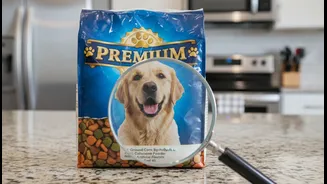
Pet food packaging is designed to appeal to you, the human buyer. Images of juicy meats and fresh vegetables are powerful marketing tools. However, these pictures often don't represent the main ingredients. Terms like 'premium,' 'gourmet,' or 'holistic'
have little to no legal definition in the pet food industry and say nothing about the quality of the food inside. While Indian standards exist (IS 11968:2019, issued by the Bureau of Indian Standards), they are voluntary, meaning brands are not required to follow them. Therefore, it's crucial for pet parents to become savvy label-readers to understand what they are actually feeding their furry companions.
The 'Complete and Balanced' Promise
One of the most important phrases on a pet food label is the nutritional adequacy statement, which might say the food is "complete and balanced." This is a key indicator of quality. According to guidelines set by bodies like the Association of American Feed Control Officials (AAFCO), which heavily influence global standards, a "complete" food contains all the necessary nutrients, and a "balanced" food contains them in the correct ratios for a specific life stage (like puppy/kitten, adult, or all life stages). A product without this statement may be intended for supplemental feeding only, like a treat, and shouldn't be your pet's sole source of nutrition.
Decoding the Ingredient List
Ingredients are listed in descending order by pre-processing weight. This means the first few ingredients are the most plentiful. Look for a high-quality, named animal protein source—like 'chicken' or 'lamb'—at the top of the list. Be wary of vague terms like 'meat and animal derivatives' or 'meat by-products'. Also, watch for a tactic called 'ingredient splitting'. This is when a manufacturer lists different forms of the same lower-quality ingredient separately (e.g., 'corn gluten meal', 'corn bran', 'ground corn') to make them appear further down the list, pushing the more desirable meat ingredient to the top spot. A food that seems to be chicken-first might actually be corn-based when you add it all up.
Understanding the Guaranteed Analysis
Every pet food label must include a 'Guaranteed Analysis'. This chart lists the minimum percentages of crude protein and crude fat, and the maximum percentages of crude fibre and moisture. The term 'crude' refers to the testing method and doesn't reflect the quality of the nutrient itself. These numbers give a basic nutritional profile, but they can be misleading, especially when comparing wet and dry food due to vast differences in moisture content. To make a fair comparison, you need to calculate the nutrient content on a 'dry matter basis'. While it requires some maths, it gives a much more accurate picture of how much protein or fat your pet is getting.
Marketing Buzzwords vs. Reality
The pet food market is full of trendy terms that can be confusing. 'Grain-free' foods, for example, became popular but aren't necessary for most pets unless they have a specific grain allergy; they simply swap grains for other carbohydrates like potatoes or peas. The term 'natural' has a very loose definition, often just meaning the ingredients weren't chemically synthesized, but it allows for significant processing. Similarly, a 'vet-recommended' claim is powerful but can be part of a marketing relationship between the brand and veterinarians. The most reliable information comes not from these front-of-pack claims, but from the legally required ingredient list and guaranteed analysis on the back.