


A Celestial Ballet in Your Backyard
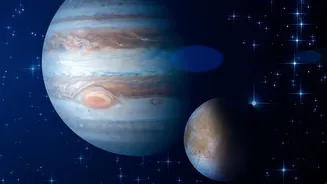
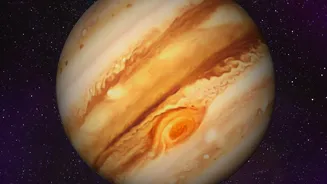
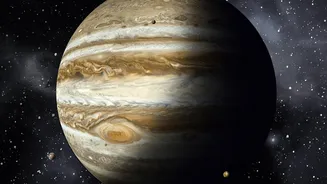
Jupiter is one of the brightest objects in the night sky, making it an easy find for even the most novice stargazer. But the real magic begins when you point a pair of binoculars at it. Suddenly, the brilliant planet resolves into a tiny, sharp disk,
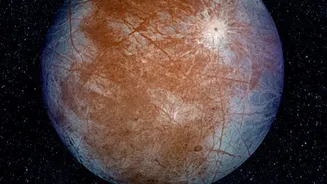
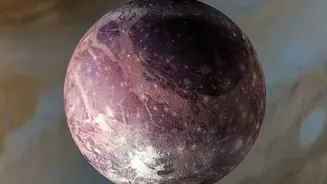
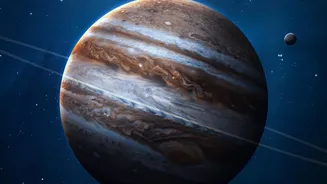
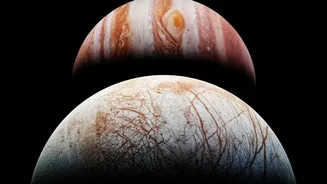
and flanking it, you'll see what look like faint, tiny stars. These aren't stars at all; they are Io, Europa, Ganymede, and Callisto—the four largest of Jupiter's many moons. Discovered by Galileo Galilei in 1610, they were the first objects found to orbit another planet, and this simple observation helped reshape our understanding of the universe. With basic binoculars, you can recreate this historic discovery from your own home. The moons typically appear in a nearly straight line, as we are viewing their orbital plane edge-on.
The Non-Stop Dance of the Moons
What makes these moons so captivating for observers is their speed. Their configuration around Jupiter changes so rapidly that you'll never see the same view two nights in a row. This constant motion is due to their relatively short orbital periods, a direct result of Jupiter's immense gravitational pull. The innermost moon, Io, is a speedster, completing a full orbit in just 1.8 days (about 42.5 hours). Europa takes a more leisurely 3.6 days, Ganymede about 7.2 days, and the outermost moon, Callisto, completes its journey in roughly 17 days. This rapid pace means that from one night to the next, a moon might switch from one side of the planet to the other, or disappear entirely as it passes behind or in front of Jupiter.
What You Need to Get Started
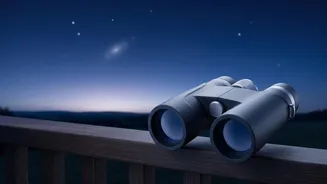
You don’t need a powerful or expensive telescope to join the show. A good pair of binoculars, such as a 7x50 or 10x50 model, is perfectly capable of revealing the Galilean moons. The key challenge isn't magnification, but stability. The natural shake of your hands can make the tiny points of light dance around, making them difficult to see clearly against Jupiter's glare. To counter this, it is highly recommended to mount your binoculars on a tripod. If you don't have one, simply bracing your elbows on a steady surface like a wall, fence, or the roof of a car can make a world of difference.
Finding Jupiter and Its Companions
For observers in late September 2026, Jupiter will be a brilliant object in the pre-dawn eastern sky. Its steady, powerful white light makes it stand out from the twinkling stars around it. Stargazing apps can help you pinpoint its exact location. On September 8, 2026, the crescent Moon will be very close to Jupiter, making it exceptionally easy to find. Once you have the planet centered in your binoculars, look for the faint pinpricks of light on either side. Depending on the night, you might see all four, or perhaps only two or three if one is hidden in transit (passing in front of the planet) or occultation (passing behind it). Don't be discouraged if you don't see all four at once; the ever-changing view is part of the fun.
Track the Movement for Yourself
To truly appreciate the dynamic nature of this system, try keeping a small logbook. Each night you observe Jupiter, sketch the planet and the positions of the moons you can see. Note the date and time. After just a few consecutive nights, you will have a clear, visual record of their orbits in action. You'll see Io race from one side to the other, while slower Callisto seems to lag behind. This simple practice transforms passive viewing into an active and rewarding scientific project, connecting you directly to the celestial mechanics that Galileo first charted over 400 years ago.