






An Unbreakable Monsoon Bond
In India, the arrival of the monsoon is a multi-sensory experience. It’s the smell of petrichor rising from the parched earth, the dramatic darkening of the afternoon sky, and the cool breeze that offers respite from the oppressive summer heat. And intertwined
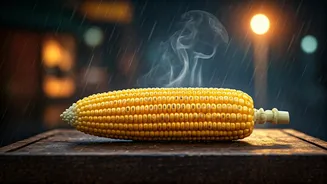
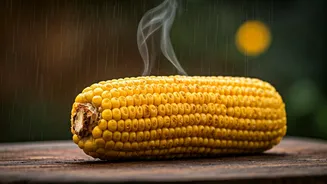
with these sensations is the unmistakable aroma of bhutta, or roasted corn on the cob. The connection is so profound that for many, one cannot exist without the other. The craving for a hot, spicy bhutta is as much a part of the rainy season as carrying an umbrella. It’s a Pavlovian response built over a lifetime of rainy evenings spent by the roadside, watching the world go by from under the vendor’s makeshift tarp.
A Masterclass in Simplicity
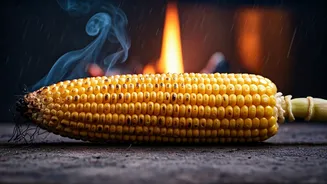
The magic of bhutta lies in its utter simplicity. There are no complex recipes or secret sauces hidden in a kitchen. The theatre is right there on the street. It begins with the vendor, often fanning hot coals in a small, portable grill. They pick a cob of desi corn—starchy, chewy, and perfect for roasting—and place it directly over the embers. The kernels pop and char, releasing a nutty, smoky fragrance. The sound of the small hand-cranked fan providing a steady stream of air is the background score to this culinary performance. It’s a rustic, primal method of cooking that connects us to something fundamental. This isn’t fast food; it’s slow food, prepared with a rhythm that has remained unchanged for generations.
The Ritual of Flavour
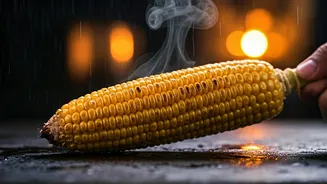
Once the corn is roasted to perfection, with a dappled pattern of golden, brown, and blackened kernels, the final act begins. This is where the bhutta-wala becomes an artist. They take half a lemon, dip it generously into a signature spice blend—typically a mix of salt, red chilli powder, and chaat masala or black salt (kala namak)—and rub it vigorously all over the hot cob. The hiss of the acidic juice hitting the warm kernels is a moment of pure anticipation. That single gesture transforms the plain, smoky corn into a flavour explosion: the heat from the chilli, the tang from the lemon, the savouriness of the salt, and the earthy sweetness of the corn itself. Each bite is a perfectly balanced symphony of taste and texture.
The Great Unifier
In a country of immense diversity, bhutta is a great unifier. You will see people from all walks of life—students, office-goers in suits, families in their cars—pulling over to the side of the road to partake in this shared ritual. A hot bhutta costs very little, making it an accessible joy for everyone. It dissolves social and economic barriers for a few blissful moments. It’s a snack that’s tied not to a specific community or region, but to a collective Indian experience. It evokes memories of childhood, of college days, of long drives with loved ones, all centred around the simple act of sharing a piece of roasted corn under a cloudy sky.
Nostalgia on a Cob
While boiled sweet corn cups have become a common sight in malls and cinemas, they lack the soulful appeal of the classic roasted bhutta. The traditional version, made with the less-sweet, more robust Indian corn, is a vessel for nostalgia. The slight chewiness of the kernels and the smoky flavour from the charcoal are elements that cannot be replicated in a steam pot. Eating a bhutta is not just about consumption; it’s about participating in a tradition. It’s a taste of a simpler time, a connection to the earth, and a celebration of the season’s change.